-
Peace According to Empire: How the Nobel Prize Became a Tool of Geopolitics
By Peiman Salehi
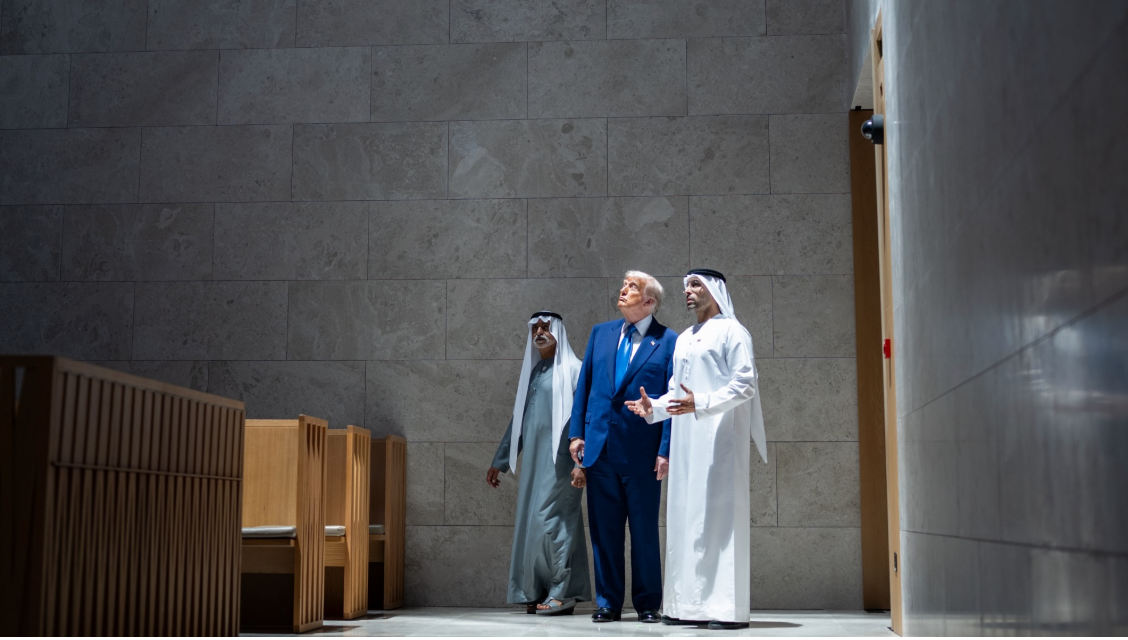
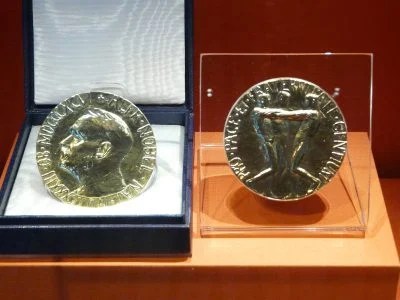
In July 2025, Israeli Prime Minister Benjamin Netanyahu submitted a letter of nomination for U.S. President Donald Trump for the Nobel Peace Prize. In the world we imagined decades ago—where the Nobel Peace Prize once evoked memories of Martin Luther King Jr., Desmond Tutu, or even Yitzhak Rabin—such a move might have sparked outrage or satire. But today, it raises eyebrows not because it’s shocking, but because it’s expected. After all, Trump had already nominated himself through the Abraham Accords, agreements that sought to normalize relations between Israel and several Arab regimes while circumventing the central issue: Palestine.
The Nobel Peace Prize was never divorced from power. But it used to pretend. In the last two decades, however, its illusion of neutrality has worn increasingly thin. The prize now often mirrors the West’s ideological priorities—democracy promotion, liberalization, “peace through strength”—rather than any genuine commitment to structural justice, demilitarization, or nonviolence.
It’s worth asking: whose peace does the Nobel Prize really celebrate?
The 2009 award to Barack Obama, barely nine months into his presidency, marked a turning point. It was given not for what he had done, but for what he promised. That same year, the U.S. escalated drone strikes in Pakistan, and in 2010, NATO operations intensified in Afghanistan. It wasn’t peace that was rewarded—it was the promise of a palatable empire.
When Malala Yousafzai received the award in 2014, it was both deserved and politically convenient. She was a victim of the Taliban, a symbol of female education under attack—but also a figure the West could easily appropriate into its civilizing mission narrative. Malala’s peace became a symbol of individual empowerment, but disconnected from any critique of the global structures that produce poverty, war, and patriarchy.
Meanwhile, the very same year, Palestinians in Gaza were recovering from a brutal 51-day Israeli offensive that killed over 2,000 people—most of them civilians. There were no Nobel mentions. The only peace that counts, it seems, is the peace of those who align neatly with liberal capitalism, not those who resist its machinery.
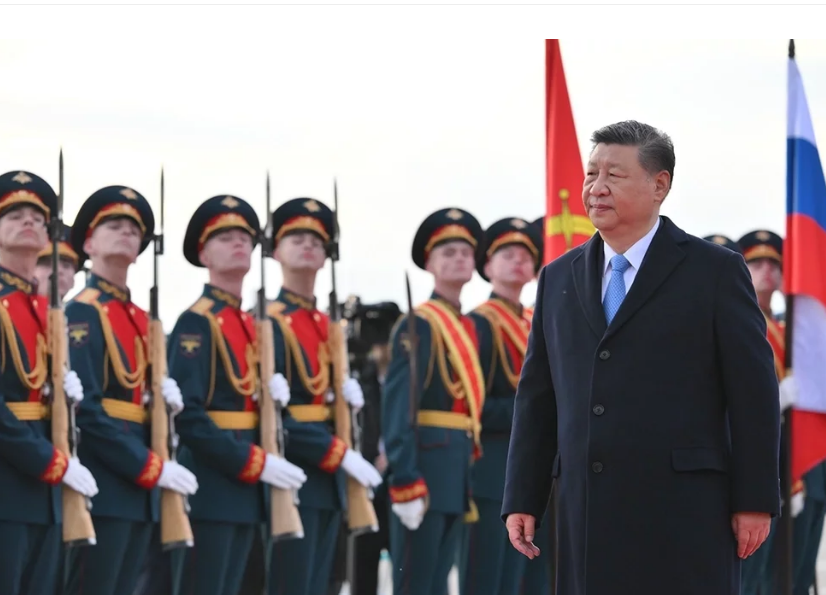
The prize, historically, has been awarded by a committee appointed by the Norwegian Parliament—an institution embedded in the West’s political orbit. Its selections reflect the geopolitical anxieties and priorities of that order. For example, in 2010, the Chinese dissident Liu Xiaobo won the prize, prompting China to freeze diplomatic relations with Norway. His selection—while grounded in legitimate human rights concerns—was not just about dissent, but about asserting moral authority over a rising China.
Compare this to the total silence on Julian Assange or Edward Snowden, figures whose revelations exposed vast surveillance empires and war crimes. Their pursuit of peace was too inconvenient, too disruptive. Their truth was unsanctioned.
In the era of “rules-based order,” peace is no longer the absence of violence or the triumph of justice. It is a brand—curated, marketable, ideologically safe. Nobel laureates are now often chosen for symbolic value: they reflect a version of peace that reassures rather than challenges the dominant system. They are “peacemakers” who rarely disrupt empire.
This is particularly dangerous for the Global South. Movements for liberation, from Iran to Palestine to Congo, are often dismissed as “radical,” “violent,” or “unrealistic,” regardless of their grassroots nature or ethical claims. Their visions of peace—which demand redistribution, sovereignty, or the dismantling of neocolonial structures—are rarely acknowledged by the Nobel committee. Because peace, according to empire, must never be revolutionary.
Consider the current situation in Gaza. Over 57,000 Palestinians have been killed in the past year under Israeli bombardment. International law is routinely violated. UN resolutions are blocked. The U.S. continues to send weapons. Yet no Nobel committee member will seriously consider the resistance of an occupied people as a candidate for peace. Peace is what is granted to the powerful when they pause their violence—never to the oppressed when they demand dignity.
This is not merely hypocrisy; it is ideological discipline. The prize helps structure global consciousness around acceptable norms. It tells us who to celebrate, who to pity, and who to erase.
What then should be done?
We don’t need new prizes. We need new vocabularies. Peace should not mean submission to liberal capitalism or the mere cessation of open war. Peace must be redefined as the restoration of justice, the right to sovereignty, and the dismantling of imperial dominance. It must include economic liberation, environmental repair, and cultural dignity. This is not utopian—it is practical. Because without justice, peace will remain a slogan, not a structure.
The problem is not just the Nobel Peace Prize—it is what it reveals about global governance. Even concepts like “human rights,” “development,” and “democracy” have become battlegrounds for ideological control. Institutions in the West frame their version of these values as universal, while sidelining indigenous, Islamic, socialist, or Afrocentric interpretations.
To write an alternative vision of peace, we must start from the margins—from Gaza, from Tehran, from Caracas. We must listen to movements that survive under siege. We must acknowledge that peace cannot be built with bombs, and dignity cannot be delivered through sanctions.
Until then, the Nobel Peace Prize will remain what it has become: a prize for those who make empire comfortable—not those who make the world just.
📎 Originally published on Global Research
-
Crisis of Meaning
By Peiman Salehi
The West still appears dominant, but it no longer knows why it acts. It is losing its sense of purpose.
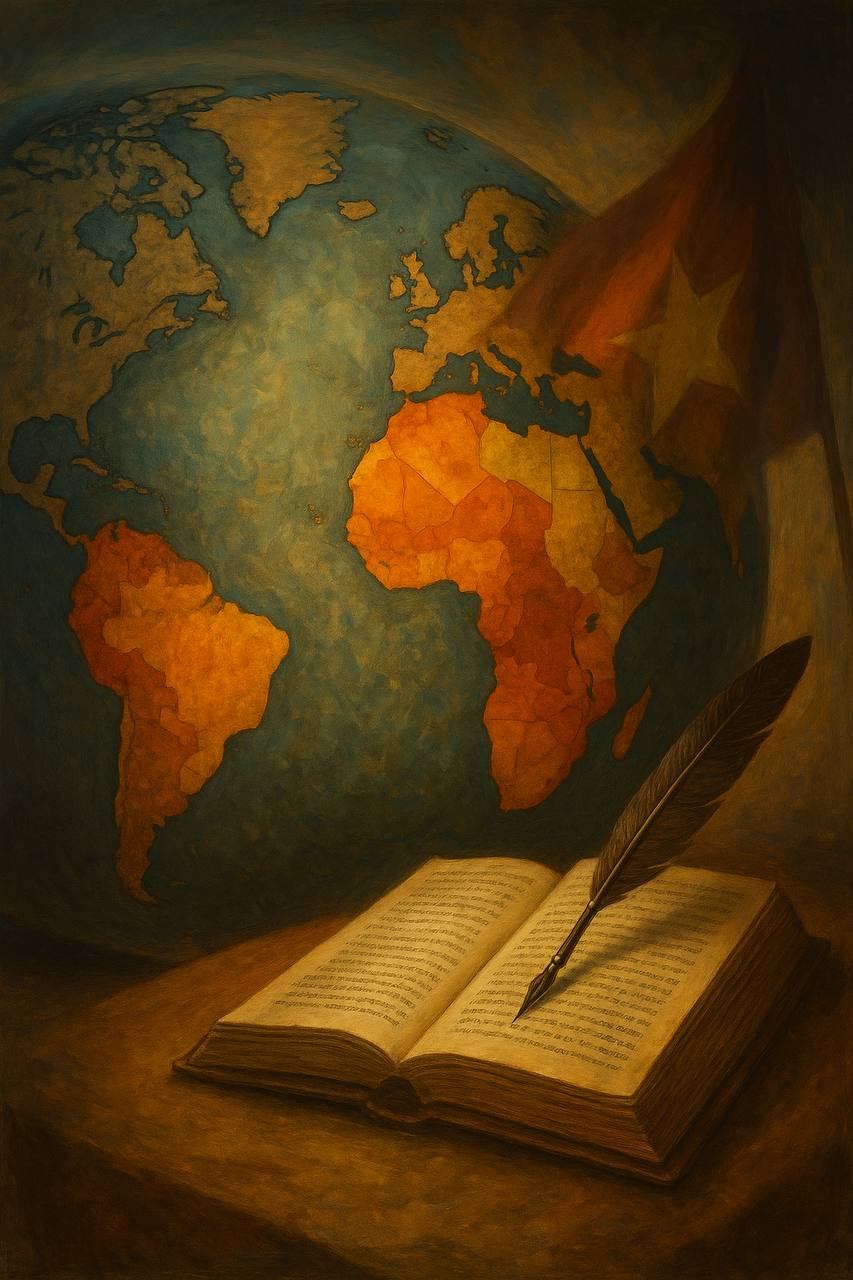
At first glance, the Western order retains its military, media, and economic power. But beneath this surface lies a profound crisis — a collapse of meaning, legitimacy, and philosophical direction. We are no longer merely in a post-American world; we are living in a post-signification era.
Once the bearer of universal promises — liberty, human rights, and rationality — the Western liberal project has now revealed its deep ambivalence: violence, hypocrisy, and internal contradictions. This essay offers a civilizational and metapolitical reading of this unfolding crisis.
I. The Philosophical Decline of Western Liberalism
Liberalism, as articulated by John Locke, was founded on three fundamental rights: life, liberty, and property. But today, these ideals have become tools of imperial domination. The United States, which portrays itself as the defender of freedom, now acts in deeply illiberal ways — echoing the authoritarian patriarchy that Locke himself opposed in Robert Filmer’s writings.
Contemporary liberal discourse has been emptied of its normative content. Freedom is no longer a shared right, but a privilege contingent upon alignment with the Western model. This shift reflects a metaphysical degeneration of the liberal project itself.
II. The Civilizational Resistance of the Global South
In this crisis of meaning, the rising voices of the Global South play a crucial role. Iran, Palestine, Bolivia, and longstanding African and Asian traditions offer an alternative vision of politics — one grounded in justice, genuine sovereignty, and the primacy of life over markets.
These resistances are not merely geopolitical — they are epistemological. They raise a fundamental question: who gets to define the world? The rejection of unipolarity is not just strategic — it is civilizational. It defends a plurality of worldviews, moral frameworks, and paths to liberation.
III. Metapolitics and the Future of the World
The speed of contemporary events and the overwhelming power of modern communication have pushed politics into the metapolitical. We are no longer merely in the realm of strategy, but in a battle over meaning itself.
The future will not be decided only at ballot boxes or on battlefields, but within symbolic, cultural, and philosophical spaces. In this context, the Global South is not a marginal actor — it is a bearer of renewed meaning.
The coming world will require a rehabilitation of thought, a redefinition of politics, and an intellectual courage that only a return to the metaphysical roots of living civilizations can offer.
Conclusion
This text invites us to rethink the present moment as a turning point. The West has not only lost its supremacy — it is losing its ability to justify its actions. Faced with this void of meaning, the answer will not come from the heart of empire, but from the margins — from the peoples, traditions, and philosophies long excluded from the dominant narrative.
It is in this reborn plurality that the promise of a truly post-imperial global order resides.
Originally published in French on Dedefensa.org
-
Netanyahu’s Dependence on War
By Peiman Salehi
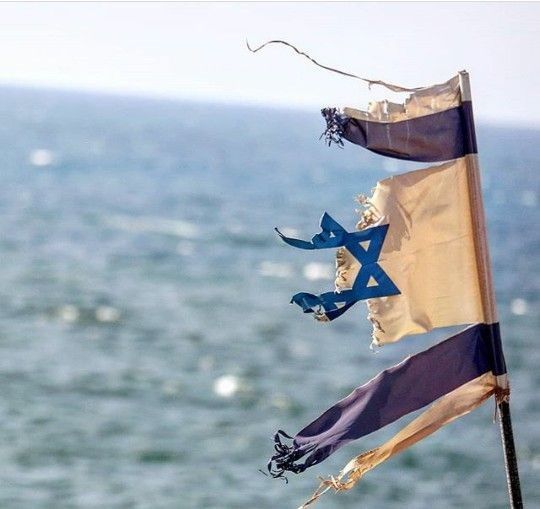
In the wake of the twelve-day war between Iran and Israel, many observers in Iran—and increasingly within the international analytical community—are voicing concern over the imminence of a much larger conflict. Despite the costs of the previous confrontation, Israeli Prime Minister Benjamin Netanyahu seems poised to repeat the same strategic mistake—this time with potentially more serious and irreversible consequences.From the perspective of many Iranian analysts, Netanyahu’s motivations no longer stem from national security or regional deterrence. Rather, they reflect a desperate political calculus: to ensure his survival amid mounting domestic opposition, judicial investigations, and a legitimacy crisis. From this angle, his turn to external conflict is no longer about protecting Israel, but about shielding himself from accountability.
Netanyahu’s strategy echoes an age-old tactic used by embattled leaders: to sustain or provoke military conflict in order to divert public attention, delay internal audits, and reframe political debates as existential crises. But the repeated use of this tactic yields diminishing returns: each new escalation further exposes the limits of Israeli military effectiveness and deepens the country’s isolation on the international stage.
The recent war offered major revelations. Iran, acting alone and without mobilizing its allied networks (such as Hezbollah or Iraqi militias – PMU), launched sustained missile strikes into the heart of Israeli territory. Despite massive investments in air defense and intelligence cooperation with Western allies, Israel failed to prevent significant damage to its strategic infrastructure. More importantly, Iran’s retaliation demonstrated not only military capability but also the resilience of its strategic doctrine.
For Netanyahu, however, the war did not end in a decisive Israeli victory. And therein lies the political danger: for hawks, a ceasefire without clear victory is tantamount to defeat. Facing growing pressure—from protesters, political rivals, and the judiciary—Netanyahu appears trapped in a war-driven survival strategy. As long as the conflict continues, accountability is postponed. Unanswered questions linger. Critics are branded as disloyal. War becomes the adhesive holding together his crumbling grip on power.
Yet this cycle is fundamentally unsustainable. Each escalation brings Israel closer to the edge—militarily, diplomatically, and economically. With every exchanged missile and war-focused media headline, Israel’s strategic depth erodes, its alliances weaken, and its deterrent credibility wanes. Worse still, it becomes increasingly evident that Netanyahu is sacrificing long-term national security to secure short-term political survival.
In Tehran, anticipation of a new conflict is matched by thorough preparation. Authorities and analysts are bracing for another round—one that neither Israel can fully win nor Iran endure without reprisal. Unlike the previous clash, a fresh escalation could trigger a broader regional alignment—potentially involving Hezbollah, the Houthis, and other militias in the region. And while the United States might again back Israel, the core question remains: at what cost?
Netanyahu’s gamble is not merely military—it is existential. By instrumentalizing war for political ends, he has misjudged the shifting regional dynamics. Iran has demonstrated its ability to absorb strikes and respond in an asymmetric, calibrated manner. More significantly, it has reframed the narrative: survival is victory, and resistance in the face of overwhelming power becomes an act of resilience.
If Netanyahu continues down this path, Israel may soon find itself embroiled in a protracted conflict from which it cannot emerge without internal political crisis. The danger lies not only in military defeat but in strategic exhaustion, international isolation, and internal collapse.
Ultimately, a nation’s strength is not measured by how many wars it can initiate, but by the wisdom it shows in avoiding the wrong ones. Netanyahu’s relentless pursuit of conflict may provide temporary political shelter, but at the cost of Israel’s future. The world is watchingand many are beginning to realize that the real threat to Israel’s security may not come from outside, but from within its own leadership.
This article was originally published in French by Dedefensa:
🔗 La dépendance de Netanyahou à la guerre – Dedefensa.org
 Peiman Salehi – Political Analyst & Writer