-
Strategic Signaling or Tactical Patience?
What Larijani’s Visit to Moscow Means for Tehran’s Foreign PolicyWritten by Peiman Salehi — July 22, 2025
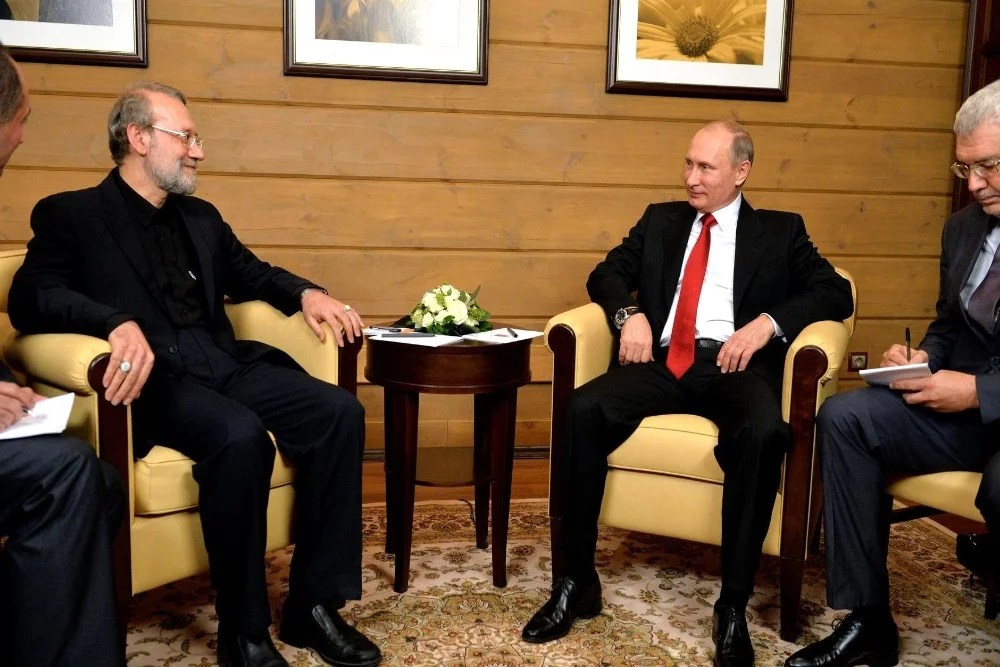
On July 20, 2025, Ali Larijani, senior advisor to Iran’s Supreme Leader and former speaker of parliament, made a discreet but highly symbolic visit to Moscow, where he met with Russian President Vladimir Putin. While no major public statement followed, the timing, nature, and geopolitical context of the meeting invite closer scrutiny.
Occurring just months ahead of the potential activation of the snapback mechanism under UN Resolution 2231, Larijani’s trip to Russia signals a strategic recalibration by Tehran at a time of rising regional tension and diplomatic uncertainty.
For Iranian policymakers, the current moment demands delicate maneuvering. Following the breakdown of the JCPOA and the 12-day conflict between Israel and Iran, the Islamic Republic has entered a phase not of retreat but of controlled recalibration.
The visit to Moscow is not merely a show of alignment with the East, nor a rejection of future engagement with the West. Rather, it fits into a longer pattern of strategic ambiguity that allows Tehran to signal strength while avoiding direct confrontation.
The prospect of renewed UN sanctions looms large in the minds of Iranian officials. With October 2025 drawing closer, European states—under pressure from Washington and Tel Aviv—are reportedly considering reactivating the snapback clause, which would reimpose multilateral sanctions without the need for a new Security Council vote.
For Iran, such a move would not only undermine what remains of the JCPOA, but also reaffirm the deep-seated belief that Western diplomacy is built more on coercion than cooperation.
In this context, Moscow becomes a critical partner—not as a savior, but as a counterweight. Iran’s outreach to Russia reinforces a message to the West: “We are not isolated, and we are not without alternatives.”
At the same time, the meeting sends a domestic message to Iranian constituencies. It assures both elites and the public that the Islamic Republic is actively managing its external risks rather than merely reacting to them.
In the post-war atmosphere, where national solidarity briefly eclipsed internal dissent, Larijani’s engagement with Russia showcases a foreign policy still capable of maneuvering—even when the margin for error is razor-thin.
What makes the timing even more notable is the ongoing fragmentation of global alliances. With the BRICS+ bloc gaining momentum and Western institutions facing legitimacy crises, Tehran is not simply leaning toward Moscow out of necessity.
It sees an emerging opportunity to position itself within a multipolar order—one that dilutes Western centrality and opens space for alternative discourses on sovereignty, development, and international law.
Of course, there are those who speculate that the visit may also have a preventive dimension. With internal crises mounting in the United States—from political instability to explosive revelations such as those tied to the Epstein files—some observers fear the prospect of a U.S. diversionary military action.
In that light, the Larijani-Putin meeting may serve as a form of diplomatic deterrence, reminding Washington that any escalation in the Persian Gulf would not go uncontested by other powers.
What is clear is that Iran’s strategic patience is not passive. By engaging Moscow at this critical juncture, Tehran is performing a balancing act: signaling resolve to the West, securing diplomatic support from the East, and preparing its domestic narrative for an increasingly uncertain international order.
Rather than retreating into isolation, Iran is actively recalibrating its alliances, positioning itself for what may come—whether confrontation, compromise, or something in between.
If the snapback is activated in October, this visit will be remembered as one of the last serious gestures of multilateral diplomacy before the storm.
If it is avoided, the Larijani mission may mark the beginning of a renewed, albeit tentative, dialogue—one built less on trust and more on realism.Either way, Tehran has made its move. Now, it waits to see whether the global order is willing to play a new game—or whether it remains addicted to the old one.
🔗 Original publication: Oriental Review – July 22, 2025
-
Iran challenges the West not just militarily, but philosophically
By Peiman Salehi
After more than four decades since the Islamic Revolution, it remains clear that many Western policymakers still don’t understand Iran. But perhaps the problem isn’t only Iran it’s the limits of a worldview that assumes liberal norms are universally applicable.
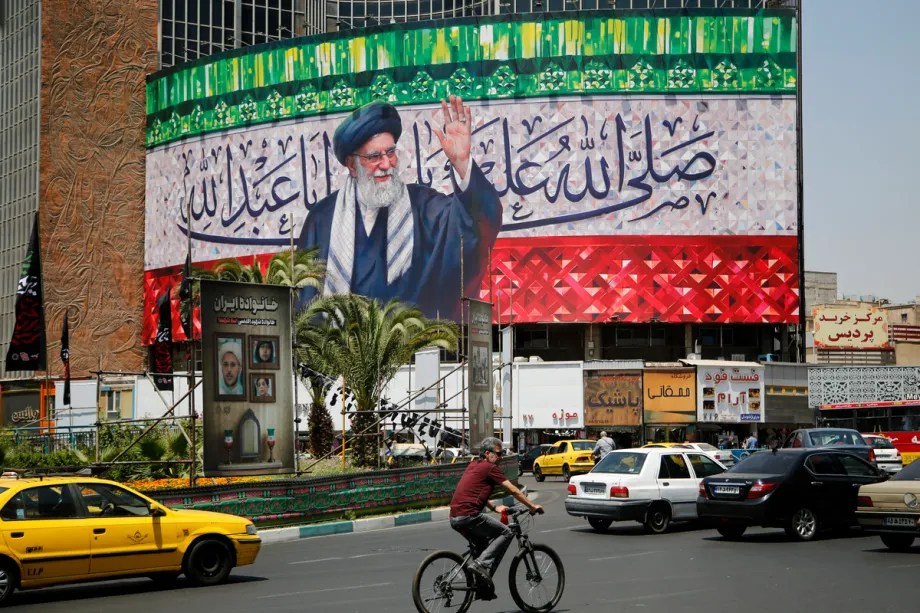
People continue their daily life under the shadow of the ceasefire reached with Israel, in Tehran, Iran, on July 15, 2025. [Fatemeh Bahrami – Anadolu Agency]
Today, Iran is not merely a state at odds with the West. It represents a political discourse forged in the crucible of colonial memory, revolution, and international isolation. A discourse that, rather than fading, now echoes from Damascus to Caracas, from Beirut to Sanaa. While Western media often reduces Iran to missiles, centrifuges, or proxy forces, a growing number of people in the Global South see it as something more: an alternative logic.
This alternative became even more visible after the events of July 2025, when Israel launched a surprise strike on Iranian soil, targeting key figures in Iran’s defense and nuclear programs. While the attack shocked the world, it was Iran’s response that changed the calculus. Within hours, Tehran had rebuilt its command infrastructure and launched retaliatory strikes not only on Israeli positions but also on the US Al Udeid airbase in Qatar. More than a military move, it was a symbolic one: a message that Iran no longer accepts the role of passive deterrence.
For decades, the West has painted Iran as isolated, irrational, or unpredictable. But the reaction to the July attacks suggested otherwise. Iran acted with speed, coherence, and, above all, intention. Its message was clear: it is not simply reacting, it is asserting.
This assertion, however, isn’t just geopolitical. It’s philosophical. For the first time in the post-Cold War order, a non-Western state under immense pressure has openly defied the Western security logic not out of desperation, but with a distinct and alternative worldview.
A discourse, not a rogue actor
To truly grasp Iran’s posture today, one must look beyond the nuclear file or sanctions regime. Iran’s political identity is underpinned by a coherent discourse one that challenges the philosophical underpinnings of the liberal international order.
Unlike other critics of the West who focus on inequality or double standards, Iran questions the moral legitimacy of the system itself. Its opposition is not just realist, but moral: a critique of domination, hegemony, and the presumption of cultural superiority.
This discourse draws strength from three elements:
1. A moral critique of liberal internationalism:
Iran’s opposition to Western order is rooted not only in geopolitics but also in a deep moral rejection of its foundations what it sees as structural injustice embedded in international institutions.
2. Fusion of tradition and geopolitical rationality:
Unlike the Soviet Union, Iran fuses an Islamic ethos of resistance with strategic, realpolitik calculations. The result is a state project that is both ideological and flexible a “resistant state” with its own grammar.
3. Soft influence in the Global South:
From Latin America to West Asia, Iran’s narrative of sovereignty, dignity, and anti-imperialism finds resonance even in the absence of formal alliances or blocs.
Western policymakers often dismiss this influence as propaganda or ideological projection. But ignoring it has consequences. Many in the Global South don’t see Iran as a pariah they see it as a symbol of resistance in a system that often feels rigged.
The “snapback” problem: legitimacy in crisis
Now, with the West seeking to re-activate the so-called “snapback” mechanism from the 2015 nuclear deal a legal tool designed to restore sanctions in the event of serious Iranian violations a deeper crisis is being exposed.
There is a legal paradox at the heart of this move: the very state that unilaterally exited the agreement (the United States) now seeks to enforce its provisions. This is less a legal strategy than a symbolic gesture and one that risks accelerating the decline of Western credibility.
If multilateral institutions are perceived not as frameworks for justice but as tools of selective enforcement, they lose more than authority they lose legitimacy. For many outside the transatlantic world, this reinforces a troubling conclusion: international law is not neutral, but political.
Beyond containment: The need for cognitive recalibration
The West’s biggest challenge in dealing with Iran isn’t military or diplomatic it’s cognitive.
Most Western analyses continue to view Iran through outdated lenses: the Cold War, terrorism, or nuclear proliferation. But we live in a world increasingly shaped by non-Western actors, emerging civilizational identities, and profound mistrust in Western institutions.
To move forward, the West needs a new map one that acknowledges the discursive nature of Iran’s global role.
It requires a shift:
• From seeing Iran as a threat to seeing it as a discourse.
• From punitive strategies to understanding sources of internal and regional legitimacy.
• From security-based thinking to engaging Iran’s political philosophy — especially its challenge to global liberalism.
And most of all, it requires acceptance of a changing world:
We no longer live in the “end of history” we are witnessing the birth of competing rationalities, rival universalisms, and alternative visions of order.
If the West continues to deny the legitimacy or even the existence of these competing visions, it risks not only diplomatic failure but deeper moral and political isolation.
Originally published on Middleeastmonitor
-
Why Israeli Impunity Still Shapes Global Politics
Every time the world looks away, it signals to other aggressors that crimes can be committed without consequence, as long as the perpetrator has the right allies.
By Peiman Salehi
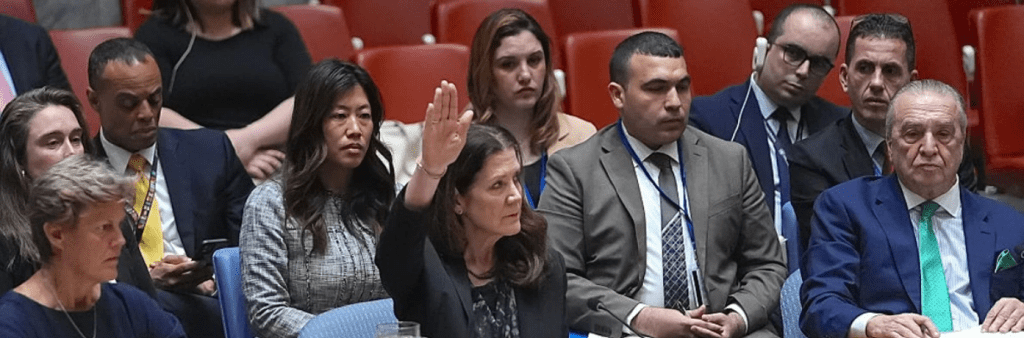
Image source: Common Dreams
In a world increasingly defined by calls for accountability, human rights, and a rules-based international order, one glaring exception continues to shape global norms: Israel’s impunity. Despite decades of United Nations resolutions, extensive documentation of war crimes, and near-universal condemnation from civil society, Israel has consistently avoided meaningful consequences for its actions in occupied Palestine and beyond.
This impunity is not just a regional concern—it is a systemic issue that corrodes the credibility of international law. Israel’s treatment of Palestinians and the consistent shielding it receives from powerful allies like the United States create a precedent where international law becomes selectively enforced. In 2023 and 2024, Israel’s assault on Gaza reached levels of devastation previously unseen. Tens of thousands of civilians were killed, and more than a million displaced. According to Amnesty International, Israel used starvation as a weapon of war against civilians, a war crime under international law.
The bombing of hospitals, refugee camps, and humanitarian corridors was condemned by organizations such as Human Rights Watch, but the global response remained muted. Instead of sanctions or diplomatic isolation, Israel continued to receive arms and military support from the West. The United States, in particular, increased military assistance and used its veto power to block multiple U.N. Security Council resolutions calling for a cease-fire, most recently in June 2025.
The struggle for Palestinian rights is, ultimately, a struggle for the soul of the international system.
The consequences of this selective enforcement go far beyond the borders of Gaza. First, it emboldens authoritarian regimes worldwide to dismiss international law, citing the double standard applied to Israel. Second, it undermines the legitimacy of multilateral institutions, especially among Global South nations that have long decried Western hypocrisy. How can justice be demanded from others when it is not applied evenly?
This imbalance also undermines emerging efforts toward multipolarity. Coalitions like BRICS and the Non-Aligned Movement have made rhetorical commitments to a just world order. However, their credibility depends not only on economic cooperation but also on moral consistency. When they remain silent on Israel’s violations, they risk perpetuating the same hierarchy they claim to resist.
The issue is also deeply embedded in Western domestic politics. In the U.S., the so-called ”Palestine Exception” means that standard principles of free speech, human rights, and legal accountability are suspended when applied to Israel. Politicians and activists who question unconditional support for Israel often face severe professional and personal consequences. Meanwhile, countries like Germany and France have suppressed peaceful pro-Palestinian protests under the guise of combating antisemitism—even when such protests are rights-based and nonviolent.
Critics are not merely challenging Israeli policy; they are questioning a larger structure of Western dominance that hinges on exceptions. Israel’s impunity acts as a litmus test: Those who support it are often invested in preserving U.S.-led hegemony, while those who challenge it advocate for a global system based on equal rights and accountability.
The human cost is incalculable. Families have been wiped out, infrastructure destroyed, generations traumatized. And yet, the global community continues to debate whether the threshold for genocide has been crossed, rather than acting to stop it. A column in The Guardian recently described Gaza as a “killing field where people are being starved.” The language is clear, but the political will remains absent.
Ending Israeli impunity is not only a matter of justice for Palestinians—it is essential for restoring faith in international law. Selective justice is no justice at all. Every time the world looks away, it signals to other aggressors that crimes can be committed without consequence, as long as the perpetrator has the right allies.
Civil society has a role to play. Pressure must be maintained on governments to cut military aid, impose sanctions, and support international investigations into war crimes. Institutions like the International Criminal Court must be empowered, not obstructed. Media must resist censorship and double standards in their coverage.
As we face interconnected global crises—from climate collapse to growing authoritarianism—allowing one state to remain above the law undermines collective survival. The struggle for Palestinian rights is, ultimately, a struggle for the soul of the international system. It asks a simple question: Will we uphold justice, or allow power to define who deserves it?
Originally published on Common Dreams
 Peiman Salehi – Political Analyst & Writer