-
US sanctions are losing their power in a post-American world
Author: Peiman Salehi
*Originally published on: South China Morning Post
Feel strongly about these letters, or any other aspects of the news? Share your views by emailing us your Letter to the Editor at letters@scmp.com or filling in this Google form. Submissions should not exceed 400 words, and must include your full name and address, plus a phone number for verification
Donald Trump’s return to the White House in January reignited discussions on the use of economic pressure as a tool of US foreign policy. But the world today is not the unipolar terrain of 2018. From Beijing and Moscow to Tehran and Brasília, the contours of global power have shifted.
At the heart of this shift is a growing rejection of US dollar hegemony – and with it, the perceived moral and strategic legitimacy of Western sanctions (“US sanctions network of companies it says helped ship Iranian oil to China”, May 14).
This is not to suggest the collapse of American influence, but rather its strategic overextension. In the name of defending the rules-based order, Washington sanctions over a third of the world’s countries. But as major powers pivot towards alternative trade settlements and local currencies, the threat of sanctions begins to lose its sting.
Consider the China-Russia partnership: bilateral trade rose to US$245 billion in 2024, with over 70 per cent settled in yuan or roubles. This is not simply economic pragmatism; it’s geopolitical signalling. When such arrangements multiply, the architecture of coercive diplomacy faces erosion.
Iran, too, reads the moment carefully. Though talks with Washington continue, Tehran sees these less as openings for detente and more as shields against hostile escalation. In the view of Iranian policymakers, America’s grip is loosening – not only due to its military missteps, but because its financial weaponry is being dulled by the emergence of multipolar alternatives.
While the US dollar is still dominant, this dominance appears to rest more on inertia than trust. The Swift system, once untouchable, is now being reimagined. Digital currencies and sovereign payment channels are no longer theoretical.
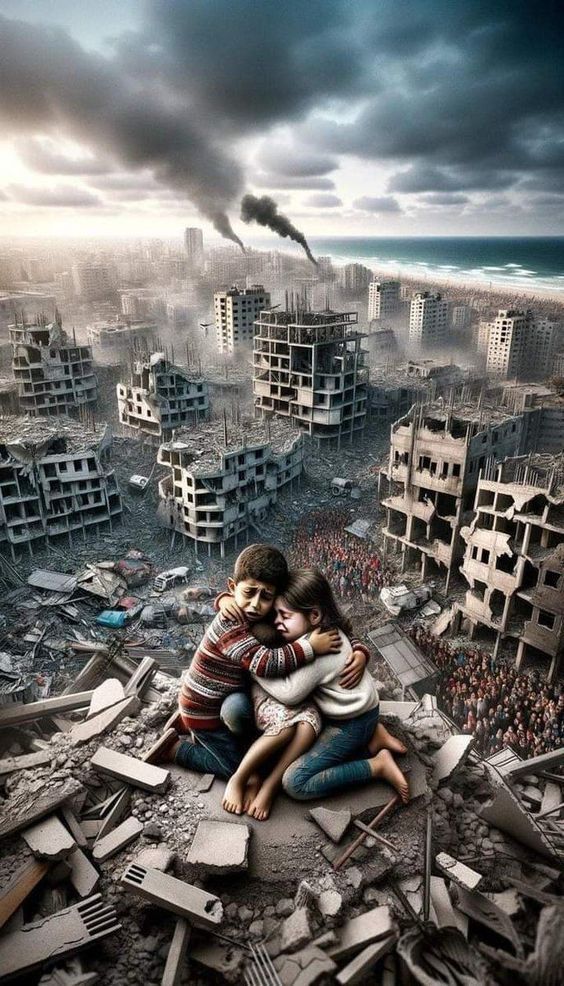
What’s at stake is more than currency dominance. It is the credibility of a Western-led moral order that applies justice selectively. When civilian infrastructure in Gaza is bombed and hospitals in Rafah are targeted with impunity, the world notices.
Washington must ask itself: can it maintain global influence without recalibrating its strategy? If it continues to lean on sanctions as a blunt instrument, it may find fewer allies, greater resistance and, ultimately, diminished leverage. The new world is not necessarily anti-American, but it is post-American in the sense that no single power dictates the rules.
The challenge for the United States is not only geopolitical, but philosophical. Sanctions presume moral clarity. But in today’s fragmented moral geography, that clarity can no longer be taken for granted. The era of multipolar trade is not just an economic shift; it is a civilisational response to decades of double standards.
-
Trump’s Persian Gulf visit
A diplomatic show or a liberal delusion?
Author: Peiman Salehi
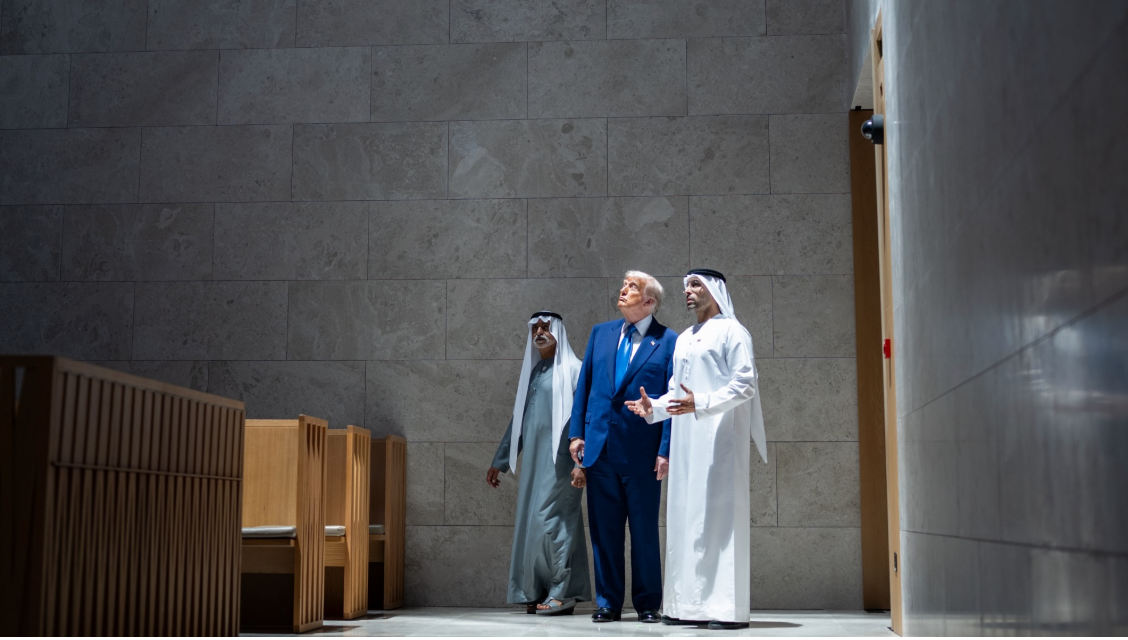
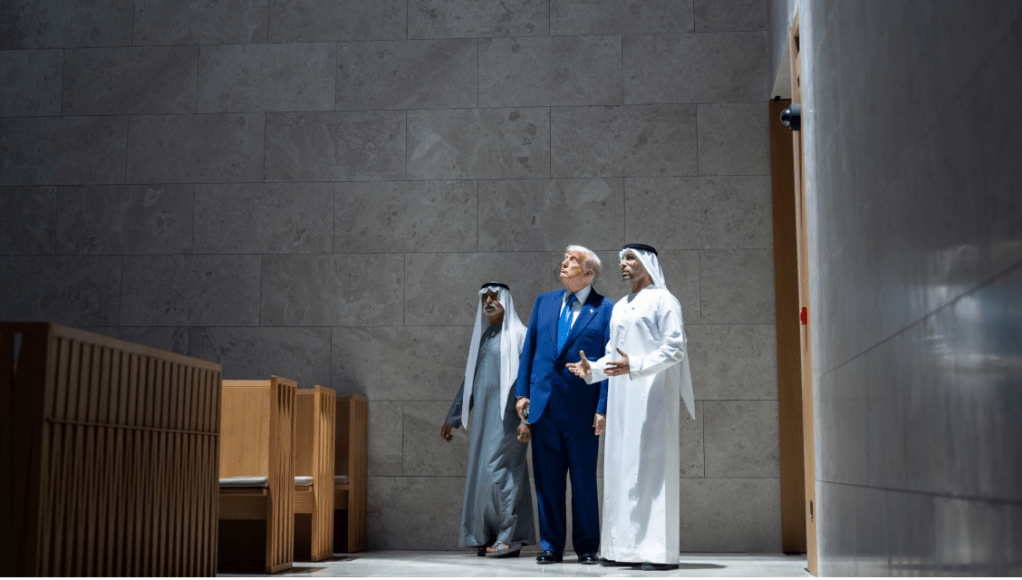
Originally published on: People’s DispatchUS President Trump at the Abrahamic Family House in Abu Dhabi. Photo: The White House
On May 16, 2025, Donald Trump concluded his three-day tour of the Persian Gulf. Global headlines focused on the staggering numbers:
- over USD 140 billion in arms sales to Saudi Arabia
- multi-billion-dollar infrastructure and AI investment pledges from the UAE and Qatar
- promises of hundreds of billions in Gulf capital flowing into the US economy
Yet beneath the dazzling surface of this diplomatic pageantry lay a darker truth, one not of global leadership, but of crumbling moral legitimacy and deepening contradictions within the liberal narrative that once underpinned the US-led global order.
Today’s West Asia is increasingly polarized. On one side are blocs aligned with the Palestinian cause and regional resistance movements; on the other, Gulf monarchies pursuing normalization with Israel and deepening economic integration with the West. Trump’s visit unmistakably sided with the latter. While Israeli bombs have killed over 50,000 Palestinians in Gaza, Trump made no serious mention of Palestine. Instead, he praised the “stability” and “economic prospects” of his host countries, a discourse that cloaks silence in the face of injustice.
This contradiction is not merely political: it is philosophical. John Locke, a founding figure of liberal thought, emphasized the inalienable rights of life, liberty, and property. He envisioned a political order based on tolerance and consent. Yet US foreign policy today treats liberalism not as a moral compass, but as a strategic tool. It speaks of human rights while selling weapons to repressive regimes. It preaches democracy while enforcing crushing sanctions that target civilian populations. Countries like Iran, Venezuela, and Yemen remain under relentless economic warfare.
Iran’s Supreme Leader Ayatollah Khamenei, in a speech on May 17, described Trump’s visit as a “performance to project strength” and condemned Washington’s strategy of pressuring Iran under the guise of diplomacy. While the US continues indirect negotiations with Tehran, Trump’s rhetoric during the trip was marked by threats, exposing the fundamental inconsistency of US foreign policy.
Regionally, the message was clear: security and investment are reserved for those who align with US interests. However, according to the latest Arab Opinion Index, over 76% of people in the region see Israel not Iran as the biggest threat to regional stability. While Arab rulers welcomed contracts and photo ops, these deals lacked popular legitimacy.
Unlike previous US presidents who worked within alliance frameworks, Trump has taken a purely transactional approach. Amid a global energy crisis driven by sanctions on Russia, Trump ignored the potential for regional cooperation, particularly between Iran, Saudi Arabia, and others, to stabilize energy markets. Instead, he prioritized personal and political gains.
Iran, for its part, is not passive. Having lost strategic ground in Syria, Tehran is determined not to cede influence in Iraq, Lebanon, or Yemen. While Trump courts Gulf rulers with arms deals, Iran is expanding ideological alliances across the region including outreach to religious minorities in pursuit of its resistance doctrine.
In the end, Trump’s visit did not advance peace or justice. It revealed, once again, the widening gap between governments and peoples in the region. Billion-dollar deals and military pacts cannot compensate for the silence on Palestine, the suffering under sanctions, or the erosion of dignity. For the majority of the region’s people, this was no victory; it was a reminder that the American-led order can no longer claim moral authority.
-
Xi Jinping’s Presence In Moscow: Symbolism Beyond Diplomacy
Author: Peiman Salehi
Originally published on: Oriental Review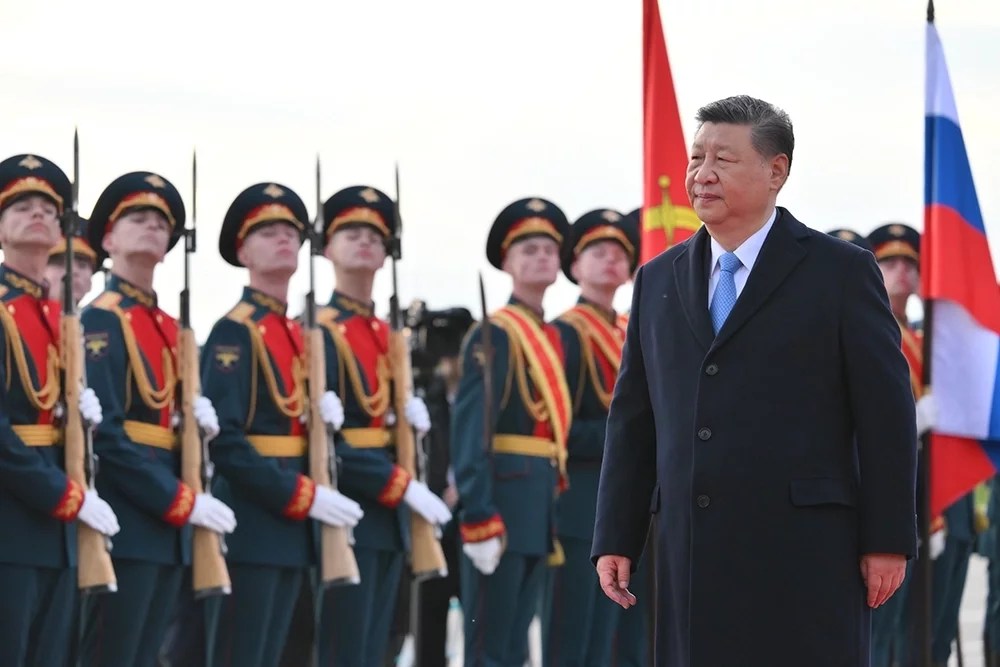
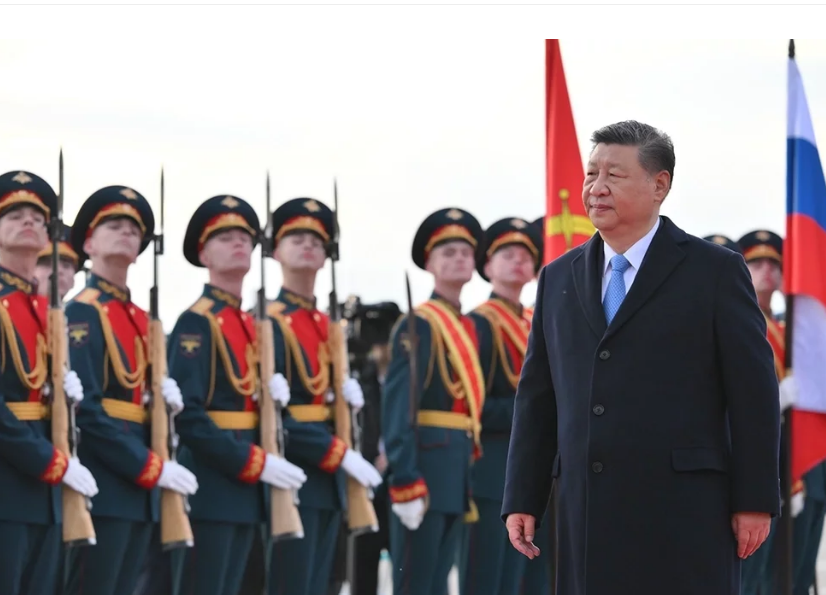
The general secretary of the Chinese Communist Party Xi Jinping has arrived in Moscow on an official visit
The presence of China’s president in Moscow, invited as an “honored guest” to one of Russia’s most significant symbolic military ceremonies, carries a message far beyond traditional diplomatic protocol. It signals a multi-layered expression of geopolitical intent in a world transitioning from longstanding unipolarity to a more multipolar and civilizational configuration.
In recent years, cooperation between China and Russia has transcended formal agreements and economic exchange. Their deepening strategic alignment reflects an ambition to escape the established orbits of global power—and to construct alternative frameworks not dependent on Western financial or security architectures. The near-total removal of the U.S. dollar from China-Russia trade is not merely a monetary move; it is a civilizational stance—an intentional break from mechanisms that reproduce Western hegemony.
By accepting a formal invitation to participate in a ceremony deeply rooted in Russia’s wartime memory, Xi Jinping symbolically positions himself—and China—as a partner in both the narrative and the resistance of a nation long standing against NATO’s expansion and Western dominance. This alignment sketches a shared image of the East—not as a reactive bloc, but as a proactive force redefining global order on the basis of sovereignty, historical consciousness, and civilizational identity.
What is most noteworthy is not only the formal messages of this encounter, but also its unspoken signals: military proximity, foreign policy coordination, and above all, convergence in political discourse. In this emerging language, liberal democracy is not prioritized; instead, stability, multipolarity, and each nation’s right to define its own path are emphasized.
Symbolically, China’s companionship with Russia amid intensifying geopolitical fractures in the West signals the gradual re-emergence of the East as a political imagination. It is a space that may, in time, reclaim not only material power and economic influence, but narrative authority as well.
Within this evolving context, a passing yet meaningful mention of Iran feels appropriate. States like Iran—locked in a long-standing confrontation with Western-dominated mechanisms—are watching these developments closely. Not necessarily in pursuit of immediate alliances, but as part of a broader constellation that appears increasingly committed to recalibrating the global balance from an eastern vantage point.
 Peiman Salehi – Political Analyst & Writer