-
Palestine and the Collapse of the Rules-Based World Order
Author: Peiman Salehi
*Originally published on:Global ResearchIntroduction
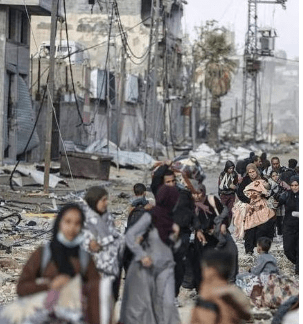
As of May 2025, the humanitarian catastrophe in Gaza has reached an unprecedented level. Over 50,000 Palestinians have been killed since October 2023, the vast majority of them civilians, including thousands of children. Yet, Western powers—particularly the United States and its allies—continue to champion a so-called “rules-based international order.” This phrase, often invoked to justify sanctions, interventions, and diplomatic pressure elsewhere, rings hollow when applied to the decades-long plight of the Palestinian people. The ongoing occupation, apartheid policies, and repeated war crimes committed by Israel—backed unconditionally by the West—expose a deep hypocrisy at the heart of this so-called global order.
The reality on the ground As of April 2025, the humanitarian catastrophe in Gaza has reached catastrophic proportions.
Despite over 100 UN resolutions condemning Israeli settlements, forced displacement, and indiscriminate attacks on civilians, meaningful accountability remains absent. Israel faces no sanctions, no arms embargo, and no international isolation. Instead, it continues to receive billions of dollars in military aid, preferential trade agreements, and political cover from Western powers. Gaza, meanwhile, remains under siege. Hospitals are bombed, aid convoys are blocked, and basic necessities such as water, fuel, and electricity are deliberately withheld. This is not a security response—it is collective punishment on a mass scale.
Selective Application of International Law
The West’s approach to international law is anything but consistent. When Russia annexed Crimea or when countries like Iran and Venezuela were accused of rights violations, swift sanctions and global condemnation followed. Yet, when Israel openly violates the Geneva Conventions, targets civilian infrastructure, and defies the International Court of Justice, it is rewarded with normalization deals, tech investments, and defense partnerships. This blatant double standard has destroyed the credibility of any “rules-based” narrative. It is clear that the “rules” apply only to adversaries of the West—not its allies.
The Weaponization of Narrative
Equally troubling is the role of Western media in shaping public perception. Palestinian resistance is labeled as “terrorism,” while Israeli aggression is framed as “self-defense.” Terms like “clashes” are used to obscure the reality of one-sided military assaults. The dehumanization of Palestinians and the erasure of their suffering are key components of maintaining this illusion of moral superiority. Journalism that challenges this narrative is often silenced, censored, or dismissed as biased.
Conclusion
Palestine is no longer just a humanitarian crisis—it is a mirror reflecting the moral bankruptcy of the global system. The rules-based world order, as promoted by the West, has collapsed under the weight of its own contradictions. When international law is selectively enforced, when some lives are deemed expendable, and when justice is sacrificed for geopolitical interests, what remains is not order—but domination. Justice for Palestine is no longer a political preference; it is a global moral imperative. Until the world confronts this hypocrisy, peace will remain out of reach—not only for Palestinians, but for humanity as a whole.
-

SOMOSMASS99
Peiman Salehi* / SomosMass99
Miércoles 14 de mayo de 2025
Las sanciones económicas suelen describirse como alternativas “pacíficas” a la guerra. Sin embargo, para millones de personas en países como Irán y Venezuela, son como una guerra por otros medios. Estas sanciones, impulsadas principalmente por la política exterior estadounidense, han devastado los sistemas sanitarios, inflado los precios de los alimentos y trastornado la vida cotidiana. No se trata simplemente de presión económica, sino de una forma de guerra civilizatoria destinada a desmantelar el tejido social de las naciones.
En Irán, los años de sanciones impuestas por los Estados Unidos han restringido gravemente el acceso a los medicamentos. Human Rights Watch denuncia que los pacientes con cáncer, epilepsia y otras enfermedades crónicas se enfrentan habitualmente a una escasez que pone en peligro sus vidas. Aunque en teoría existen exenciones humanitarias, las sanciones secundarias – que penalizan a los bancos y empresas extranjeros que mantienen relaciones comerciales con Irán – han dado lugar a un cumplimiento excesivo a nivel global. El resultado es que incluso se bloquean las importaciones legales de medicamentos esenciales.
Como señaló un oncólogo de Teherán: “Tenemos los conocimientos para tratar a nuestros pacientes, pero no las herramientas. Las sanciones han convertido tratamientos sencillos en tareas imposibles”. Un caso trágico es el de Armin, un niño de 7 años con hemofilia, cuya familia no pudo conseguir un factor de coagulación esencial. “El medicamento existe”, dijo su madre, “pero nadie se atreve a venderlo a Irán”. Armin murió por complicaciones que se podrían haber evitado debido a este asedio silencioso.
En Venezuela, expertos de la ONU han calificado la situación de “catástrofe humanitaria”. Los hospitales carecen de suministros básicos y millones de personas han huido debido al colapso económico. En 2020, el relator de la ONU Alfred-Maurice de Zayas declaró: “Las sanciones económicas y los bloqueos modernos son comparables a los asedios medievales”.
Estas políticas no solo presionan a los gobiernos, sino que corroen sociedades enteras. Las restricciones bancarias paralizan la ayuda humanitaria. La inflación y la escasez de alimentos debilitan la cohesión civil. Las industrias locales se derrumban bajo el peso del aislamiento. Esto no es diplomacia, es una guerra económica encubierta con lenguaje jurídico.
Incluso dentro del pensamiento liberal, estas sanciones son contradictorias. Pensadores como Locke y Smith hicieron hincapié en el intercambio voluntario y los derechos inalienables, principios que se ven socavados cuando las sanciones castigan a poblaciones enteras. En la práctica, las sanciones transforman el “libre mercado” en un arma estratégica que esgrimen las potencias dominantes para castigar la disidencia y la desobediencia.
Esta contradicción pone de manifiesto una verdad más profunda: las sanciones no son solo herramientas de política exterior, sino que representan la traición al liberalismo por parte de los mismos regímenes que dicen defenderlo. Cuando Occidente impone sanciones económicas que privan a los niños de medicamentos o a las familias de alimentos, socava los fundamentos morales de su propia filosofía política.
Sin embargo, la resistencia continúa. Las naciones sancionadas están forjando nuevas alianzas. Irán profundiza sus lazos con China y Rusia. Venezuela recibe ayuda en combustible de sus aliados. En todo el Sur Global, se alzan voces en contra del castigo colectivo.
En 2023, más de 200 organizaciones instaron a la ONU a abordar el coste humanitario de las sanciones. Grupos como Code Pink protestaron en Washington D.C. contra la economía de asedio que perjudica más a los civiles que a los Estados.
Es importante destacar que, con los recientes acontecimientos políticos, como la caída del Gobierno de Assad en Siria, el debate mundial sobre las sanciones está entrando en una nueva fase. Si bien las sanciones impuestas en el pasado en virtud de la Ley César de los Estados Unidos obstaculizaron gravemente la reconstrucción y la ayuda, su trayectoria futura sigue siendo incierta. Sin embargo, lo que está claro es que el uso de las sanciones como instrumento de dominación debe examinarse críticamente, tanto en lo que se refiere a las políticas como a los principios.
Atacar a una nación puede servir para alcanzar objetivos estratégicos a corto plazo. Pero cuando ese aislamiento provoca que un niño no reciba insulina o que un paciente muera sin recibir tratamiento, se convierte en algo mucho más oscuro. Ya no es una política, es crueldad sistematizada.
Las sanciones deben reconocerse como lo que son: una guerra económica. Y, como en todas las guerras, sus víctimas merecen justicia.
-
Digital Siege
Sanctions, Sovereignty, and the New Face of Economic Warfare
Author: Peiman Salehi
*Originally published on: South Africa TodayIntroduction: Sanctions in the Age of Digital Empire
In today’s world, economic sanctions have moved beyond traditional levers of financial restriction. As nations grow increasingly dependent on digital infrastructure, a new battleground has emerged—one where access to cloud services, software, chips, and platforms is weaponized. Sanctions now target not only economies, but ontologies: how societies communicate, innovate, and define their own modernity.
As Edward Fishman of Columbia University writes in The Economic War Era, “We live in an age of economic warfare. Sanctions, export controls, and tariffs are no longer side instruments—they are central to how nations compete.”
Digital Sanctions: Epistemic and Infrastructural Control
The rise of digital sanctions—blocking access to technologies such as 5G networks, cloud hosting, or even mobile app stores—reflects a shift from material control to epistemic warfare. These sanctions aim not just to punish states, but to disrupt their ability to narrate reality, process data, and construct independent tech ecosystems.
According to Michael Kwet of Yale University, “Big Tech firms are reconstructing colonialism through digital means. They dominate not just markets, but the very infrastructure of knowledge and communication.”
By denying access to critical tools, sanctions render nations digitally invisible—unable to participate in the global digital economy or defend their narratives.
Africa’s Digital Struggles and Aspirations
Across Africa, the digital colonial paradigm is acutely felt. Many African nations are net importers of digital technologies, often vulnerable to external gatekeepers. When Google, Meta, or Amazon dictate the terms of access, Africa’s sovereignty is challenged—not by armies, but by algorithms.
South Africa, however, is emerging as a hub of resistance. The government’s recent investment in sovereign cloud infrastructure, and its partnership with BRICS nations on the BRICS Pay initiative—a blockchain-based alternative to SWIFT—signal a shift toward digital self-determination. As President Cyril Ramaphosa has noted, “Africa must not be a consumer of the digital age, but a creator in it.”
This aspiration is echoed in regional efforts to bolster intra-African digital connectivity, such as the Smart Africa initiative and the African Continental Free Trade Area’s digital protocol. These moves seek not only economic benefit, but epistemic and political agency in a digitized world.
Digital Colonialism and the Liberal Hegemonic Order
The structure of digital colonialism is upheld by a handful of corporations—many based in the West—that control core protocols, cloud infrastructures, and digital marketplaces. This monopolization turns access into power and scarcity into coercion. As a result, liberal values of “openness” and “connectivity” become tools of exclusion.
As Shoshana Zuboff notes in The Age of Surveillance Capitalism, “The digital frontier has become the new territory of conquest—one where the logic of surveillance replaces the promise of democracy.”
Resisting the Digital Blockade: The Case for Technological Sovereignty
Despite this asymmetry, the Global South is not passive. Countries like Iran, Venezuela, and China are pursuing indigenous software development, encrypted communications, and sovereign cloud systems. These are not merely acts of resilience—they are declarations of narrative and epistemic independence.
The call is clear: sovereignty today must include the power to code, to host, to encrypt, and to connect—on your own terms.
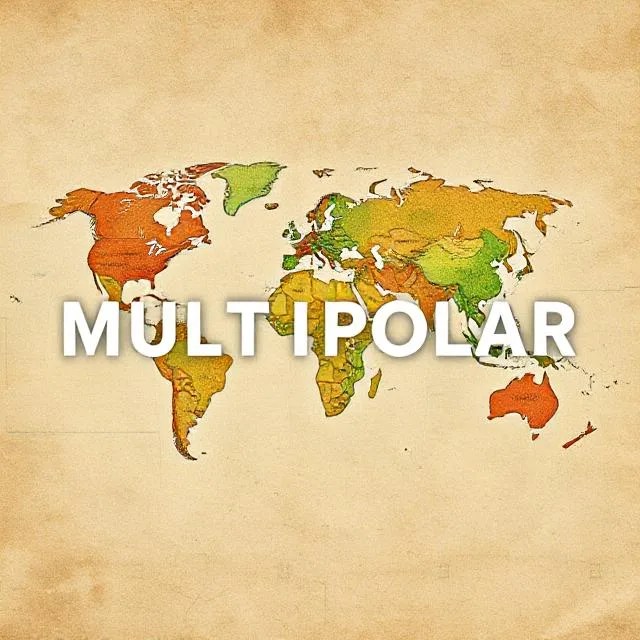
Conclusion: The Future is Multipolar—and Digital
Digital sanctions are the new face of war in a post-industrial age. They are not about guns or tariffs, but about algorithms and access. For nations seeking independence, the challenge lies not only in resisting this siege—but in reimagining the digital future beyond Silicon Valley’s reach.
From Johannesburg to Caracas, from Tehran to Harare, the message is the same: digital sovereignty is no longer optional—it is existential.
Or, in the words of Edward Said: “Empire’s reach is often most enduring when it is invisible.”
 Peiman Salehi – Political Analyst & Writer