-
The Rise of Civilizational Resistance
Author: Peiman Salehi
*Originally published on: Geopolitika.ruIntroduction: The Promise and Betrayal of Liberalism
Liberalism, once heralded as the final evolution of human political organization, promised freedom, dignity, and prosperity for all. Emerging from the Enlightenment and championing values such as individual rights, democracy, and free markets, it claimed moral superiority over all other ideologies. Yet today, we witness the crumbling of these promises. The liberal order has devolved into an apparatus of domination, waging wars in the name of peace, imposing sanctions that suffocate nations, and exporting cultural nihilism disguised as “universal values.”
The betrayal is profound: the very civilization that proclaimed itself the defender of human dignity now tramples upon it to maintain global hegemony.
Section 1: The Ethical Bankruptcy of Liberalism
Across the world, the moral contradictions of liberalism are exposed. Under the banners of “human rights” and “freedom,” liberal powers have launched devastating wars: Iraq, Afghanistan, Libya. Sanctions regimes against Iran, Venezuela, and Syria have led to untold suffering among civilians. Rather than fostering peace, liberalism has institutionalized coercion.
Internally, the liberal West faces its own decay. Inequality reaches historic levels; trust in democratic institutions collapses. The rise of surveillance states, censorship under the guise of “disinformation control,” and growing social atomization all signify a system unable to live up to its own ideals.
Philosophically, liberalism’s claim to universalism has been revealed as a mask for Western particularism. Its institutions—the UN, IMF, and World Bank—serve not humanity, but the entrenched interests of an Atlanticist oligarchy. Through mechanisms like loan conditionalities and the imposition of austerity policies, these institutions have often deepened inequality and political dependency in the Global South rather than fostering real development.
Section 2: The Rise of Civilizational Resistance
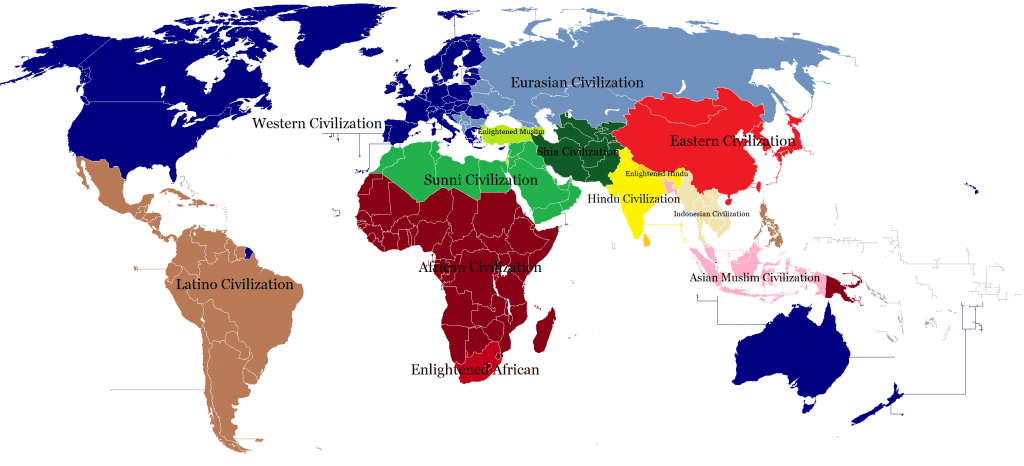
In response, a global wave of civilizational resistance is rising. This is not mere nationalism; it is a deeper affirmation of alternative ways of being, knowing, and organizing societies.
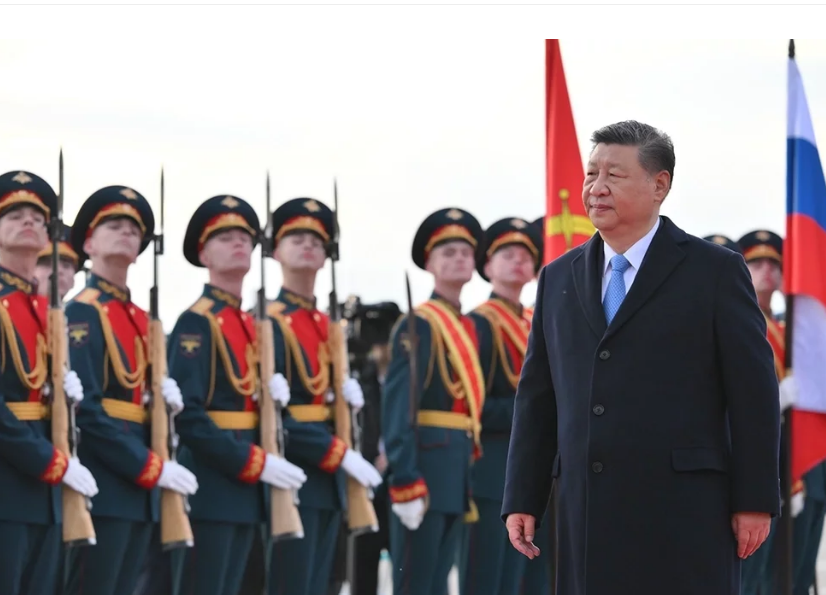
In Iran, the Islamic Republic continues to assert an Islamic model of governance rooted in spiritual sovereignty. Russia, under the rubric of Eurasianism, reclaims its Orthodox and civilizational identity. China’s Confucian socialism offers a synthesis of tradition and modernization outside Western paradigms. Meanwhile, Latin America witnesses a rebirth of Bolivarian solidarity, and Africa gradually reclaims its indigenous epistemologies.
Civilizational resistance is not a return to isolationism; it is an insistence on multipolarity—on the right of different cultures to define modernity on their own terms.
Section 3: Toward a Multipolar World
The unipolar moment is over. The emerging global order is inherently multipolar, shaped by diverse civilizational actors. While liberalism sought to erase cultural particularity in favor of homogenization, the future belongs to the plurality of civilizations.
Iran’s strategic partnerships with Russia and China, the BRICS expansion, and growing South-South cooperation illustrate that resistance is not merely defensive. It is constructive—a creative endeavor to build an alternative international system based on respect, not domination.
These civilizations, rooted in enduring spiritual and cultural traditions, possess a resilience that liberal modernity, with its ephemeral consumerist ethos, increasingly lacks.
Western liberalism, facing demographic decline, moral exhaustion, and strategic overreach, is ill-equipped to reverse this trend. The center can no longer hold.
Conclusion: The End of an Empire, the Birth of Civilizations
The moral collapse of liberalism marks not simply a political shift but a civilizational turning point. As Western hegemony falters, the opportunity arises to forge a more just, diverse, and spiritual world.
Civilizational resistance is not born of hatred but of love—love for tradition, for identity, for a future where humanity is not reduced to economic units but honored as bearers of transcendent meaning.
In this new era, the age of Empire fades. The age of civilizations dawns.
At the dawn of the age of civilizations, dialogue among cultures must replace the monologue of a crumbling civilization.
-
“When Liberalism Betrays Itself: Why U.S. Foreign Policy Can’t Deliver Real Diplomacy with Iran”
Author: Peiman Salehi
*Originally published on: Global ResearchIntroduction: Liberalism at War with Itself
The modern liberal tradition, as envisioned by thinkers like John Locke, Adam Smith, and John Stuart Mill, was supposed to champion freedom, self-determination, and non-intervention.
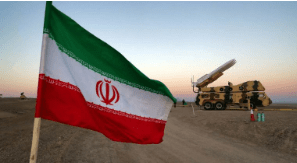
Yet U.S. foreign policy—especially toward countries like Iran—often violates these very ideals. Sanctions that deprive civilians of medicine, unilateral strikes that defy international consensus, and economic coercion that targets sovereign infrastructure reveal a contradiction: American liberalism, in practice, has become a global apparatus of control.
What happens when a liberal superpower behaves illiberally?
For Iran, the answer is clear: there can be no sustainable negotiation with a country that does not abide by its own professed values.
Liberalism as Rhetoric, Not Restraint
In Locke’s vision, the state exists to protect life, liberty, and property. When it violates those rights, citizens have a moral right to resist. Yet the United States, under the banner of democracy promotion, routinely imposes sanctions that deny life-saving goods, restrict sovereign trade, and devastate public health systems. Adam Smith’s ideal of the free market has been replaced by a system in which Washington determines which nations may participate in global commerce.
Nowhere is this clearer than in the U.S. approach to Iran. Since 2018, when Washington unilaterally exited the JCPOA, Iran has faced economic warfare under the guise of diplomacy. The sanctions have choked its banking system, deterred academic exchange, and blocked imports of critical medicine. Far from being instruments of peace, these measures resemble the very coercive imperial practices that classical liberalism once opposed.
Diplomacy without Trust: The Iran–U.S. Negotiation Trap
Iran does not reject diplomacy—but it rejects negotiations based on force and double standards. From Tehran’s perspective, America uses the nuclear file as a tactical pressure point, not as an avenue for genuine compromise. Even when dialogue resumes, new conditions emerge: Iran’s missile program, its regional alliances, its ideological commitments. These are not technical concerns—they’re attempts to reshape Iran’s strategic identity.
In this context, diplomacy becomes management—not resolution. The U.S. seeks to contain Iran, not coexist with it. Leaders in Tehran understand this dynamic. As Iranian officials have noted repeatedly, the real goal of sanctions is not to modify behavior but to erode autonomy.
This is where the epistemic divide becomes clear: Iran sees sovereignty and civilizational dignity as non-negotiable. The U.S., guided by liberal universalism, expects conformity. It’s not just a political dispute—it’s a clash of worldviews.
When Philosophy Meets Policy Failure
The problem is not that liberalism is inherently flawed, but that it has been weaponized by policymakers who reduce it to slogans. Human rights become tools of regime change. Free trade becomes an instrument of siege. Rule of law is applied selectively. The philosophical foundation of Western liberalism—pluralism, mutual respect, and limits on power—has been hollowed out.
Iran’s resistance, therefore, is not simply defiance. It is a demand that diplomacy be rooted in mutual respect, not hierarchy. It insists that engagement occur on equal terms, not through coercive leverage disguised as negotiation.
Conclusion: A New Model for International Engagement
If the United States is serious about diplomacy, it must reconcile its global actions with its philosophical roots. That means moving beyond economic punishment as a default tool of statecraft. It means respecting the sovereignty of states that operate outside the liberal consensus. And it means acknowledging that in a multipolar world, no single model of governance should be imposed as universal.
As long as liberalism is practiced selectively—applied to friends and denied to rivals—the world will see through the hypocrisy. The Iran nuclear talks will remain stalled, not because diplomacy is impossible, but because real diplomacy cannot grow in soil poisoned by mistrust.
-
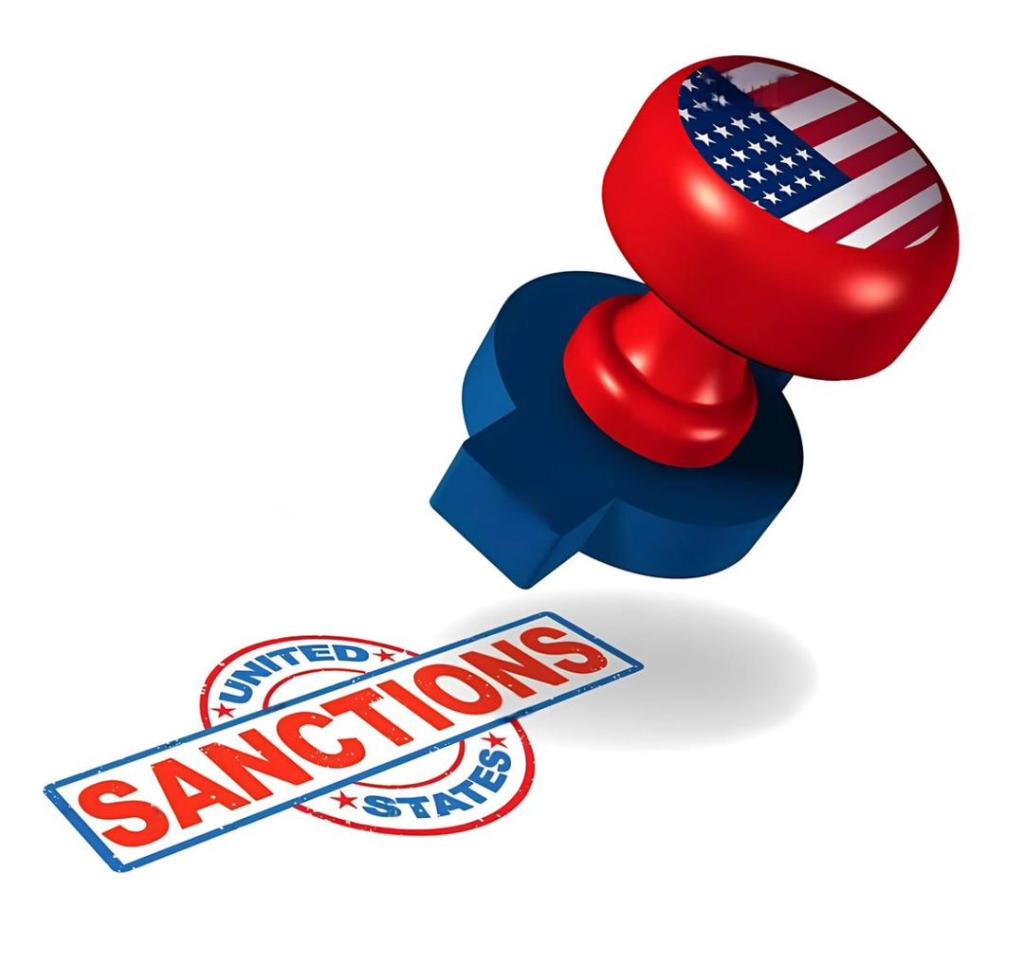
Sanctions as civilizational warfare
Author: Peiman Salehi
*Originally published on: Africa Is a CountryFramed as hard diplomacy, economic sanctions are a subtler form of warfare—one that erodes sovereignty, punishes civilians, and extends colonial power under a new name.
In today’s multipolar world, economic sanctions have become a primary tool of American foreign policy. While they are typically framed as nonviolent targeted mechanisms for influencing “rogue” regimes, a deeper inspection suggests that sanctions operate as instruments of civilizational warfare—seeking not only to alter policy but to dismantle the cultural coherence and sovereign legitimacy of states in the Global South.
What is “civilizational warfare?” By this, we mean a campaign that attacks a nation’s identity, social fabric, and place in the world order. It is a strategic and ideological tool in US foreign policy. Sanctions are wielded to declare that a targeted country is outside the bounds of the “civilized” international community and must be brought to heel—or broken. Unlike conventional military action, this method uses banks, trade embargoes, and diplomatic isolation as weapons. The aim is to erode not just a government’s capabilities but a society’s confidence, memory, and dignity as an independent civilization. This logic is disturbingly familiar from the colonial playbook: imperial powers often imposed blockades or withheld resources to “discipline” populations they deemed inferior. In modern form, economic coercion has replaced gunboats, yet the underlying goal remains the same—to force a sovereign people into submission by undermining their very civilization.
Iran’s experience under the “maximum pressure” campaign is emblematic. Since the US unilaterally withdrew from the JCPOA nuclear deal in 2018, successive sanctions have crippled not just Iran’s economy but its access to scientific collaboration, cultural exchange, and even life-saving medicines. As Richard Nephew, the architect of these sanctions, wrote: “An effective sanction is one that inflicts pain—strategically and sustainably.” The aim is not limited to regime behavior change, but includes the slow erosion of the state’s internal equilibrium and civilizational continuity. Indeed, Iran’s rich cultural and scientific life became a target; when even cancer medications and academic journals are cut off, it feels like an assault on Iran’s very identity and resilience as a nation.
Venezuela presents a parallel case. US and EU sanctions have deepened the country’s humanitarian crisis, curbing its ability to import food and medical supplies and worsening hyperinflation. The United Nations special rapporteur on the negative impact of unilateral coercive measures, Alena Douhan, noted in her 2021 and 2023 reports that these sanctions had “exacerbated pre-existing calamities” and violated the Venezuelan people’s right to health and development. This is not diplomacy—it is siege by economic means. The Venezuelan economy, once buoyed by vast oil reserves, has been asphyxiated, contributing to mass migration and the collapse of social programs. In effect, an entire society is being strangled to undermine a political project that Washington opposes.
In Syria, the US Caesar Act of 2019 intensified collective suffering by targeting key sectors essential to postwar reconstruction. The UN Office for the Coordination of Humanitarian Affairs (OCHA) reported in 2023 that the sanctions “continue to undermine civilian infrastructure and obstruct humanitarian operations.” By paralyzing Syria’s recovery process, the sanctions prolong instability and misery well beyond the end of open conflict. Rebuilding schools, hospitals, and homes becomes nearly impossible when any transaction could violate sanctions. For Syrian civilians—many already traumatized by a decade of war—this economic asphyxiation ensures the hardship continues in peace time. It is a grim extension of war by other means, hindering a proud nation from healing and rebuilding its life.
Zimbabwe’s experience adds another dimension to this global pattern. After Zimbabwe’s government reclaimed white-owned farms in a bold land reform around 2000, the US and EU imposed sanctions ostensibly targeting the political elite of President Robert Mugabe’s regime. In reality, these measures plunged Zimbabwe’s economy into a tailspin—industries in cities like Bulawayo shut down, hospitals and schools ran short of basic supplies, and the national currency collapsed. For over two decades, ordinary Zimbabweans have borne the brunt of these sanctions, which regional African leaders have decried as “illegal” and a violation of the basic human rights of ordinary people. This was punishment beyond a policy dispute: It sent a message that defying Western economic interests—in this case, upsetting colonial-era land ownership patterns—would result in crippling isolation. As with Iran or Venezuela, the sanctions in Zimbabwe undermined the country’s ability to sustain its civilizational gains (from education to infrastructure) after independence, effectively waging an economic war to negate its postcolonial sovereignty.
Taken together, these cases reveal a strategic logic: Sanctions are not neutral instruments. They are neocolonial in function and intent. Instead of deploying troops, powerful nations deploy spreadsheets—weaponizing access to global finance, trade, and institutional legitimacy. The goal is not just containment of the targeted state, but the re-engineering of that nation’s trajectory in a way that aligns with Western preferences. In essence, the sanctioning power arrogates to itself the right to decide how these societies should evolve. Whether the stated justification is nuclear nonproliferation, “democracy promotion,” or human rights, the common denominator is an attempt to either remake the targeted society in the West’s image or grind it down through isolation.
Such measures also erode international norms. Most of these unilateral sanctions lack UN Security Council approval and violate principles enshrined in international law, including nonintervention and sovereign equality. Even European officials have grown uneasy with the overreach. In a speech to the European Parliament in February 2023, EU foreign policy chief Josep Borrell warned that “sanctions without precision become ethically indefensible.” Meanwhile, leaders in the Global South openly reject the legitimacy of this coercion. The Southern African Development Community has condemned the sanctions on Zimbabwe as “illegal” and called for their immediate and unconditional removal, noting that they violate the basic rights of Zimbabweans. At the United Nations, year after year, an overwhelming majority of member states vote to condemn the US embargo against Cuba—183 countries did so in one resolution—calling it a “cruel and illegal” siege. Such global dissent highlights how far unilateral sanctions stray from the multilateral principles that ostensibly govern the world order. A system in which a powerful nation can economically besiege another at will is a recipe for cynicism and mistrust in international relations.
Most troublingly, sanctions disproportionately harm ordinary people. A 2022 report by Human Rights Watch noted that US sanctions had significantly impeded access to insulin and cancer treatment in Iran. In Venezuela, child malnutrition rates soared in part due to the financial blockades preventing food imports. Syria’s families, too, have faced fuel shortages and aid bottlenecks due to sanctions, even in the wake of natural disasters. This collateral damage is not accidental—it is structurally embedded. The architects of sanctions understand that by crippling a nation’s economy, they inevitably inflict suffering on its civilians. In fact, they bank on that suffering to foment unrest or weaken the population’s support for their leaders. It is society’s most vulnerable—children, the sick, the elderly—who pay the price for these grand geopolitical maneuvers.
If war is politics by other means, then sanctions are warfare by subtler yet equally destructive means. They target memory, identity, dignity—components of what might be called a nation’s civilizational infrastructure. Over time, the academic knowledge eroded, the cultural exchanges foregone, and the lives lost to medicine shortages all chip away at the heritage and cohesion that define a society. Sanctions punish not just policy but presence—sending the signal that a people’s very existence as a sovereign culture is intolerable unless it conforms. And for the Global South, they represent the persistence of a long colonial logic: that sovereignty is negotiable and dignity conditional. The rhetoric may have shifted from the overt racism of colonial times to the technocratic language of “rules-based order,” but the underlying power dynamic—who gets to live with dignity and who is made to suffer—remains uncomfortably similar.
As new powers emerge and the world moves toward a more pluralistic order, it is essential to question the moral and strategic legitimacy of sanctions. A system that normalizes collective punishment under the guise of diplomacy is one that deepens global inequality and delegitimizes global governance itself. The notion that one civilization can bludgeon another into compliance belongs to a bygone era. In the 21st century, such economic warfare does not stabilize the world—it only fans the flames of resentment and resistance. The time has come to dismantle this civilizational siege warfare, before it cripples the very international order its proponents claim to defend.
 Peiman Salehi – Political Analyst & Writer