-
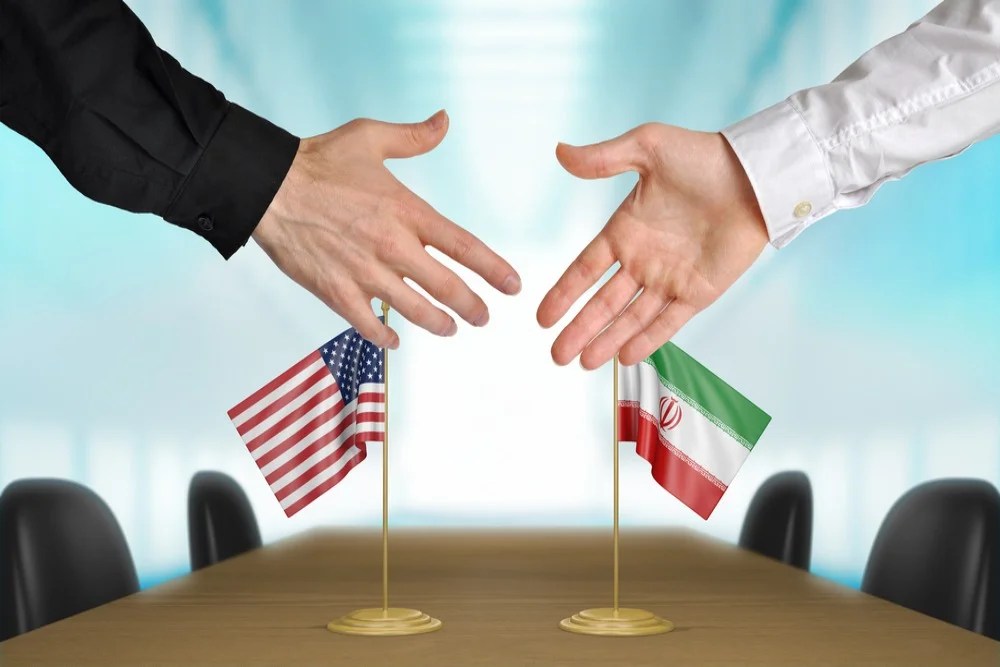
Diplomacy Under Siege: How Turkey And Israel Undermine Iran–US De-escalation
Author: Peiman Salehi*
*Originally published on: Oriental ReviewA Moment of Strategic Opportunity
The fragile path toward an Iran–US agreement is increasingly crowded with spoilers—and not all of them sit in Washington. As backchannel diplomacy intensifies and public rhetoric softens, two regional actors, Turkey and Israel, are strategically intervening to prevent a meaningful breakthrough. Their motives may differ, but the outcome is the same: prolonging hostility between Tehran and Washington.
Since early 2025, there have been cautious signs that Washington and Tehran may explore a new framework for limited sanctions relief in exchange for regional de-escalation. While US domestic politics remain polarized, backdoor efforts by European mediators have yielded informal talks. Iran’s recent diplomatic outreach to Russia, including a high-level message from Supreme Leader Khamenei to President Putin, suggests Tehran is positioning itself for multipolar leverage. Yet this very initiative is seen by some regional powers as a threat.
Israel’s Campaign of Preemption
Israel’s opposition to Iran–US détente is neither secret nor subtle. Through lobbying entities like AIPAC and a steady flow of security briefings to US Congress, Tel Aviv seeks to frame any opening toward Tehran as appeasement of a “rogue regime.” In April 2025, AIPAC warned against any US concessions, stating: “Iran cannot be rewarded for destabilization.” Meanwhile, reports have surfaced of Israeli intelligence activities aimed at sabotaging Iran’s nuclear facilities and spreading cyber disinformation on social media.
These moves are part of a broader narrative war: to portray Iran as an unchangeable threat and thereby lock Washington into a permanent containment strategy. While public discourse emphasizes “non-proliferation,” the underlying goal is to prevent Iran from reclaiming any degree of international legitimacy.Turkey’s Shadow Diplomacy
While Israel acts overtly, Turkey’s interference is more covert and opportunistic.
Presenting itself as both a NATO member and regional stabilizer, Ankara has worked to insert itself into the Iran–US equation—positioning itself as a go-between while quietly leveraging the tension to bolster its regional weight.
While Turkey has not played a formal mediating role between Tehran and Washington—as Oman currently does—it has sought to project relevance by aligning itself rhetorically with agreement while simultaneously amplifying anti-Iran narratives through media and regional alliances. Turkish outlets, often aligned with state interests, have painted Iran’s regional allies as “spoilers of peace,” subtly undermining Tehran’s diplomatic image while preserving Ankara’s leverage with both NATO and the Pesrian Gulf.
The Bigger Game: Controlling the Narrative
What unites Israel and Turkey—despite their divergent ideologies—is a desire to shape the regional narrative in a way that minimizes Iran’s soft power. For Israel, Iran’s resistance discourse challenges the Zionist framework. For Turkey, Iran’s ideological and strategic consistency limits Ankara’s ability to lead the Sunni bloc.
This competition is no longer confined to military or economic dimensions; it now encompasses media, diplomacy, and soft influence. The growing recognition of this dynamic has led Iranian strategists to speak of a “narrative siege” around the country—a siege that requires counter-strategies rooted in civilizational confidence and information sovereignty.
Conclusion: Dialogue at a Crossroads
As Iran and the US inch closer toward re-engagement, the region’s geopolitical terrain remains highly complex. Israel and Turkey, each for their own reasons, are working to block or dilute this process. Recognizing this three-way dynamic is crucial for both analysts and policymakers.
What is at stake is more than a nuclear deal. It is the future of Iran’s international posture: whether it remains boxed in by regional adversaries and their Western allies, or whether it can navigate its way toward a renewed role in shaping a post-Western global order.
The siege on diplomacy is real – but so too is the opportunity for peace it seeks to destroy.
-
Why The Iran–U.S. Talks Are Destined To Fail: An Iranian Perspective
Author: Peiman Salehi*
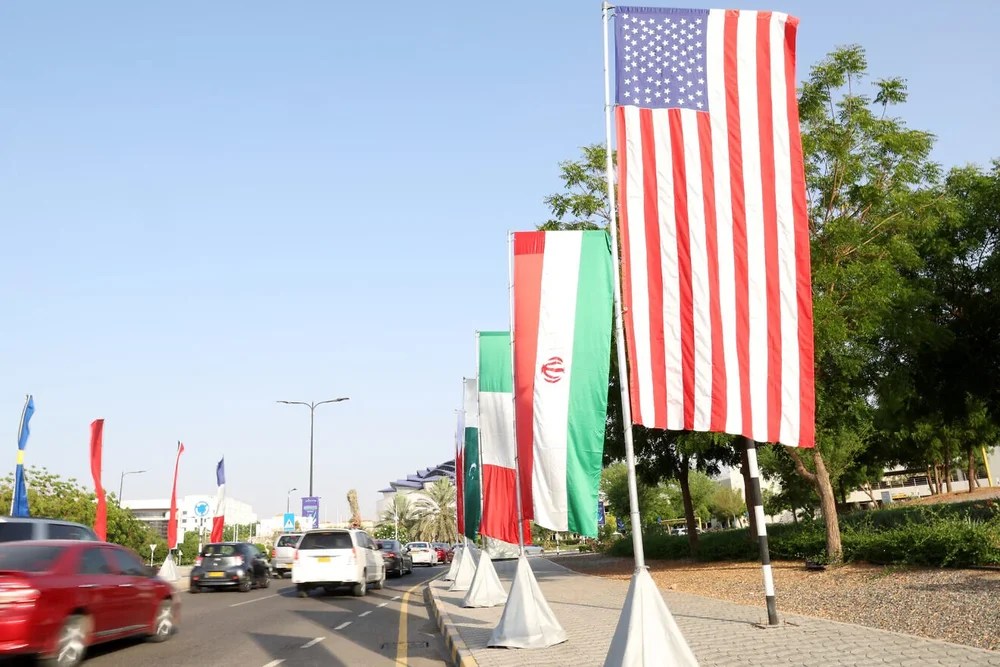
*Originally published on: Oriental ReviewThe flags of the United States and Iran hang on the road leading to the Muscat International Book Fair on April 25, 2025.
Despite repeated rounds of negotiations, hopes for a successful agreement between Iran and the United States remain dim. From Tehran’s perspective, the core obstacle is not technical—it is epistemological.
The enduring standoff reflects a civilizational dissonance: a secular liberal internationalism on one side, and a theologically-rooted sovereignty on the other—each with incompatible views on law, legitimacy, and the role of religion in statehood.
For the Islamic Republic, the United States is not a trustworthy actor. This is not merely a product of past grievances but a conclusion drawn from ongoing contradictions in Washington’s behavior. Just three days ago, the U.S. Treasury imposed yet another round of sanctions on Iran, this time citing the country’s sale of liquefied petroleum gas. These actions signal to Iranian policymakers that America’s strategy is not sincere diplomacy, but calibrated containment—
part of a broader civilizational strategy aimed at dismantling ideological alternatives to Western liberal hegemony.Tehran is especially wary of what it perceives as the shifting goalposts of U.S. negotiation tactics. The initial justification for sanctions and talks was Iran’s nuclear program. However, there is a strong belief within Iranian leadership that once progress is made on the nuclear front, Washington will escalate demands—raising issues such as Iran’s regional alliances and its missile capabilities. These matters are regarded as sovereign imperatives and strategic red lines.
Iranian officials have consistently emphasized that its support for regional resistance groups is a matter of principle and deterrence, not aggression.
Negotiations are often shaped by narrative frameworks—where one side seeks legitimacy and the other projects deviance.
Washington’s framing of Iran as a perpetual threat feeds a broader containment doctrine. While the U.S. and its allies accuse Iran of financing groups such as Hezbollah or Hamas, Iranian authorities deny such characterizations, describing their position as moral solidarity with movements resisting occupation and foreign intervention. In this view, the U.S. narrative deliberately misconstrues regional politics to justify broader efforts at isolating Iran.
Moreover, from Tehran’s vantage point, the American fear is not limited to Iran’s nuclear potential but extends to its ideological influence. Policymakers in Washington worry that lifting sanctions and allowing economic normalization could inadvertently empower Iran’s model of governance—an independent state rooted in Islamic values, civilizational confidence, and regional connectivity.
Such a model stands in stark contrast to the U.S.-backed order in West Asia.
In a world slowly gravitating toward multipolarity, Iran positions itself as a node of resistance. This defiance unsettles Washington—not because of Iran’s capacity, but because it challenges the liberal order’s claim to universality.Thus, the question arises: if the U.S. deems Iran’s ideology incompatible with its own vision of order, why return to the negotiation table? For many in Tehran, the answer is clear—Washington seeks neither reconciliation nor resolution. The nuclear file is simply a pretext. The real goal is to control Iran’s rise, delay its strategic projects, and force a recalibration of its behavior through prolonged dialogue and limited economic relief.
This is why some Iranian analysts argue that negotiations are not designed to succeed. Rather, they serve to manage crises, shape public perception, and extend the status quo—one in which Iran remains sanctioned but engaged, pressured yet contained.
From this vantage point, the negotiations are a game of strategic optics. The U.S. wants to appear open to diplomacy while preserving leverage. Iran, on the other hand, views dignity and sovereignty as non-negotiable.
Without mutual trust and a genuine acknowledgment of Iran’s regional and ideological identity, the prospects for a lasting agreement remain slim.
If diplomacy continues to be framed within Western expectations of compliance and ideological surrender, Iran may look Eastward and Southward—not just for trade, but for a reimagined global engagement.
As long as Washington insists on engaging Iran solely through the lens of coercion, not respect, diplomacy will remain under siege.
-
Iran–Russia Strategic Convergence And The Architecture Of A Post-Western World
Author: Peiman Salehi*
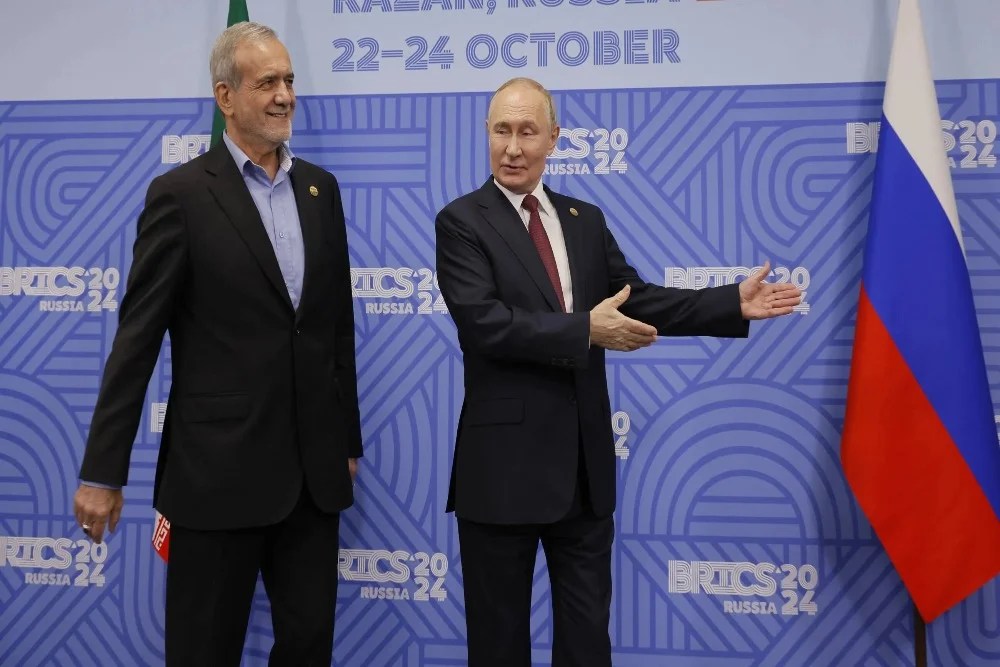
*Originally published on: Oriental ReviewRussian President Vladimir Putin meets with Iranian President Masoud Pezeshkian on the sidelines of the BRICS summit in Kazan on 23 October 2024
Introduction
Over the past few years, the strategic landscape of Eurasia has undergone a quiet but consequential shift. Iran and Russia—two countries long encumbered by Western sanctions, geopolitical isolation, and ideological marginalization—have moved decisively toward a comprehensive partnership that transcends transactional convenience. From energy deals and defense cooperation to financial integration and shared infrastructure, the Iran–Russia axis is evolving into a cornerstone of what both nations herald as a “multipolar” global order.
This realignment is not merely reactive; it is deeply rooted in a shared worldview that challenges the foundational assumptions of U.S.-led global hegemony. At its core, the Tehran–Moscow partnership represents an attempt to reorder international relations on the basis of sovereignty, regionalism, and strategic pluralism. The significance of this pivot lies not only in its bilateral implications but in its symbolic resonance for a growing cohort of states seeking alternatives to the Western-centric order.
Shared Adversity, Shared Strategy
The foremost driver of Iran–Russia convergence is their mutual experience under Western sanctions. Russia, especially after its 2022 intervention in Ukraine, has become the world’s most sanctioned state, a status Iran has long held. Both see sanctions not as tools of law, but as instruments of geopolitical coercion. In this light, their cooperation emerges from a survivalist logic—building parallel financial systems, alternative trade routes, and sovereign defense capacities insulated from Western disruption.
In 2024, over 96% of Iran–Russia bilateral trade was settled in local currencies—rials and rubles—signaling a decisive departure from dollar dependence. Their financial systems have been directly linked, bypassing SWIFT and enabling seamless cross-border transactions. Such developments are more than logistical workarounds; they are the blueprints of a post-dollar order.
Infrastructure of Multipolarity
One of the most tangible manifestations of this axis is the joint development of the International North–South Transport Corridor (INSTC), a trade route that bypasses the Suez Canal and connects India, Iran, Russia, and eventually Europe. The $1.6 billion Rasht–Astara railway, now under construction, is a key segment of this corridor. This initiative not only enhances regional connectivity but also rewires global trade logistics to reduce reliance on Western-dominated chokepoints.
Equally notable is Russia’s investment in Iran’s energy sector. The $40 billion Gazprom–NIOC memorandum envisions shared development of Iranian gas fields, oil production, and LNG infrastructure. This energy cooperation aligns with Moscow and Tehran’s mutual interest in undermining Western energy monopolies and recalibrating supply lines toward the East.
Importantly, in Iran, strategic actors beyond the executive branch have also contributed to sustaining this trajectory. Under the leadership of Speaker Mohammad Baqer Qalibaf, the Iranian Parliament (Majles) has taken proactive steps to deepen legislative diplomacy with Russia. Parliamentary committees have advanced discussions with the State Duma on cross-border transit, energy coordination, and financial integration—providing institutional continuity and political endorsement for long-term bilateral frameworks.
Security Cooperation Without a Formal Alliance
In the military domain, Iran has emerged as a critical supplier of drones to Russia during the Ukraine conflict, reversing traditional arms flow patterns. Joint production of UAVs on Russian territory and discussions about advanced fighter jet sales illustrate how both nations are transcending past mistrust. Yet, their strategic cooperation avoids entanglement in mutual defense obligations—no Article 5 equivalent exists between them.
Instead, they have embraced what could be called “asymmetric strategic alignment”: intelligence sharing, joint exercises, and coordinated messaging in regional theaters like Syria and the South Caucasus. This loose security partnership is flexible, allowing each party to retain autonomy while enhancing deterrence against common adversaries.
A New Geopolitical Grammar
Iran and Russia have also embedded their partnership within broader Eurasian institutions. Tehran’s full accession to the Shanghai Cooperation Organization (SCO) and BRICS—both with Moscow’s backing—underscores their shared commitment to multilateral platforms that operate outside the normative framework of the West. These institutions offer diplomatic ballast and economic alternatives to Western-dominated global governance bodies.
Moreover, both countries articulate a coherent ideological narrative that frames Western interventionism as hypocritical and destabilizing. In their view, liberal democratic norms often serve as pretexts for regime change and neocolonial influence. Their counter-narrative emphasizes cultural sovereignty, non-intervention, and regional dialogue—a lexicon increasingly attractive to many in the Global South.
Challenges to Durability
Yet, this strategic alignment is not without friction. Iran and Russia remain competitors in global energy markets and may diverge in regional priorities, especially if geopolitical conditions change. The asymmetry in their power profiles—Russia as a global actor, Iran as a regional one—could lead to strategic recalibration.
Nonetheless, the institutionalization of their partnership—formal treaties, interlinked banking systems, military dialogues, and multilateral coordination—suggests a level of permanence that transcends past oscillations. As long as the United States maintains a confrontational stance toward both countries, their incentives to deepen cooperation will remain intact.
Conclusion: A Catalyst for a New Order
What we are witnessing is not merely the strengthening of a bilateral relationship, but the crystallization of a broader challenge to the unipolar moment. The Iran–Russia entente may not dismantle the Western order, but it offers a viable alternative for states seeking strategic autonomy and multipolar equilibrium. It is a prototype for how non-Western actors can build resilience, pursue self-defined development, and defy economic and political coercion.
For policymakers in the West, the implications are profound. Ignoring this realignment risks underestimating the centrifugal forces reshaping global governance. The Iran–Russia partnership is both a symptom and a driver of a world in transition—a world in which power, values, and institutions are no longer the exclusive domain of the Atlantic alliance.
As the geopolitical pendulum swings eastward, Tehran and Moscow are not merely reacting to Western pressure—they are rewriting the rules of engagement in a post-Western era.
 Peiman Salehi – Political Analyst & Writer