-
Realignment Or Illusion? America’s Selective Concessions To Russia Amid Strategic Contest With China
Author: Peiman Salehi*
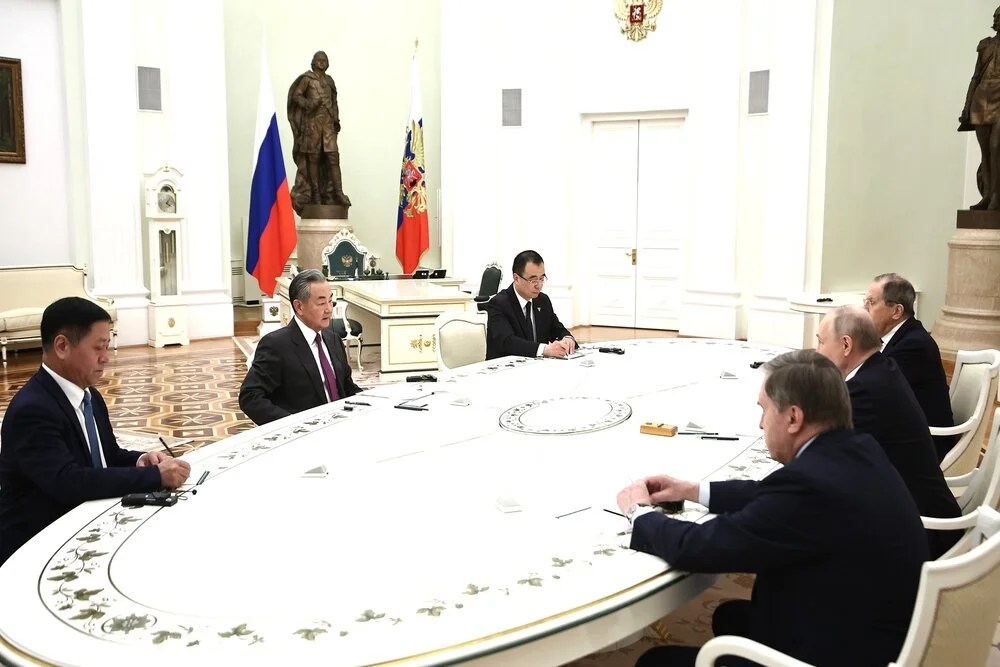
*Originally published on: Oriental ReviewVladimir Putin met with Wang Yi, a member of the Political Bureau of the Central Committee of the Communist Party of China, Director of the Office of the Central Commission for Foreign Affairs, and Minister of Foreign Affairs, in the Kremlin.
The recent visit of Chinese Foreign Minister Wang Yi to Moscow, culminating in a high-profile meeting with President Vladimir Putin, is more than a symbolic gesture of deepening Sino-Russian ties. It marks a broader realignment—or perhaps the illusion of one—within the international system, where the United States appears increasingly unable to simultaneously confront Iran, Russia, and China. Instead, Washington seems to be choosing its battles, recalibrating its priorities in a world where strategic overload is no longer sustainable.
A close reading of U.S. foreign policy behavior in recent months suggests a deliberate shift. While the Trump administration publicly reaffirms its commitment to Ukraine, behind closed doors, a softening stance toward Moscow is palpable. The language has grown less confrontational. There are whispers—backed by diplomatic overtures—that Washington may be seeking a geopolitical de-escalation with Russia, potentially accepting a “frozen conflict” in Ukraine, as long as it allows the U.S. to divert resources and attention toward its primary strategic competitor: China.
Unlike Russia, China poses a systemic, long-term threat to U.S. global primacy—not only in military or diplomatic terms, but also economically and technologically. From export controls on advanced semiconductors to restrictions on Huawei and TikTok, Washington’s posture toward Beijing remains confrontational and enduring. This rivalry is not a matter of short-term tactical disagreement but a structural clash of hegemonic visions. China’s recent coordination with Moscow, especially through forums like BRICS+ and the Shanghai Cooperation Organization, only reinforces Washington’s anxiety over the consolidation of an Eastern strategic bloc.
Amid this reshuffling of great-power dynamics, Iran occupies a distinct and immovable position. As I argued in a previous article, the conflict between Iran and the United States is not merely about sanctions or centrifuges—it is philosophical and civilizational in nature. While the U.S. may be flexible with Moscow and calculating with Beijing, its posture toward Iran remains rigid and absolutist. The American strategic imagination cannot accommodate a sovereign, ideologically self-defined Iran that resists assimilation into the Western liberal order. That is why, despite multiple mediation efforts—including by Russia—no durable agreement has been reached. The impasse is not diplomatic; it is metaphysical.
In this context, the U.S. appears to be offering selective concessions. It is testing the idea that by neutralizing the “manageable adversary” (Russia), it can concentrate its energies on the “strategic peer competitor” (China), while continuing to contain the “irreconcilable enemy” (Iran). Yet this triage-like strategy underestimates the level of convergence between Moscow, Beijing, and Tehran. The idea that Russia can be peeled away from China or that Iran can be isolated from both is a relic of a bygone unipolar logic.
Wang Yi’s visit to Moscow sends a different message: that the architecture of Eurasian resistance is hardening, not fragmenting. And the West, if it continues to misread this geopolitical symphony, may soon find itself responding to a world no longer composed in its own key.
-
A Dialogue Doomed To Diverge? The Philosophical Limits Of The U.S.-Iran Nuclear Talks
Author: Peiman Salehi*
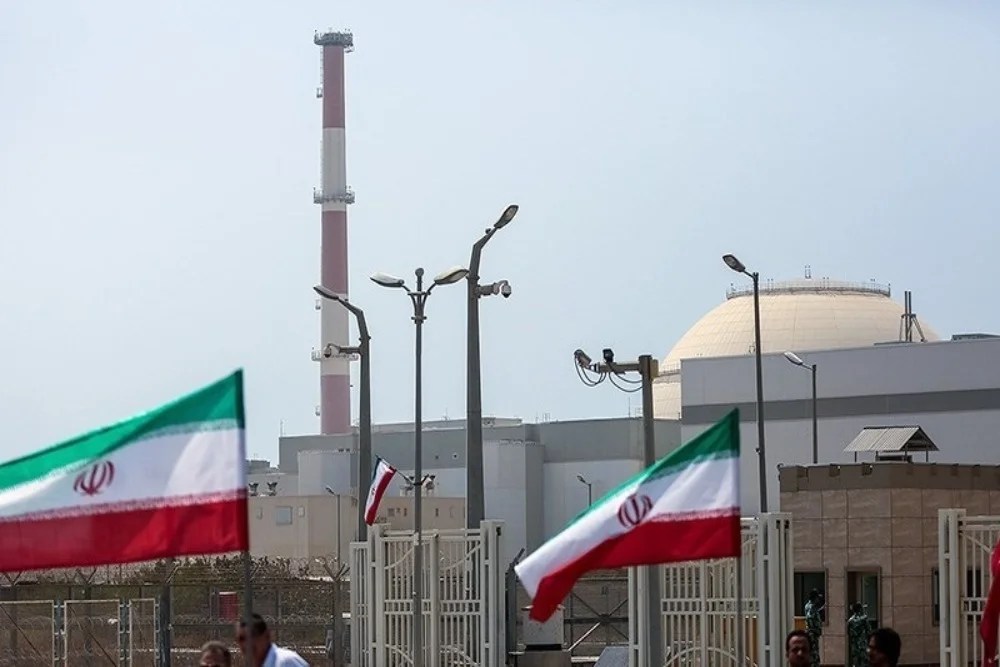
*Originally published on: Oriental ReviewAs Iran and the United States prepare for a new round of indirect nuclear negotiations in Muscat on April 12, 2025, much of the media coverage remains focused on tactical concerns—sanctions, uranium enrichment levels, or the potential for a temporary deal. But what remains obscured beneath these layers of diplomacy is the philosophical distance that continues to separate Tehran and Washington. This is not a dispute between two governments over technical details; it is a clash between two worldviews that fundamentally resist convergence.
Since the Islamic Revolution of 1979, Iran has positioned itself not just as a regional power, but as a civilizational challenge to the liberal order. It presents an alternative vision rooted in Islamic political thought—one that rejects the moral relativism, secular individualism, and imperial hierarchies embedded in the Western model. The United States, in turn, does not view Iran merely as a geopolitical actor, but as a stubborn ideological anomaly—resistant to assimilation and immune to pressure.
This is precisely why, even after years of backchannel diplomacy, mediation by third parties, and occasional tactical flexibility, the U.S.-Iran dialogue remains trapped in a metaphysical impasse. The liberal imagination that animates U.S. foreign policy cannot fully accept the legitimacy of an Islamic Republic that defines sovereignty not through Western democratic norms, but through religious authenticity and resistance.
To be clear, Tehran’s approach to negotiations is not maximalist in the conventional sense. It is principled. Iran can compromise on timelines, technical frameworks, or inspection mechanisms—but not on its identity. Washington, however, continues to treat identity as a variable rather than a constant, hoping that economic pressure or incremental engagement will eventually “normalize” Iran into the liberal system.
In this context, the upcoming Muscat talks are unlikely to yield a breakthrough—unless the United States begins to recognize that the disagreement is not just about centrifuges or sanctions relief, but about civilizational autonomy. A short-term deal may still be possible, but a durable agreement will require something far more radical: a transformation in the American strategic imagination.
-
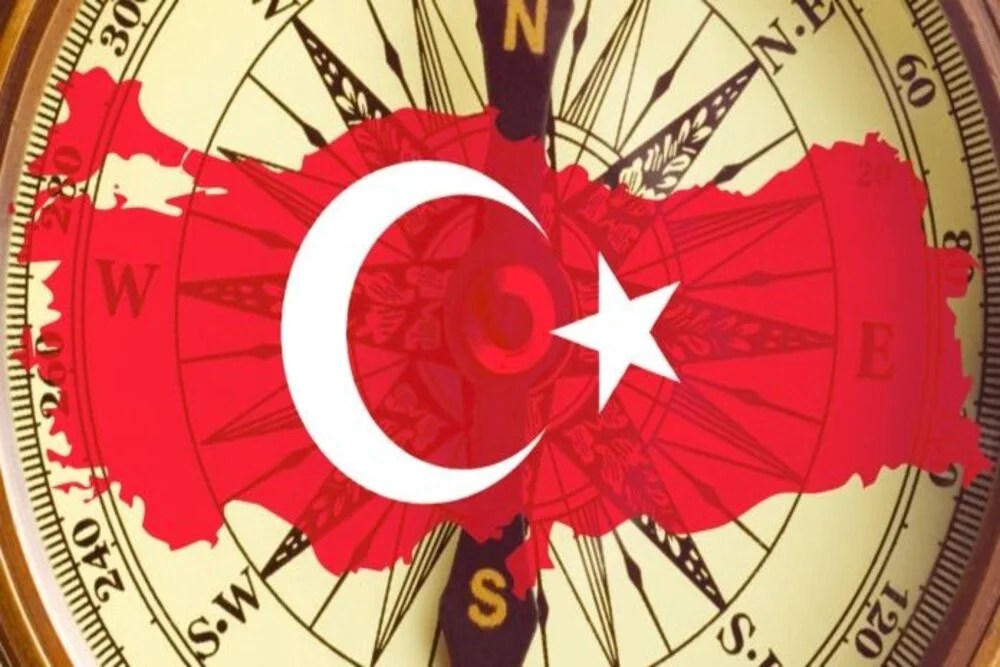
The Crisis Of Civilizational Identity In Turkish Foreign Policy
Author: Peiman Salehi*
*Originally published on: Oriental ReviewTurkey today presents itself as a rising regional power, yet its foreign conduct exposes a deeper structural duality—perpetually oscillating between East and West, Islam and secular nationalism, diplomacy and neo-imperial ambition. Despite its NATO membership, Ankara has refused to fully align with Western sanctions on Russia and instead expanded strategic ties with Moscow, including arms deals and energy cooperation. This is not merely a case of pragmatic hedging, but the reflection of a deeper geopolitical vision shaped by neo-Ottoman nostalgia.
Turkish foreign policy under Erdoğan has increasingly assumed the undertone of a neo-Ottoman civilizational project—an effort to position Turkey as the natural leader of the Muslim world. Yet this ambition inevitably brings it into ideological tension with the Islamic Republic of Iran. While Turkey retains a secular republican foundation—albeit with an Islamic-populist veneer—Iran represents a fundamentally different model rooted in political Islam, guided by Shiite clerical authority and metaphysical legitimacy. Unlike Turkey, Iran presents the only theologically grounded alternative to the Western liberal order—one that challenges not only its rhetoric but also its structural norms.
This divergence has manifested across various regional arenas. In Syria, following the weakening of the Assad regime and the ascent of Sunni militant factions, Turkey positioned itself as the dominant actor in shaping the post-Assad order—frequently in opposition to Iran’s support for the Syrian state. In the South Caucasus, Turkey’s military and political backing of Azerbaijan during the Nagorno-Karabakh conflict similarly reflected a broader rivalry with Iran for regional influence. While Ankara emphasizes Turkic solidarity and national interest, Tehran sees the region through a civilizational-religious lens rooted in Shiite identity and strategic resistance.
One of the most telling contradictions in Ankara’s foreign policy lies in its approach to Palestine. President Erdoğan has long portrayed himself as a champion of Gaza and a critic of Israeli policies. Yet behind this posture, Ankara has maintained robust diplomatic and economic ties with Tel Aviv. This dual-track policy has undermined Turkey’s credibility among resistance movements and cast doubt on its legitimacy as a pan-Islamic leader. It also reveals the underlying dilemma: whether Turkey’s leadership aspirations are truly ideological or simply strategic.
Notably, during the failed coup attempt in Turkey in 2016, it was Iran—rather than most of Turkey’s Western allies—that swiftly expressed diplomatic support for Erdoğan’s government. Despite this, deep ideological distrust has persisted, particularly given Ankara’s enduring suspicion of Shiite influence and its discomfort with Iran’s clerically-based political model.
At its core, Turkey finds itself caught in an identity crisis: seeking legitimacy from the West, leadership in the East, and autonomy in its civilizational narrative. This strategic ambiguity is not merely tactical maneuvering—it reflects unresolved philosophical tensions about sovereignty, legitimacy, and the meaning of Islamic leadership in a post-Western world. Beneath the rhetoric of unity lies a persistent contradiction between nationalist secularism and religious symbolism, between imperial nostalgia and geopolitical pragmatism.
Understanding Turkey’s true position in the emerging multipolar order requires moving beyond surface-level analyses and confronting the deeper civilizational contradictions embedded in its foreign policy imagination—contradictions that may ultimately limit Turkey’s ability to become a coherent pole in the multipolar world.
 Peiman Salehi – Political Analyst & Writer