-
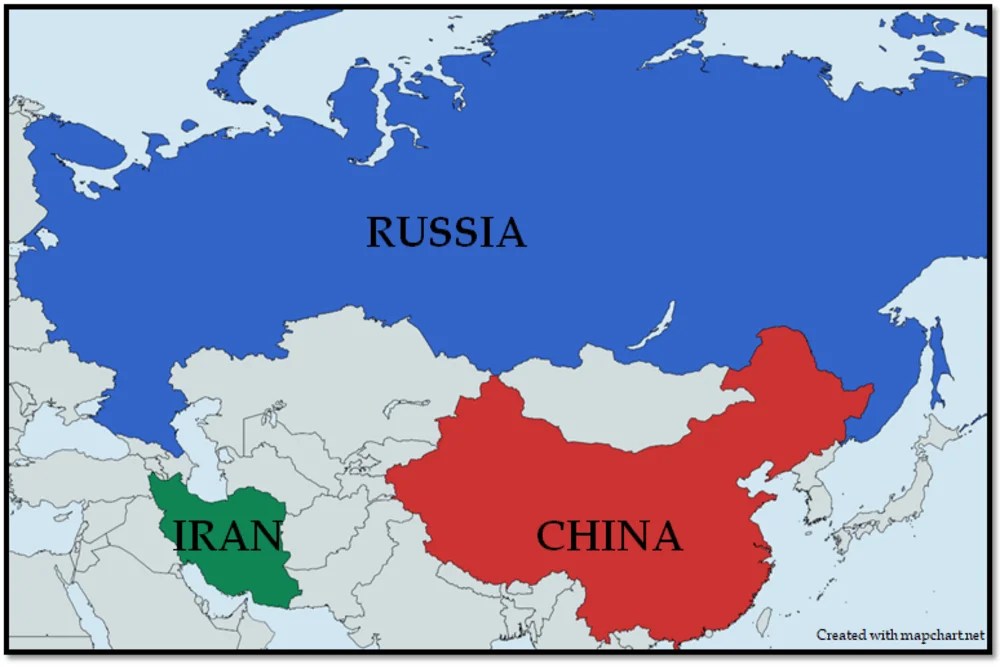
The Return Of Politics: How The Tehran–Moscow–Beijing Axis Signals A New World Order
Author: Peiman Salehi*
*Originally published on: Oriental ReviewFollowing the collapse of the Soviet Union, Western liberalism proclaimed itself as the end of history—an ideology that, through the language of universal human rights, free markets, and liberal democracy, promised a stable and global order. Yet, once again, history has proven to be far from over. What Francis Fukuyama described in the 1990s—drawing on Hegel and Kojève—as the final ideological evolution of mankind is now unraveling in the face of the return of “the political,” just as Carl Schmitt had warned.
As Fukuyama famously wrote:
“What we may be witnessing is not just the end of the Cold War, but the end of history as such: that is, the end point of mankind’s ideological evolution.”
In contrast, Schmitt insisted that politics can never be fully eradicated, noting:
“The specific political distinction to which political actions and motives can be reduced is that between friend and enemy.”
The alliance between Iran, Russia, and China cannot be reduced to a tactical or purely geopolitical convergence. It reflects the emergence of a logical alternative to the liberal order—an order whose legitimacy has been severely challenged by the war in Ukraine, the stalemate in Gaza, and the collapse of trust in Western multilateral structures. Despite their differences in civilization, language, and ideology, these three states converge on one critical point: the redefinition of sovereignty in opposition to unrestrained globalization and the Western desire for cultural standardization.
In Western political thought—from Machiavelli to Schmitt—politics has always been defined through boundaries; through the distinction between friend and enemy, self and other. Modern liberalism attempted to erase those boundaries and transform human beings into global subjects, stripped of cultural, religious, or national belonging. Yet resistance to this project—especially from powers with imperial legacies and civilizational narratives—has brought about the revival of the political.
Chantal Mouffe, one of the most prominent critics of liberal consensus politics, argued that:
“Modern liberalism tries to depoliticize human relations by replacing the antagonism of friend/enemy with economic competition and moral universalism.”
Similarly, John Gray wrote in False Dawn that:
“The project of globalization is ultimately a project of cultural homogenization.”
Today, China—drawing on Confucian heritage and a centralized authoritarian model; Russia—reviving Eurasianist thought and conservative orthodoxy; and Iran—with its revolutionary discourse and Islamic identity—are collectively articulating a new axis of meaning in global politics.
This emergent order, implicitly shaped by the Tehran-Moscow-Beijing triangle, is defined by multipolarity, sovereign reassertion, and a rejection of liberal universalism. In this new order, “difference” is not a threat but a value. Politics is no longer reduced to technocracy or economics; it regains its historical, cultural, and philosophical weight. If the liberal order sought the “end of politics,” this alternative order marks the “return of politics”—a politics rooted in history, identity, and meaning.
As Schmitt warned,
“A world which has been depoliticized is a world without identity or meaning.”
Of course, this alliance is not without internal contradictions—cultural divergences, conflicting national interests, and the lack of integrative institutions may pose limits to its cohesion. But these very frictions may themselves signal the end of the Western order: an order where unity was only possible through sameness, while in the new order, unity arises from difference.
Raymond Aron, reflecting on international politics, reminds us that:
“International politics is not ruled by harmony, but by the management of diversity and conflict.”
The rise of the Tehran-Moscow-Beijing bloc should not be seen merely as a reaction to Western pressure, but rather as an attempt to articulate a new horizon for political order—one where concepts like justice, sovereignty, independence, and identity return to the heart of global governance.
And perhaps it is in light of this transformation that we must return to Schmitt’s essential question:
“Who decides?”
If a new world order is indeed emerging, its answer may lie not in global institutions, but in the historical decisions of actors who no longer accept being consumers of Western-designed order—but instead aspire to become its architects.
-
Liberalism Or A Tool Of Imperialism? The West’s Contradictions In Promoting Global Human Rights
Author: Peiman Salehi*
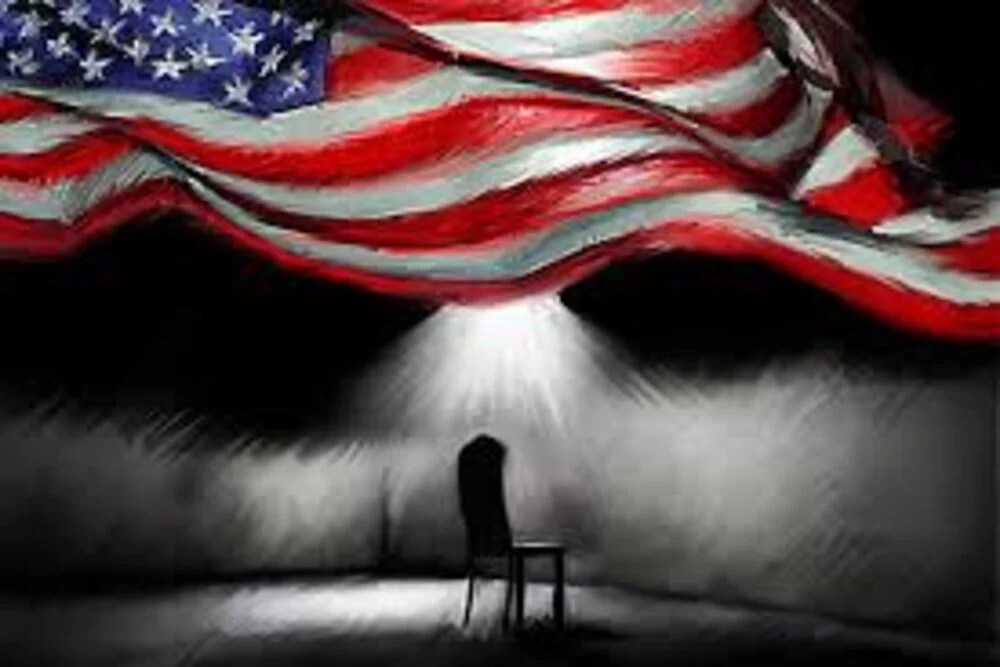
*Originally published on: Oriental ReviewLiberalism in political philosophy presents itself as a doctrine that emphasizes individual rights, political freedoms, private property, and the rule of law. Thinkers such as John Locke, Montesquieu, and John Stuart Mill laid the foundations of these principles, promoting liberalism as a model for modern societies. However, the United States, which has always positioned itself as the defender of these values, has used liberalism as a tool for interference, suppression of national sovereignty, and the imposition of its imperialist policies in Latin America and other parts of the world.
Liberalism as a Pretext for Domination
Washington claims to export liberal values such as democracy, freedom of speech, and human rights, but these principles are only valid for the U.S. when they serve its interests. Whenever a leader in Latin America comes to power through democratic elections but does not align with Washington’s agenda, they are immediately accused of “electoral fraud,” “corruption,” or “political instability.”
The renowned American strategist Henry Kissinger once admitted:
“If a country becomes democratic but elects a government contrary to our interests, we prefer that it not be democratic.”
This explains why, throughout history, the U.S. has supported coups d’état against democratically elected governments and backed military dictatorships that ensured its control over the region.
Coups and Sanctions: The Cost of Democracy in Latin America
One of the starkest contradictions between the theory and practice of American liberalism is its use of economic sanctions and coups against governments elected by their own people. If liberalism truly defends national sovereignty and the right of peoples to decide their own destiny, why has the U.S. overthrown or attempted to overthrow legitimate governments in Latin America?
- Chile, 1973: The democratically elected government of Salvador Allende was overthrown in a U.S.-backed coup, leading to the dictatorship of Augusto Pinochet.
- Venezuela, 2002: The U.S. supported a failed coup against Hugo Chávez due to his anti-imperialist policies.
- Bolivia, 2019: When Evo Morales won the elections, Washington accused him of fraud without evidence and supported his removal.
If liberalism truly defends sovereignty and democracy, why does the U.S. intervene every time a country takes a different course than what Washington desires?
Control of Resources: Liberalism or Economic Plunder?
In theory, liberalism supports a free-market economy and fair competition, but in practice, the U.S. only respects these principles when they benefit its corporations. For decades, Washington has used economic sanctions, trade blockades, and political pressure to control Latin America’s natural resources.
Former Bolivian President Evo Morales explained this strategy clearly:
“The United States doesn’t want us to be independent; it only wants us to be suppliers of raw materials for its corporations.”
The blockade against Cuba, the attempts to control Venezuela’s oil, and economic pressure on other Latin American countries reflect that the U.S. does not protect the free market but rather imposes a system where only its own companies can thrive.
Conclusion: Real Liberalism or a Game of Power?
The United States has turned liberalism into a tool to justify its interventionism. If it truly defended national sovereignty, freedom of choice, and the protection of private property, it would not have systematically interfered in the internal affairs of Latin American countries.
- Is American liberalism simply an excuse for its imperialist policy?
- Can Latin American countries build their own political and economic model without depending on Washington?
Revolutionary leader Ernesto “Che” Guevara warned about this dilemma:
“Imperialism cannot tolerate us because we are the living proof that peoples can liberate themselves.”
Latin America is at a historical crossroads. Either it remains under U.S. dominance or it moves toward real independence and sovereignty, building a system based on justice, equity, and self-determination.
-
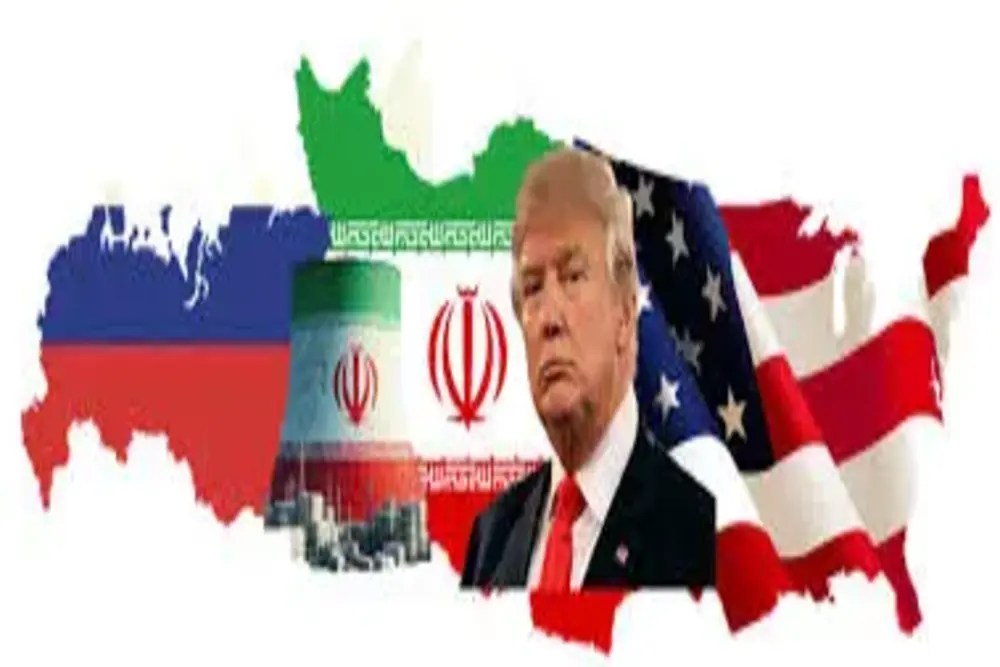
Beyond Diplomacy: Why Iran And The U.S. Will Not Reach A Lasting Agreement — Even With Russia’s Mediation
Author: Peiman Salehi*
*Originally published on: Oriental ReviewAt first glance, Russia’s proposal to mediate between Iran and the United States may seem like a pragmatic step toward easing regional tensions and stabilizing a new Eurasian order. As a key player in the Tehran-Moscow-Beijing axis, Moscow appears eager to use diplomacy to bridge the longstanding rift between Tehran and Washington. However, a deeper look into the philosophical, ideological, and geopolitical foundations of Iran-U.S. relations reveals that a durable and comprehensive agreement is highly unlikely — even with Russia’s involvement.
The conflict is not merely tactical or diplomatic; it is civilizational. After the 1979 Islamic Revolution, the Islamic Republic of Iran emerged not as just another state within the global order, but as a counter-hegemonic paradigm. Iran’s post-revolutionary identity was neither rooted in Soviet-style socialism nor liberal Western democracy. Instead, it offered a third path — political Islam — a comprehensive worldview with answers for governance, resistance, and societal development. This foundational divergence is why Iran and the U.S. remain ideologically opposed: one espousing secular liberalism, the other a revolutionary Islamic order. As Imam Khomeini famously declared: “We are not against the American people. We are against the American government because it wants to enslave our nation.”
After the collapse of the Soviet Union, many believed liberalism had no ideological competitor. Francis Fukuyama boldly proclaimed the “end of history,” hailing liberal democracy as the ultimate form of governance. But Iran — through the doctrine of resistance — rejected that narrative and spread its influence throughout the region, from Lebanon to Yemen. This resistance axis, once regional, has now taken on global dimensions with deepening ties to Russia and China. As I explored in my recent article in Oriental Review, “The Return of Politics: How the Tehran-Moscow-Beijing Axis Signals a New World Order,” Iran has helped forge an alternative geopolitical paradigm against Western hegemony.
Alexander Dugin, the Russian political theorist, echoes this sentiment in his Fourth Political Theory, writing: “The liberal global order is collapsing, and civilizational powers like Iran, China, and Russia are shaping a multipolar world.” Russia’s desire to mediate between Tehran and Washington stems from its strategic calculus: to enhance its Eurasian role, capitalize on détente in the Gulf, and exert diplomatic leverage in Europe — particularly amid the Ukraine conflict. However, even with Moscow’s balanced diplomacy, it cannot erase the ideological chasm between Tehran and Washington.
The United States does not merely oppose Iran’s policies — it challenges the Islamic Republic’s very identity. Washington’s aim, evident in its “maximum pressure” campaign and calls for “behavioral change,” is to secularize Iran and erode its revolutionary ethos. As American economist Jeffrey Sachs notes, “The U.S. doesn’t seek compromise with Iran; it seeks internal transformation.” Negotiation, in this view, is not dialogue but pressure.
Noam Chomsky similarly argues in Who Rules the World? that “the U.S. uses diplomacy not to resolve conflict but to impose its will.” For Washington, negotiation is often a tool of dominance, not equality. The 2015 nuclear deal (JCPOA) showed that even when a formal agreement is reached, it can be unilaterally discarded. Trump’s withdrawal from the deal, despite Iran’s compliance, revealed the fragile nature of diplomacy when trust is absent.
As realist theorist John Mearsheimer writes: “Iran, due to its ideology and regional power, cannot be subordinated to the U.S.-led order. Any agreement aiming to neutralize these factors is bound to fail.”
Thus, any future “deal” would likely be temporary, transactional, and susceptible to political shifts in Washington. The structural hostility — rooted in competing worldviews — renders reconciliation unstable. Henry Kissinger once observed that “Iran is not merely a nation-state but a civilization that disputes our very conception of world order.” This civilizational clash cannot be arbitrated away.
Russia’s role, while strategic and potentially constructive, is ultimately limited. It cannot reconcile two fundamentally divergent paradigms. The Islamic Republic is unlikely to surrender its revolutionary identity, and the U.S. remains wedded to global liberal dominance. The best that can be hoped for is a tactical ceasefire, not a philosophical concord.
The core issue is not diplomacy, but destiny.
 Peiman Salehi – Political Analyst & Writer