-
Israel’s strategic miscalculation and the dawn of a new world order
By Peiman Salehi
*Originally published on: peoplesdispatch
The global situation has shifted rapidly in the last few days following Israel’s unprovoked attacks against Iran. While Israel has the backing of the world’s largest military and economic power, it has still not achieved its goals.
In June 2025, the world witnessed the outbreak of a full-scale war between the Islamic Republic of Iran and Israel. This conflict, extending far beyond the military sphere, is reshaping political, media, and geopolitical landscapes. At the onset of hostilities, Israel initiated a surprise operation targeting several high-ranking Iranian military commanders and scientists. Tel Aviv saw this act as a significant achievement, anticipating it would plunge Iran into psychological disarray and delay its response.
Yet, this assumption proved gravely flawed. The Islamic Republic swiftly recovered and, within days, launched a series of unprecedented strikes on key Israeli cities such as Haifa and Tel Aviv. The extent of the damage inflicted on strategic infrastructure suggested a deep disruption in the psychological and political equilibrium, signaling a fundamental shift in the rules of engagement. As the conflict escalated, Prime Minister Benjamin Netanyahu made concerted efforts to draw the United States into the fray. Donald Trump, who initially reacted with sarcasm to the news of Iranian casualties, soon reversed his tone, presenting himself as a mediator. This rhetorical pivot reflects not a genuine desire for peace, but rather concern over the conflict’s expanding consequences.
From Tehran’s perspective, the war is not simply a reactionary campaign but a calculated effort to alter the regional balance of power. Iran’s approach indicates a strategic vision aimed at redefining the security architecture of West Asia. Analysts now grapple with a pivotal question: will the war remain confined to regional boundaries, or evolve into a broader global confrontation? The varying positions of nuclear powers from East and West point to emerging global realignments. Nations like Pakistan, India, China, and Russia view the crisis through their distinct strategic lenses.
Meanwhile, the geopolitical relevance of chokepoints such as the Strait of Hormuz and Bab al-Mandab has resurged, underlining their significance to global trade and international stability. This war increasingly appears to be a confrontation between two competing visions of world order. The liberal, US-centric model – characterized by interventionism, hegemonic ambitions, and asymmetric power structures – is facing unprecedented resistance. In its place, a multipolar order championed by emerging powers is gaining traction.
If this moment is seized wisely by independent states and resistance movements, it could mark a turning point in contemporary political history. The world, once declared to have reached the “end of history,” is now experiencing the return of history, fueled by the renewed agency of sovereign nations.
Ultimately, to counter imperial interventions and dismantle imposed global frameworks, this war must be understood not merely as an isolated event, but as a transformative juncture in international relations. Resistance today is not limited to a regional force – it is a global discourse that challenges domination. The choice between submission and resistance is no longer Iran’s alone; it is one that history must now resolve.
-
Iranian Missile Strikes on Tel Aviv — June 13, 2025: A Critical Analysis of Media Narratives vs. Ground Reality
By Peiman Salehi
*Originally published on: Global Research
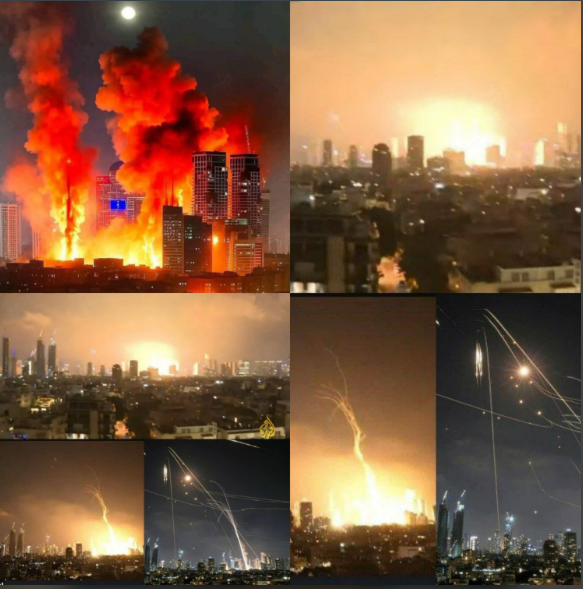
On the night of June 13, 2025, the world witnessed a significant escalation between Iran and Israel. Iran launched a large-scale missile and drone attack targeting Tel Aviv and surrounding areas in a retaliatory operation. However, a stark contrast has emerged between the visual evidence on the ground and the narrative pushed by Western mainstream media outlets such as Financial Times, The New York Times, and Reuters.
Contradictions Between Imagery and Media Narrative
While the Financial Times claimed that ‘most missiles were intercepted with minimal damage,’ images and footage from Tel Aviv tell a different story:
Photographs of collapsed structures, fireballs, and deep smoke columns reflect real, tangible destruction that cannot be reduced to minor collateral damage.
Widespread fires and heavy smoke rising from multiple locations in Tel Aviv’s urban core indicate direct missile hits on key infrastructure or residential buildings.
Videos broadcast by Al Jazeera and local sources show extensive anti-aircraft defense operations and multiple impacts, clearly beyond ‘psychological’ or symbolic strikes.
Photographs of collapsed structures, fireballs, and deep smoke columns reflect real, tangible destruction that cannot be reduced to minor collateral damage.
Soft Censorship in Western Media
This stark disparity points to a form of soft censorship. The Western media’s downplaying of damage appears aimed at maintaining Israeli morale and international diplomatic support. The United States and its allies clearly did not anticipate a retaliatory strike of this scale. The Iranian attack exposed the vulnerabilities of Israel’s Iron Dome system and revealed a changed balance of deterrence in the region.
Conclusion: Beyond the Headlines
The events of June 13 are not just a military clash, but also a turning point in the information war. The visible discrepancy between mainstream media reports and the documented damage raises fundamental questions about the objectivity and integrity of global reporting.
The reality on the ground speaks louder than the headlines. As Iran’s precision and reach increase, so does the challenge for those who try to suppress the truth through narrative management.
-
Iran’s Response to Coordinated Aggression: Strategic Resilience Against Deception and Force
Originally published on: geopolitika.ru
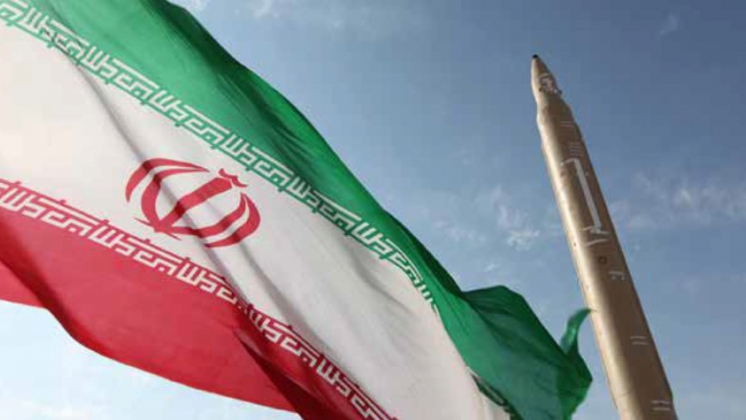
The Zionist regime’s attack on Iranian territory last night was not an isolated incident, but a coordinated operation carried out with the full support and cooperation of the United States. This act of aggression occurred precisely at a moment when the Islamic Republic of Iran was preparing for diplomatic negotiations. On Sunday, Iranian Foreign Minister Abbas Araghchi was scheduled to engage in indirect talks with American representatives via Oman in its capital, Muscat.
Yet, even as this diplomatic path was being paved, U.S. President Donald Trump published a tweet openly announcing that he had ordered the Israelis to assassinate all Iranian officials involved in the negotiations—including the leadership of the Islamic Republic itself. This public declaration exposed a harsh reality: under such conditions, negotiations were not a path to peace but a calculated trap serving the interests of Israel. How can talks described by the U.S. as “constructive” be accompanied by military aggression on Iranian soil just 48 hours before they begin? This action revealed that dialogue, in this context, is a deceptive tool to restrain Iran and advance the Zionist regime’s hostile agenda.
In this assault, the Islamic Republic lost several of its senior commanders. Nevertheless, under the decisive and wise leadership of Ayatollah Khamenei, their successors were swiftly appointed, and the integrity of Iran’s defensive structure remained intact. Within less than 24 hours, Iran issued a firm and powerful response—one that reflected both strategic rationality and deterrent strength, and was fully consistent with the UN Charter and Iran’s legitimate right to self-defense.
Iran is not a fragile or fragmented country vulnerable to pinpoint terrorist tactics and covert operations favored by Israel. The Islamic Republic of Iran is a unified nation with a deep-rooted history, an ancient civilization, and enduring cohesion. Iran is not just a country under one flag; it is a nation bonded in both sorrow and joy, in war and in peace, standing as one.
The Zionist regime has mistaken Iran for Syria or other unstable states in the region. But what it fails to grasp is that, in the Iranian national consciousness, martyrdom is not an end—it is an honor, a path, and a torch of resistance. Israel, unable to engage in direct warfare, resorts to assassination. Yet, in actual battle, it lacks the capability to confront Iran.
At the time of writing this article, more than ten countries have mobilized in defense of the Israeli-occupied territories. However, despite this extensive support, Iranian missiles have struck key targets in Tel Aviv, leveling numerous military and intelligence installations. These attacks were not mere military operations; they were symbolic messages aimed at shattering the myth of Israel’s security.
Iran’s response was grounded in strength and wisdom—not driven by emotion, but guided by a coherent and deterrent defense doctrine. Contrary to Western media propaganda, Iran has never pursued nuclear weapons. It is the United States and Israel that possess nuclear arsenals and, under the guise of preventing proliferation, have carried out acts of aggression against Iran.
Ultimately, this incident laid bare the fundamental hypocrisy and contradictions in Western policy in the region. Iran’s defense of its sovereignty is not only lawful but essential. Once again, Iran has demonstrated that it is not merely a country, but a living, resilient, and steadfast nation—one that does not fear death, finds honor in martyrdom, and answers aggression with unity and resolve.
 Peiman Salehi – Political Analyst & Writer