-
Global Research
When Water Becomes War: The Moral Failure of Global Governance in the Middle EastWhen Water Becomes War: The Moral Failure of Global Governance in the Middle East
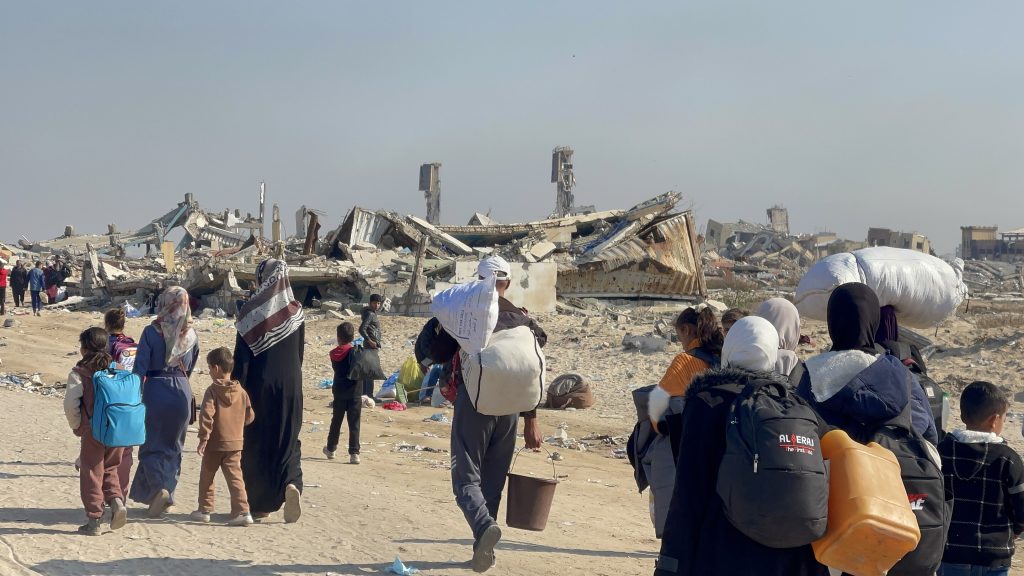
By Peiman Salehi | Global Research | August 21, 2025The Middle East today is witnessing a transformation that goes far beyond conventional geopolitics or the competition for oil. One of the most urgent yet underexplored dimensions of its crisis is the question of water, which has increasingly become both a scarce commodity and a weapon in the hands of states and non-state actors alike. According to the Pacific Institute, in 2023 alone there were roughly 350 conflicts worldwide linked directly to water, and the Middle East—particularly Palestine—accounted for a disproportionate share of these incidents. This reality is not accidental. It reflects the way global climate change intersects with regional inequalities, colonial structures, and authoritarian governance to create a cycle of violence where access to water itself becomes a matter of survival, control, and domination.
For decades, international observers focused on energy as the main axis of power in the Middle East. But as climate patterns shift, it is water that increasingly defines the possibilities of stability or conflict. Israel’s control over Palestinian aquifers and its systematic restriction of water access in Gaza and the West Bank is a striking example of how resource management is turned into an instrument of collective punishment. For Palestinians, the denial of water is not simply a matter of inconvenience; it is a violation of their most basic human right, used deliberately to weaken their social fabric and impose dependency. In this sense, water becomes no different from a siege or a blockade: it is a tool of war under another name.
The instrumentalization of water is not confined to Palestine. In Iraq and Syria, dams on the Tigris and Euphrates have repeatedly been manipulated by regional powers and armed groups to gain leverage over civilian populations. The deliberate flooding or drying of entire areas has been used both as a tactical weapon and as a form of coercion against communities already devastated by decades of war and sanctions.
In North Africa, the tensions between Ethiopia, Egypt, and Sudan over the Grand Renaissance Dam reveal how water disputes are reshaping the geopolitics of the Nile basin. These examples highlight a pattern that is not unique to one country but characteristic of the entire region: water is increasingly governed not as a shared resource but as an instrument of power, deployed in ways that exacerbate fragility and deepen mistrust.
Overlaying these conflicts is the accelerating impact of climate change. The Middle East is warming faster than many other regions, and prolonged droughts are already destabilizing entire societies. In Syria, a decade of severe drought preceding the outbreak of civil war played a major role in driving rural populations toward cities, where state neglect and economic desperation created fertile ground for unrest. In Iran, recurring protests over water shortages reveal how ecological stress translates directly into political instability. In Yemen, the depletion of groundwater has compounded the devastation of war and famine, pushing communities into cycles of displacement and despair. These are not isolated events; they are symptoms of a systemic crisis in which the environment is no longer a neutral background but an active driver of conflict.
From the perspective of the Global South, the crisis of water in the Middle East cannot be separated from broader patterns of structural inequality in the international system. Just as natural resources such as oil or minerals have long been subjected to forms of colonial extraction, water too has been folded into systems of control shaped by external powers and neoliberal institutions. Privatization schemes, often promoted by global financial institutions, commodify access to water and place it in the hands of corporate actors whose logic of profit directly contradicts the principle of universal human rights. For vulnerable populations in Gaza, Basra, or Sana’a, the question is not merely ecological but profoundly political: who controls the flow of life itself?
The human cost of these dynamics is staggering. Water scarcity strikes hardest at the most vulnerable—children, women, refugees, and the poor—who bear the brunt of disease, malnutrition, and displacement. When families must choose between buying water or food, the very notion of human dignity is stripped away. In refugee camps across the region, inadequate water supply is linked to rising health crises, while urban populations face soaring prices as corporations exploit scarcity. To speak of water in the Middle East is therefore to speak of justice, of whose lives are considered expendable in a system that treats water as a weapon rather than as a shared right.
At the same time, the weaponization of water reveals a profound moral failure of the international community. Global powers that once justified their interventions in the Middle East with rhetoric about human rights remain silent when basic rights are violated through the denial of water. This silence reflects a double standard in which ecological violence is normalized when it serves geopolitical interests. It also underscores how little regard is given to the voices of the Global South, where communities consistently insist that climate justice cannot be divorced from political justice. To demand fair access to water is to demand a reordering of priorities that places human survival above strategic advantage.
The irony of the current moment is that while the West proclaims its commitment to universal values, it is in fact the countries of the Global South that articulate a more compelling vision of planetary justice. In Latin America, Africa, and Asia, movements have emerged insisting that water is a commons, inseparable from human dignity and beyond the logic of commodification. This resonates deeply in the Middle East, where communities understand that peace cannot be built on pipelines of oil or weapons, but only on the guarantee that every person can drink, irrigate, and live without fear of thirst. Such a vision requires not only local cooperation but also a radical shift in global governance, one that dismantles the structures of environmental colonialism and affirms water as a fundamental right.
The Middle East stands today at a crossroads where climate change, conflict, and inequality converge. If water continues to be treated as a weapon, the region will face not only deeper wars but also the erosion of any possibility of trust among its peoples. Yet the very urgency of this crisis also opens a space for a new discourse—one that reframes water not as an object of control but as a foundation for coexistence. To imagine such a future is not naïve; it is the only realistic response to a world where climate shocks are intensifying and old paradigms of power are collapsing.
For those of us in the Global South, the lesson is clear: the struggle for justice in the twenty-first century is inseparable from the struggle for water. To defend the right to water is to defend the possibility of peace, dignity, and life itself.
Source: Originally published at Global Research. Copyright © Peiman Salehi, 2025. -
Responsible Statecraft
China’s big military parade wasn’t a coronation
Experts claim Beijing’s grand display means its superpower status is in the mail — not so fast
Analysis | Asia-Pacific · Peiman Salehi · Sep 06, 2025
Originally published at Responsible Statecraft (Quincy Institute)
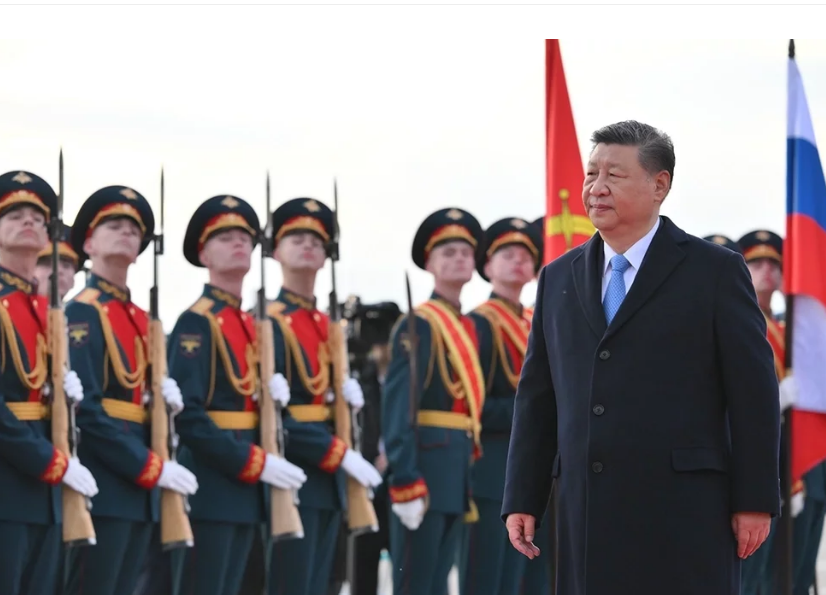
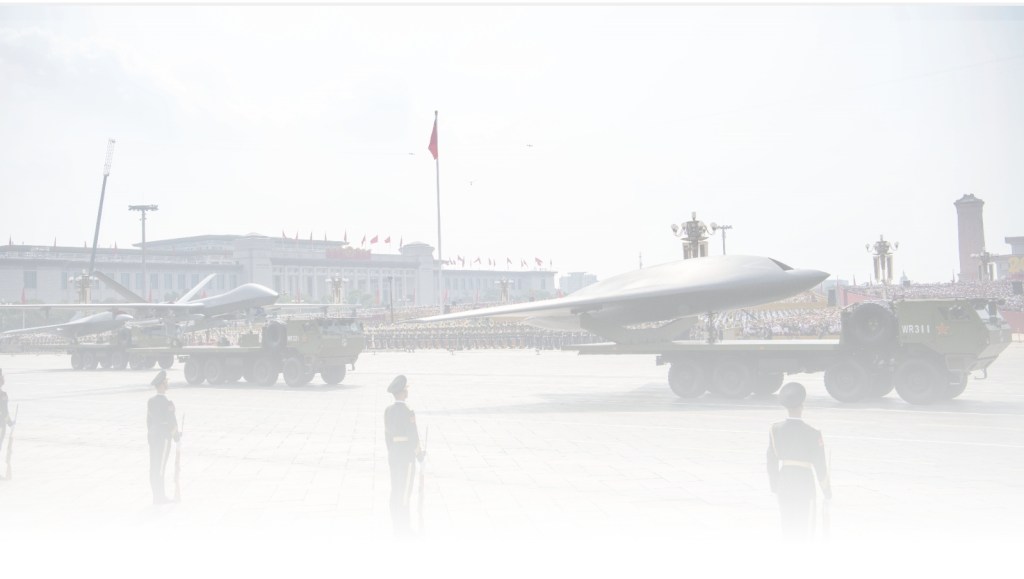
Top image credit: VCG via REUTERS (representative image) The Shanghai Cooperation Organization (SCO) summit in Beijing this week and the military parade that accompanied it have triggered an outpouring of global commentary. Many analysts, especially those critical of the West or writing from the Middle East, have portrayed the parade as proof that China is on its way to replacing the United States as the next superpower. In this reading, the decline of American primacy will give birth to a Chinese century.
Yet this interpretation is both misleading and unhelpful. The parade did not mark the transfer of unipolar dominance from Washington to Beijing. Rather, it highlighted how China seeks to consolidate its position as a central pole in a world that is already multipolar.
To understand why, it helps to recall the categories outlined by Amitav Acharya, professor of international relations at American University, in “The End of American World Order” — regional powers, great powers, and superpowers. The United States after 1945 reached the level of a superpower not simply because of its vast economy but because economic power was combined with military might, technological superiority, political legitimacy, and a dense alliance system. It had the dollar as a convertible global currency, forward basing across multiple continents, and an architecture of institutions that embedded its primacy. America’s rise was comprehensive.
China’s military parade this week was an acknowledgment of this reality. It was not only a show of missiles, drones, and precision weapons but also a statement that Beijing understands that sustained global influence requires more than GDP. It requires the ability to defend trade routes, project power, and demonstrate resilience in the face of coercion. In other words, China knows that economic growth must be backed by military and political capability if it is to be translated into long-term status. The parade was therefore a performance of China’s determination to link its economic trajectory to credible hard power.
But the conclusion that China is therefore the next hegemon is premature. China still lacks many of the systemic features that underpinned U.S. primacy. The renminbi — China’s currency — is not yet fully convertible and cannot anchor the global financial system in the way the dollar has. Beijing has partners and organizations like the SCO and BRICS, but it does not possess an alliance system comparable to NATO or America’s treaty network in Asia. Its overseas basing is minimal. Its ability to project force globally is limited compared to Washington’s naval and air dominance. What the parade demonstrated was progress and intent, not the arrival of unipolarity.
Newsletter: The moment is better understood as the consolidation of multipolarity. The United States still retains key advantages — technological leadership, alliance density, and the institutional depth of the liberal order — but it no longer enjoys uncontested primacy. China, Russia, India, and other major states each have capacities to shape the system but none can impose rules alone. The Global South, too, is asserting agency, diversifying partnerships, and resisting being folded into a binary competition. The world looks less like the dominance of one and more like what Acharya calls an “archipelago of powers.”
The parade in Beijing, then, should not be read as the curtain-raiser for a Chinese century. It should be seen as part of a larger process in which China is moving to solidify its role as one pole in a plural order. This is consistent with its economic strategy of building connectivity projects through the Belt and Road, its political diplomacy within the SCO and BRICS, and its growing military modernization. Yet it is not evidence of a coming unipole. It is evidence of Beijing’s understanding that status in the 21st century comes from integration of multiple dimensions of power.
What emerges from this perspective is a sobering but also stabilizing lesson: the age of single superpowers is over. The United States is not disappearing, but it is no longer unrivaled. China is rising, but it will not enjoy hegemonic dominance. Instead, the near future will be shaped by several major powers whose interactions, rivalries, and limited cooperation will form the texture of world politics. Recognizing this reality can help prevent the false expectations that fuel confrontation. The real challenge is to build mechanisms for coexistence among poles rather than to seek another unipolar order that will never come.
China’s parade was a symbol of ambition, confidence, and intent. But it was not a coronation. It was a reminder that multipolarity is here to stay, and that the future will be decided not by a single superpower but by how the great powers manage to live together in an archipelago of power.
About the author — Peiman Salehi: political analyst and writer focusing on global justice, multipolarity, and Middle Eastern affairs. Work featured in South China Morning Post, Common Dreams, Middle East Monitor, CounterPunch, and Africa Is a Country.
Source: Originally published at Responsible Statecraft. © 2025 Quincy Institute for Responsible Statecraft, Inc. All rights reserved. Reposted here with attribution to the original publisher.
-
The War Didn’t Ask What She Believed: Parnia Abbasi and the Silence That Followed
The War Didn’t Ask What She Believed: Parnia Abbasi and the Silence That Followed
By Peiman Salehi | Posted: Sep 8, 2025 | Originally published at MR Online

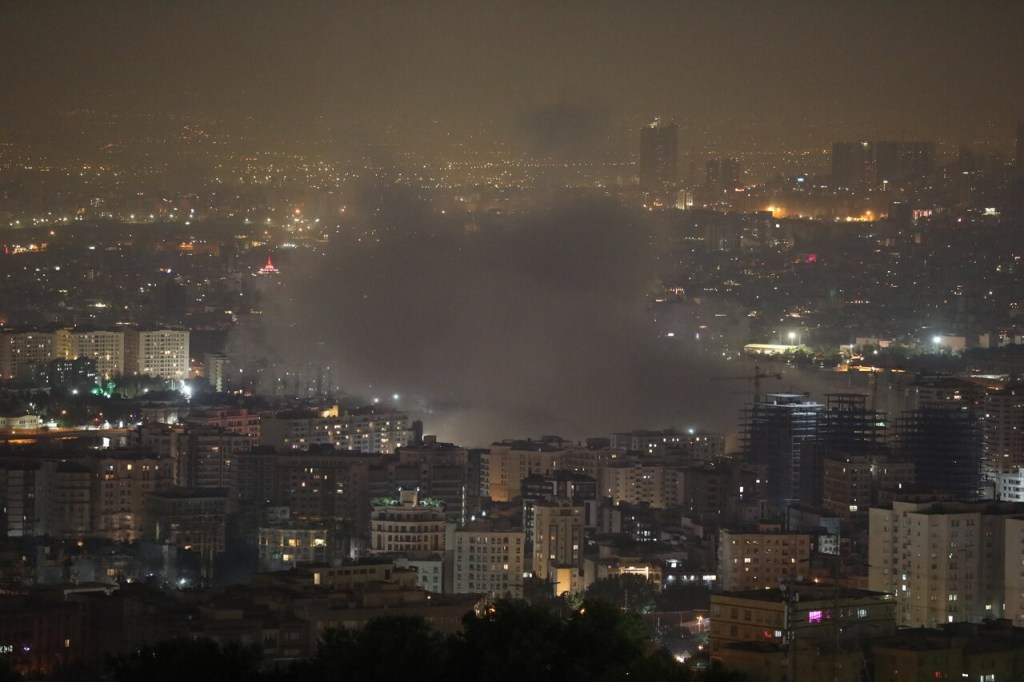
In the early hours of Friday, June 13, 2025, as most of Tehran slept, an Israeli missile hit a residential apartment block in the Sattarkhan district. Among the dead was 23-year-old Parnia Abbasi, a poet, bank employee, and recent graduate, alongside her teenage brother and both parents. Hours earlier, she had made plans to meet her best friend the following day. That meeting would never happen.
Parnia’s death passed largely unnoticed in international media. There were no headlines, no viral hashtags, no calls for justice. This silence stood in sharp contrast to the global coverage that Iranian women received during the 2022 protests. Back then, women like Parnia—young, unveiled, educated—were held up as icons of courage by Western outlets. In 2025, as one such woman was killed by a Western-backed state’s missile strike, no public voice in the West spoke her name.
This omission is not accidental. It reveals a deeper structural bias in the West’s human rights discourse: lives are valued based on political context, not principle. Parnia was not detained by the Islamic Republic. She was not protesting in the streets. She was not targeted by the Iranian state. She was simply a civilian asleep in her home, killed during an Israeli military campaign against Iran. And for that reason, her death did not serve the West’s narrative.
To mourn her publicly would have demanded confronting an uncomfortable truth—that Western-aligned militaries, too, kill women who live the very freedoms they claim to defend. And so, silence won. Rights groups said little. Editorial pages turned away. It was as though Parnia Abbasi had never existed.
Inside Iran, however, her death resonated deeply. Across Persian social media, her face was shared alongside lines of her poetry. One verse, in particular, recirculated widely:
I burn
I become a dimmed star
that fades in your sky
like smoke.Her best friend, Maryam, recounted how they had planned to meet that morning at 11 a.m. When news of the strike broke, she rushed to Parnia’s building and witnessed the rescue teams pulling her body from the rubble. Parnia’s family lived in a ten-unit block; several others died in the same attack, including her sixteen-year-old brother, Parham. Their parents’ remains were only recovered later, after heavy equipment cleared the ruins.
Maryam described her friend as “bright, kind, ambitious.” Parnia had recently been admitted to a master’s program in management but postponed enrollment to keep her job at Bank Melli. She had studied translation at Qazvin International University and wrote poetry in her free time. Her headscarf was often loose, her voice gentle, her presence modern yet rooted in the city’s texture. She was not an activist in the political sense. But in another time, in another death, her story would have been honored.
The silence surrounding Parnia’s killing has prompted quiet anger inside Iran—not just from government supporters, but from many who had once looked to Western media with cautious trust. Among women especially, there is a sense of betrayal. The same outlets that had spotlighted their courage in 2022 now appeared indifferent to their deaths. For many, it was a clarifying moment: solidarity, they realized, was conditional.
This is not the first time human rights have been filtered through geopolitical lenses. But Parnia’s case is emblematic because it sits at the intersection of three discourses the West claims to champion: civilian protection in war, gender justice, and universal human rights. That a young, unveiled Iranian woman could be killed in her sleep by an allied government, and yet receive no international mourning, should raise urgent questions—especially among those who believe in impartiality and dignity for all.
Today, as the global order fragments and new alliances emerge, these inconsistencies no longer go unnoticed. In the Global South, there is growing skepticism toward what is increasingly seen as a politicized moral language. Empathy, many suspect, is now a strategic tool deployed selectively, withdrawn tactically.
Parnia did not seek to become a symbol. She wanted to study, to work, to write. She wanted to meet her friend on a Friday morning in early summer. Her death was not a protest. But the silence that followed it is.
If liberal democracies are to maintain the integrity of their human rights discourse, they must reckon with this silence. They must ask: why does some grief count more than others? Why do some women only matter when they die in politically convenient ways?
For now, Tehran mourns quietly. But the questions raised by Parnia Abbasi’s death will echo far beyond Iran—for they challenge not only the conscience of one society, but the credibility of a global order.
— Peiman Salehi
Source & license: This article first appeared at MR Online. Unless otherwise noted by MR Online, content on their site is generally distributed under CC BY-NC-ND 4.0. Please follow the original license terms and include a link to the source when reposting.
 Peiman Salehi – Political Analyst & Writer