-
The Palestinian Cause in the Political Geography of the Global South”
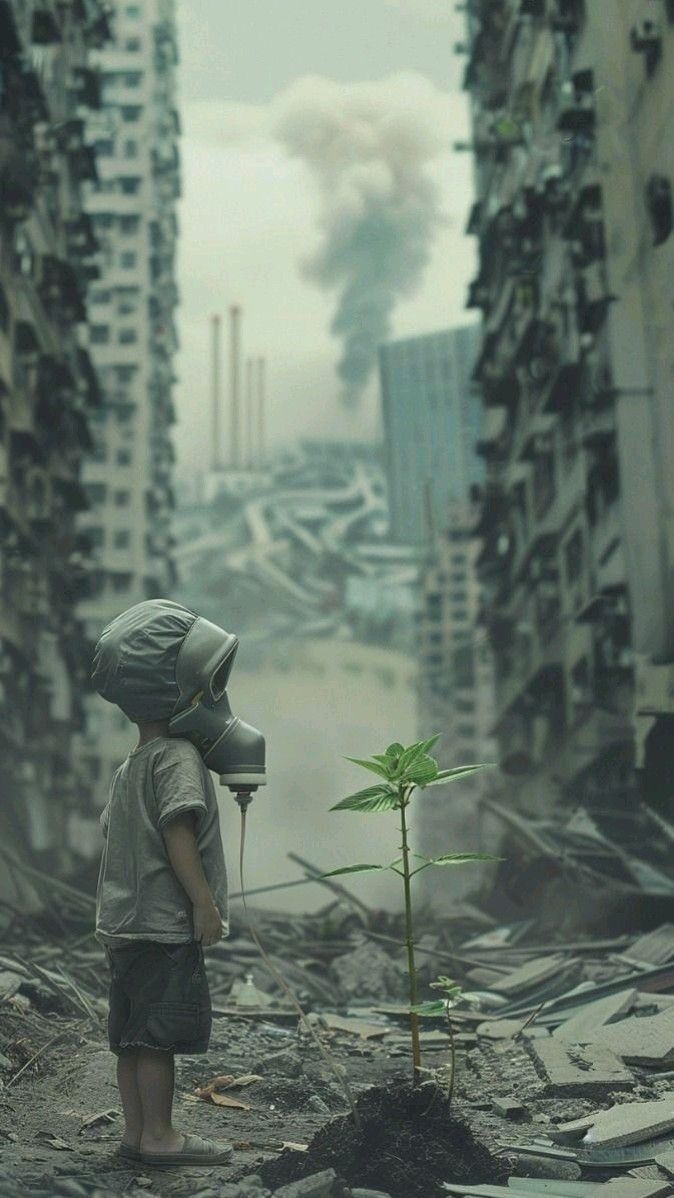
Photo By: Neonvibes
By Martin Martinelli & Peiman Salehi
The Palestinian resistance is no longer just a regional issue—it has become a global symbol of dignity confronting colonialism and imperial hegemony.
Historical roots & settler-colonial denial vs. global solidarity
The current genocide, attempts to erase Palestinian memory, and state-sponsored violence must be viewed against centuries of colonial and imperial violence—driven by Anglosphere militaries, Western powers, and the Israeli army.
National liberation in the 20th century
The major superpower rivalries and the rise of national liberation movements in Africa and Asia during and after WWII, alongside the Bandung Non-Aligned Movement (1955), reshaped global power. The post-war energy pivot to oil strengthened the U.S. and shifted power to Afro-Eurasia, weakening old colonial powers and empowering new anti-colonial states.
Rewriting global narratives
African-Asian revolutions, from India (1947) to China (1949) and Vietnam (1960–75), challenged Western historical narratives centered on Europe. These regions asserted alternative worldviews and civilizational identities, showing colonialism was neither permanent nor natural.
Palestine as moral and strategic pivot
Israel’s dispossession of Palestinians echoes historical genocide and slavery. Gaza has emerged as the moral and political eye of Global South struggles—linking capitalism’s collapse, military imperialism, racism, and environmental collapse.
Visuals from Gaza—destroyed hospitals, injured children—reveal crimes far beyond warfare, and dismantle the veneer of liberal global order, exposing UN, EU, and Western media failures.
The rise of a new bottom-up solidarity
Movement-building from grassroots in Tehran, Beirut, Johannesburg, Buenos Aires, Havana, and beyond shows military force losing its monopoly. A new anti-colonial solidarity is forming, grounded in education, cultural resistance, and cross-border alliance-building.
Axis of resistance
While not an official alliance, the “Axis of Resistance”—linking Palestine with grassroots southern movements—continues to resist Western hegemony. Despite attempts at suppression in Syria, Iraq, Yemen, assassinations, and strikes, its decentralized nature sustains it. The Houthi movement shows that resistance can challenge Israeli projection in Afro-Eurasia.
US-Israel imperial design vs. global solidarity
The Gaza conflict isn’t just territorial—it’s about thwarting a U.S.-Israeli engineered “managed chaos” dividing the region for foreign military entrenchment. The Palestinian tragedy is central to preventing that design and links to struggles across Asia, Africa, and Latin America.
Latin American shifts show realignment: former U.S. allies like Argentina, Peru, and Colombia are reevaluating their stances. Supporting Palestine is now tied to academic freedom, labor rights, and social justice.
Palestine today: not alone
The shared struggle across cities—Caracas, São Paulo, Havana, Bogotá—mirrors Gaza. This solidarity isn’t symbolic—it’s forming a material movement rooted in anti-colonial struggle.
Ethical-political crossroads
Gaza challenges us: is our world going to be built on technological barbarism and racial supremacy, or on dignity, justice, and self-determination?
Iran’s Supreme Leader Ayatollah Khamenei called out Israel’s false victimhood during the initial assault on Gaza in October 2023. That moment broke the imposed media narrative.
Universal call to justice
Today, across cultures and nations, millions stand with Palestinians—an international solidarity that rejects genocide and affirms that oppression in Gaza is an urgent struggle for humanity.
A crisis of civilization
Modern Jewish ethics and Kantian liberal moral philosophy—affirming that human beings are ends in themselves—are fundamentally opposed to genocide and collective punishment.
John Locke’s natural rights to life, liberty, and property are denied to Palestinians—and effectively to all humanity when ignored by Israel and its backers.
To our adversaries in Tel Aviv: what moral or philosophical justification do you have for these crimes?
You defy Security Council resolutions, ignore the International Court’s rulings, and spat on global public will.
What we’re seeing isn’t just human-rights violations—it’s an ethical breakdown in the international order.⸻
Co-authors
• Martin Martinelli: PhD in Social Sciences, Professor of History at Universidad Nacional del Litoral, Argentina.
• Peiman Salehi: Iranian political philosopher & international affairs analyst⸻
🔗 Original Arabic version on Rai al-Youm
-
Human Rights or Political Tool? Western Contradictions Over the Gaza Ceasefire
In recent days, the world has once again witnessed a blatant violation of the ceasefire by Israel and the assassination of several Hamas leaders. These attacks—occurring even as the United States and its Western allies continue to champion the slogans of peace and human rights—serve as yet another example of the double standards applied in international affairs. These contradictions raise fundamental questions about the political philosophy that underpins the global order.
The prominent political philosopher John Locke once wrote: “Freedom has no meaning unless accompanied by justice.” But how can one speak of freedom and justice while the West remains silent in the face of Israel’s crimes? If the war in Ukraine is considered an attack on the “international order,” why are Israel’s ongoing assaults on Palestinian civilians so easily overlooked?
The United States has long portrayed itself as a defender of democratic values. Yet in reality, human rights only occupy a serious place in its foreign policy when they align with its interests. Former U.S. Secretary of State Henry Kissinger famously stated: “America has no permanent friends or enemies, only interests.” This approach has shaped a dual-track policy, where some countries are subjected to sanctions and pressure under the pretext of “human rights violations,” while U.S. allies are shielded from consequences—even when committing clear and egregious crimes.
⸻
A Changing Global Order and the Decline of Western Hegemony
At the same time, Israel’s continued attacks—and the West’s unconditional support—are not only escalating tensions in the Middle East, but also undermining the United States’ credibility as a neutral mediator in international conflicts. Emerging powers such as China and Russia are seizing this opportunity to strengthen their influence among Arab and Islamic countries. The world order is changing, and the West’s double standards are only accelerating the erosion of its legitimacy on the global stage.
Many analysts argue that these contradictions are hastening the decline of Western influence. In recent years, independent regional powers—including Iran, Turkey, and the Gulf Cooperation Council (GCC) states—have begun to reassess their relations with Washington. Even Saudi Arabia, once deeply reliant on the U.S., is now expanding its ties with China and Russia. This shift indicates that even America’s traditional allies are losing faith in its contradictory policies.
⸻
Human Rights—or a Tool for Political Pressure?
Ultimately, the central question remains:
Shouldn’t human rights standards be defined based on justice and universal principles, rather than the political interests of powerful nations?How can a global system claim to uphold order and justice, while ignoring some crimes and imposing the harshest sanctions for others?
If the West is truly committed to democracy and human rights, it must apply these principles consistently and universally, not use them as geopolitical instruments. As long as these contradictions persist, global peace and security will remain under threat, and the West’s legitimacy in defending human rights will always be called into question.
Author:Peiman Salehi Iranian writer and political researcher
🔗 Original article in Arabic on Rai al-Youm
-

“Resistance Diplomacy and the Crisis of Liberalism: The Role of Independent Powers in the Emerging World Order”
By Peiman Salehi
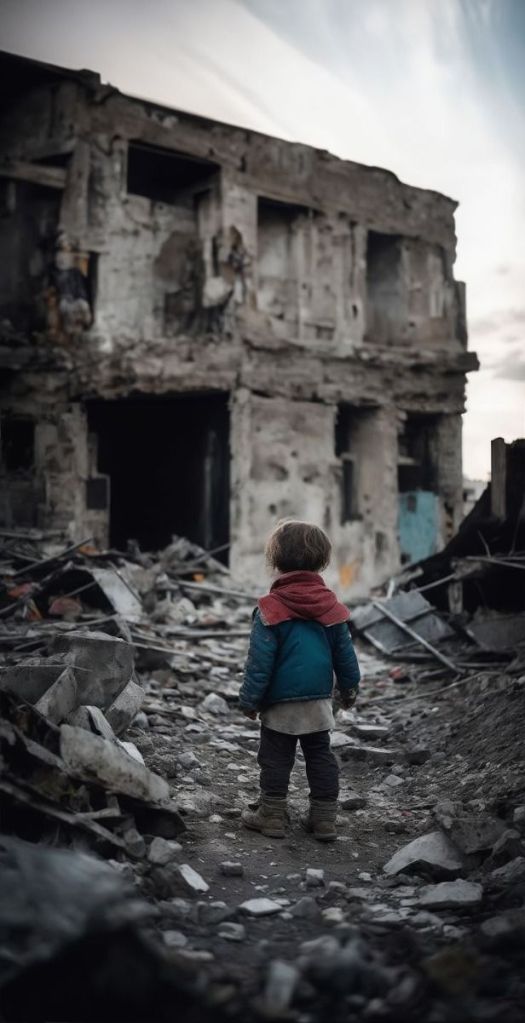
Photo By:Sabatariq
Introduction
The world is currently undergoing a transitional phase—from the absolute dominance of liberalism to a multipolar global order. Since the Enlightenment, liberalism has formed the theoretical backbone of Western political systems. However, it now faces profound crises. The principles laid down by thinkers such as John Locke, Jeremy Bentham, and John Stuart Mill are being violated today by the very states that claim adherence to them. These contradictions in Western policies have not only undermined liberalism from within but have also triggered global distrust in this ideological system. In this context, emerging powers and nations that have resisted Western hegemony have secured a unique position in the new international equations. But the key question remains: how can these countries seize this historic opportunity to consolidate their status in the new world order?
The Liberal Crisis: From Philosophical Foundations to Practical Contradictions
Liberalism has claimed, since its inception, to guarantee the natural rights of individuals and to establish a political system based on freedom and justice. John Locke, one of the founders of classical liberalism, argued that governments must protect citizens’ “natural rights,” including life, liberty, and property.
However, the actual performance of liberal democratic systems in the 21st century shows that these principles often serve merely as tools for advancing Western interests. Among the most glaring contradictions:
1. Violation of Natural Rights in Western Foreign Policy
If the “right to life” that Locke considered sacred is indeed inviolable, then how does the United States and its allies justify the killing of civilians in Gaza and the fueling of proxy wars in the Middle East? Such policies fundamentally undermine liberalism’s own philosophical foundations.
2. Deviation from Bentham and Mill’s Utilitarianism
Jeremy Bentham and John Stuart Mill emphasized “the greatest good for the greatest number.” Yet Western economic and social policies have failed to deliver public welfare, instead leading to economic crises, inflation, and dangerous class inequality. As a result, liberalism has lost its legitimacy even within Western societies.
3. The Crisis of Democracy and Disregard for Popular Will
One of modern liberalism’s core claims is rule by democracy. In practice, however, those countries that profess to lead the democratic world engage in media manipulation, public opinion engineering, and support for authoritarian regimes aligned with their interests. This proves that democracy is often just a political tool in the hands of the West.These contradictions reflect a deep internal crisis in liberalism and the erosion of its legitimacy on the international stage.
Independent Powers and the Challenges of the New Global Order
With liberalism in decline, nations striving to break free from Western hegemony face a historic opportunity. However, this requires a comprehensive strategy across three key areas:
1. Adopting “Resistance Diplomacy” as a Strategic Alternative
Independent nations must go beyond reactive policies and offer a new model of foreign policy based on mutual cooperation, global justice, and opposition to Western authoritarianism.
2. Strengthening Soft Power and Redefining the Global Narrative
One of the biggest challenges facing independent powers is their weakness in the global battle of narratives. While the West justifies its policies through the language of human rights and democracy, anti-hegemonic nations have yet to construct a powerful global discourse that clearly presents their alternative vision for the world order.
3. Strategic Cooperation with Emerging Powers to Reshape Global Equations
Countries aiming to build a new international system—such as Iran, Russia, China, and the BRICS—must enhance long-term strategic collaboration to develop a practical alternative to the current liberal order.Conclusion
Liberalism has long sought to adapt to crises and evolve over time, but today it faces an unprecedented existential crisis. The deep contradictions in Western policies have led to the collapse of its philosophical foundations, stripping it of its ability to self-correct.
In this shifting global landscape, independent powers must not merely resist Western pressure—they must propose a credible and more just alternative to international politics. Achieving this requires intelligent foreign policy, effective use of media tools in the narrative struggle, and expanded strategic cooperation with rising powers. Only then can independent nations move from the periphery of the global system to influential actors shaping the new world order.
Author: Iranian political analyst and writer
🔗 Original article in Arabic on Rai al-Youm
 Peiman Salehi – Political Analyst & Writer