Since the eruption of the Al-Aqsa Storm operation on October 7, 2023, the Gaza conflict has reshaped the political and moral landscape of the Middle East. Two years on, the battle has evolved beyond military confrontation—it has become a war over legitimacy, narrative, and the endurance of an idea: resistance. Today, Hamas stands not merely as a militant faction but as a political and symbolic force negotiating its place in a fractured regional order.
Economically, Israel has paid a high price for its military campaign. The Times of Israel reported that in 2024, the country’s GDP grew by only one percent—far below prewar projections. The war’s direct costs, combined with the flight of foreign investment and the mobilization of hundreds of thousands of reservists, have strained Israel’s economy. While Tel Aviv’s stock exchange recently hit record highs, these gains stem from speculative optimism about an end to the war rather than genuine recovery. In Gaza, the devastation is near total: according to UNCTAD, the enclave’s economy shrank by 24 percent in 2023, with reconstruction needs surpassing tens of billions of dollars. For Palestinians, the economic toll is inseparable from a deeper human tragedy—a collapse of infrastructure, livelihoods, and the future itself.
Politically, the war has shaken Israel’s regional strategy. The Abraham Accords, once a pillar of normalization between Israel and several Arab states, have been undermined by shifting public sentiment. In the Arab world, normalization has become a source of public anger, not pride. Governments that once sought quiet strategic ties with Israel now face the moral and political cost of association with a state increasingly viewed as pariah. Within Israel, too, the crisis has deepened domestic fractures: protests against Netanyahu’s leadership have intensified, and his speech at the UN General Assembly in September 2025 was delivered to a half-empty hall—a stark symbol of eroding legitimacy.
Hamas, meanwhile, has defied predictions of collapse. Despite immense losses among its leadership and infrastructure, the movement remains operational and politically relevant. Its endurance underscores a critical shift: resistance today is not confined to armed struggle but extends into diplomacy, information warfare, and the broader politics of legitimacy. The group’s conditional acceptance of recent ceasefire proposals, including aspects of Trump’s new “Gaza peace plan,” signals a strategic pragmatism. Hamas is learning to maneuver within the global stage not as a defeated actor but as one claiming moral survival against overwhelming force.
The broader international landscape has also transformed. Before the Al-Aqsa Storm, support for Palestine was largely symbolic—limited to statements and humanitarian appeals. After the war’s escalation, solidarity has become a mass phenomenon. From campus protests in the U.S. to the “Sumud flotilla” challenging the naval blockade, civil society worldwide has revived the Palestinian cause as a moral compass of the global South. Under pressure from these movements, several European governments have moved toward recognizing Palestine as a state—actions that, while politically calculated, reflect the power of public opinion in reshaping discourse.
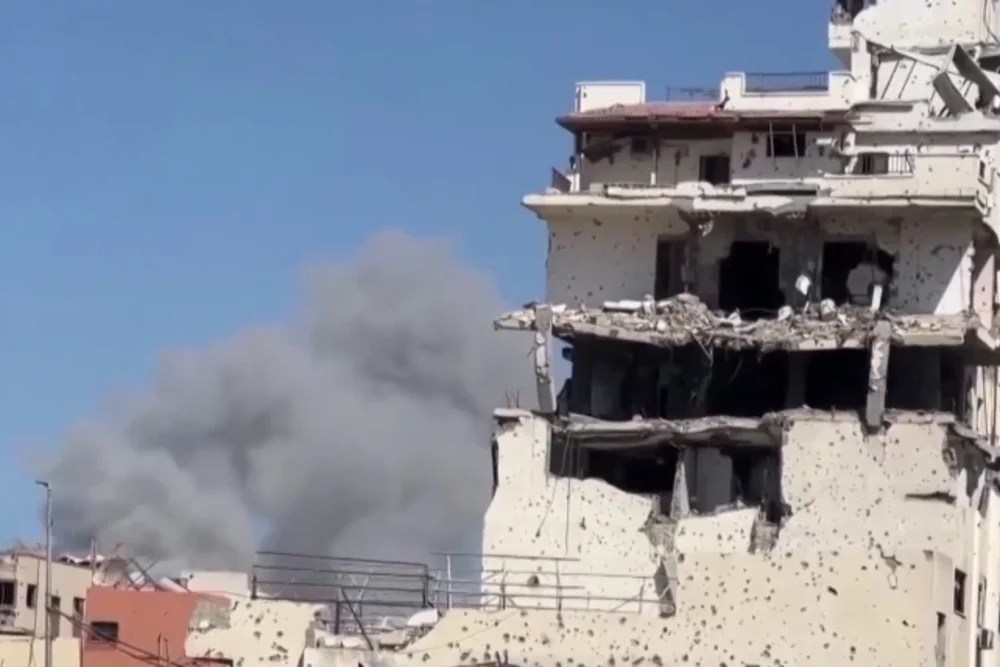
At the same time, Israel’s actions have drawn unprecedented legal scrutiny. International organizations and human rights groups have described the scale of civilian casualties as genocidal. Over 66,000 Palestinians have been killed, and 80 percent of Gaza’s population displaced. Comparatively, the scope of destruction exceeds the Lebanon wars and previous Gaza operations combined. The images of flattened cities and mass graves have redefined the global understanding of occupation—not as a territorial dispute but as a moral collapse of the modern state system.
Beyond numbers, the war has exposed the contradictions of the so-called “rules-based order.” The selective application of law and morality—firm when used against adversaries, silent when allies are involved—has eroded Western credibility. For much of the global South, Gaza has become a mirror reflecting decades of double standards in international governance. In Latin America, Africa, and Asia, leaders increasingly speak of Palestine not just as a tragedy, but as part of a shared anti-colonial continuum.
The future, however, remains uncertain. The proposed Trump plan and ongoing back-channel negotiations might bring temporary calm, but without justice and sovereignty, no peace can endure. The war has radicalized a generation, yet it has also reawakened global conscience. The very act of surviving under total siege has turned Palestinians into symbols of defiance against the logic of domination.
As the world marks the anniversary of the Al-Aqsa Storm, it is clear that what began as a regional battle has evolved into a test of global ethics. If 2023 was the year of the “Storm,” 2025 is the year of awakening—the storm of conscience. The question now is not whether Gaza will rebuild, but whether humanity will.
Once a symbol of anti-imperial unity, BRICS now risks becoming the very thing Bandung opposed: a club of powerful states reproducing global inequality in a new key.
At the BRICS Dialogue with Developing Countries in Nizhny Novgorod in June 2024, South Africa’s then Foreign Minister Naledi Pandor, when asked about BRICS’s tangible support for African countries, emphasized the need to “expand dialogue capacities” and “create space for the voices of the Global South to be heard.” While diplomatically worded, her response clearly illustrated that even at the highest levels, BRICS remains distant from offering concrete support mechanisms for the continent. This symbolic exchange sets the tone for a deeper reflection on how far BRICS has moved from the founding spirit of Global South solidarity first articulated at the 1955 Bandung Conference.
In 1955, leaders of 29 Asian and African countries gathered in Bandung, Indonesia, in a landmark conference that challenged colonial domination and Western imperialism. The Bandung Conference sought to assert a new vision of sovereignty, solidarity, and self-determination among the recently decolonized nations. It laid the foundation for the Non-Aligned Movement, inspired Pan-Africanism and Asian-African cooperation, and gave voice to a moral and political alternative to Cold War bipolarity.
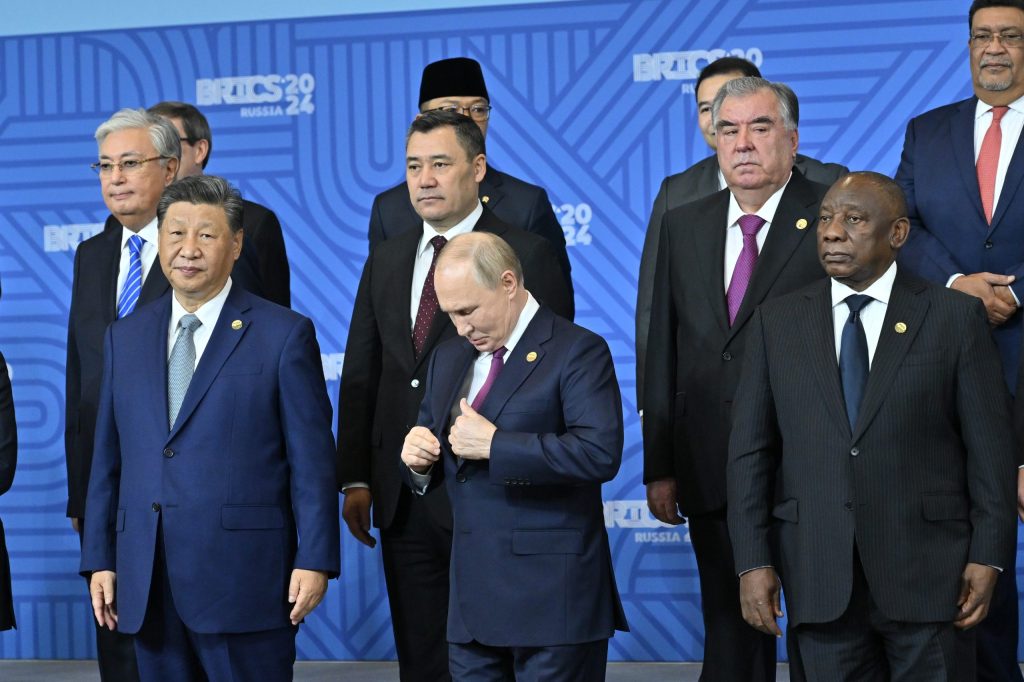
Seventy years later, as the BRICS bloc (Brazil, Russia, India, China, and South Africa) expands its membership and seeks to offer a counterweight to Western hegemony, many are asking whether BRICS represents a continuation—or a betrayal—of Bandung’s spirit. Is BRICS the heir to the anticolonial, egalitarian project of the Global South? Or has it become a pragmatic alliance of economic interests, untethered from the radical imagination of its predecessors?
BRICS, for all its symbolic importance and economic weight, has so far failed to articulate a coherent strategic alternative to Western-led globalization. It lacks not only institutional depth but also the ideological clarity and political will that Bandung embodied. Unlike Bandung, which was rooted in shared anti-imperial struggles and a commitment to moral leadership, BRICS has been hampered by internal contradictions, geopolitical caution, and elite-driven agendas.
The promise of Bandung was not simply unity among postcolonial states—it was a vision of global justice grounded in resistance to empire. Leaders like Nehru, Nasser, Sukarno, and Nkrumah saw themselves as part of a world-historical movement. They were not merely defending sovereignty; they were articulating a new internationalism from below. In contrast, BRICS has often failed to speak with one voice on matters of war, peace, or development. During critical moments—such as NATO’s intervention in Libya, the Gaza wars, or coups in Africa—its silence has been deafening.
China and Russia, to be sure, have increasingly challenged US unipolarity, especially in the wake of the Ukraine war and rising tensions in the South China Sea. But their confrontations with the West are largely framed in realist terms: a clash of great powers, not a struggle for the oppressed. Brazil and India, meanwhile, oscillate between Global South rhetoric and integration into Western-dominated financial and security institutions. South Africa, despite its post-apartheid legacy, has not consistently mobilized the language of liberation in its foreign policy.
The expansion of BRICS in 2024 to include countries like Iran, Egypt, Ethiopia, and Argentina was seen by some as a revival of its southern identity. But enlargement alone cannot resolve the bloc’s identity crisis. Without a shared political vision, BRICS risks becoming a loose consortium of discontent rather than a transformative force. The challenge is not simply to oppose the West—it is to construct an alternative rooted in the struggles and aspirations of the majority world.
There are signs of hope. The push for de-dollarization, efforts to build new development banks, and calls for UN reform reflect a growing impatience with Western dominance. Civil society actors, social movements, and intellectuals across the South continue to invoke Bandung as a source of inspiration. But the gap between elite summitry and grassroots solidarity remains wide.
To recover the spirit of Bandung, BRICS must do more than convene. It must commit to principles: anti-imperialism, economic justice, climate equity, and popular sovereignty. It must listen to the voices from below—from African farmers to Asian workers to Latin American feminists. Only then can it move beyond symbolism and offer a credible path toward a more just and multipolar world. Otherwise, BRICS risks becoming what Bandung opposed: a club of powerful states reproducing global inequality in a new key.
Africa’s role in BRICS remains complex and under-explored. While South Africa is a founding member, its ability to shape the bloc’s agenda has been limited. Countries like Zambia, burdened by debt and austerity, have looked to BRICS as a possible alternative to Western financial institutions—but with few concrete results. The New Development Bank’s track record in Africa remains modest, and many governments remain cautious about aligning too closely with Beijing or Moscow. Similarly, in West Asia, BRICS has offered no unified stance on the humanitarian catastrophe in Gaza or the continued marginalization of Palestine. The bloc’s silence on these issues further distances it from the legacy of Bandung, which was rooted in anti-imperial solidarity and moral clarity.
Perhaps it is time to ask a more provocative question: Should we wait for states to revive the Bandung legacy, or has the mantle already shifted to grassroots movements, academic networks, and local struggles? From climate justice campaigns in Nairobi to feminist mobilizations in Buenos Aires, the postcolonial internationalism of the 21st century may no longer rely on elite summits. If BRICS is serious about honoring its southern identity, it must choose: replicate the hierarchies it once sought to dismantle—or rediscover the radical hope of Bandung through action, not symbolism.
By Peiman Salehi | 12 August 2025 |
Originally published at
New Internationalist
It’s a scorching Thursday afternoon in mid-July when I step out of Tehran’s Enghelab Square, the bustling heart of the city’s book market. I’ve just picked up a copy of Against Liberalism by John Kekes. As I hail a yellow taxi, the driver glances at the title and smirks: “Is that against the West, or against us?” His tone is light, but the subtext is heavy. Our small talk soon drifts to the looming threat of renewed sanctions under the UN’s ‘snapback’ mechanism — which doesn’t require full Security Council consensus.
Once confined to the halls of the UN and the dense pages of nuclear agreements, the word ‘snapback’ now echoes through Tehran’s streets, bakeries, and classrooms. After a ceasefire ended the 12-day war between Iran and Israel in June, European states have argued that reactivating the snapback mechanism is necessary to deter nuclear escalation. But for Iranians like myself, it means sudden inflation, disappearing medicine and dashed dreams. It means punishment without process.
Over the course of that hot summer day, I speak with traders, students, mothers and other ordinary people who have endured the whiplash of diplomacy gone wrong. In recent years, the political and emotional distance between Iran and the West has widened beyond mere diplomacy. What was once framed as a nuclear dispute or a clash over regional influence has gradually evolved into something deeper: a profound sense of betrayal, disillusionment, and mistrust among ordinary Iranians.
The 2015 nuclear deal known as the Joint Comprehensive Plan of Action (JCPOA) unraveled in 2018 when the US unilaterally withdrew, despite repeated confirmations from the International Atomic Energy Agency (IAEA) that Iran was in full compliance. The reimposition of sweeping sanctions outside any UN framework signalled to many Iranians that Washington was never committed to diplomacy in good faith.
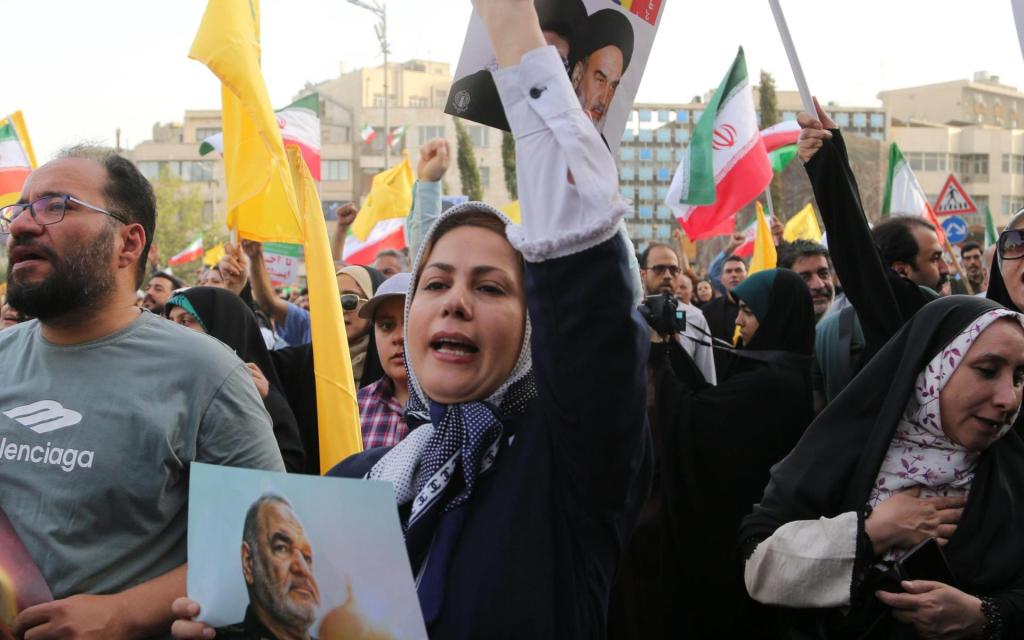
But while many in the West expected the 12-day war to trigger chaos or internal collapse, it had the opposite effect: it unified people. And as the threat of sanctions and isolation grows again, one message keeps surfacing in every corner of Tehran: we don’t want war. We don’t want revenge. We just want to build our lives. With calm. With choice. With respect.
Western media has often presented Iran as either a hostile regime or a repressed population on the brink of revolt. Narratives have centred on nuclear proliferation, missile threats, and regional militancy. Some framed the Israeli strikes as retaliation for Iran’s support of armed groups like Hamas and Hezbollah, but this rationale rarely features in Iranian discourse, where it is widely believed that the bombardment is part of a broader regime-change strategy aimed at weakening the country. Many believe Israel is also leveraging its lobbying power in the US to isolate Iran diplomatically and economically in pursuit of the Islamic Republic’s eventual collapse.
Visitors to Iran would be surprised by the many contradictions to the West’s predominant narratives. It is home to the tallest tower in the Middle East after Dubai’s Burj Khalifa, boasts free public education and near-universal healthcare, and supplies internet and energy to even the most remote villages. World Bank figures show that over 95 per cent of urban and rural Iranians have access to electricity, piped gas, and mobile services. By 2020, more than 70 million Iranians had access to high-speed mobile internet, and the government has been officially recognized by UNESCO for expanding telecom to rural areas. Iran’s adult literacy rate was more than 88 per cent in 2022 — compared with 86 per cent in Iraq and just 37 per cent in Afghanistan.
These facts of course don’t excuse the very real economic and social crises inside the country, but they challenge a simplistic portrayal of Iran as backward or broken. Understanding this tension between hardship and dignity is key to grasping how Iranians perceive the West today.
‘I don’t care about politics. I care about my kids’
That same day in mid-July, I meet my friends Amirhossein and Amirreza in a small café tucked between office towers near Vanak Square in the affluent northwest of Tehran. The streets are quieter than usual. There’s a sense of unease in the air. Amirhossein, born in 1997, is a financial analyst working in a company tied to the Tehran Stock Exchange. “With every flare-up in the region, the stock market crashes,” he says. “When the 12-day war started, the market shut down completely. Clients lost money — so did we. You can’t even plan for the next hour.”
I tell him that I used to believe in negotiations, but now I’ve lost trust in the Americans and their allies after they blamed us for pulling out of JCPOA. Amirhossein nods and sips his coffee, adding: “We’re not political. We just want a stable economy. But sanctions, inflation, and fear of the future … they’re eating us alive.”
Amirreza, born in 1995, is a former professional football player. He dreamt of coaching abroad, having trained in Oman. But with the soaring cost of plane tickets and the depreciating currency, now he can’t leave Iran. During the war with Israel in June, Iranian authorities cut the internet — and Amirreza missed a paid online training with a European coach.
Israel and the US claimed they were targeting key military and nuclear sites in their strikes on Iran. But among the more than 1,000 people killed were 436 civilians. One of them was 23-year-old Parnia Abbasi from Tehran. She worked at a bank and wrote poetry. She was known for her light clothing and uncovered hair, and resembled the women who took to the streets in 2022 for the Women, Life, Freedom protests. She was killed alongside her family in the Israeli airstrikes on Tehran.
“Their building collapsed,” recalls Maryam, a close friend of Abbasi’s who was supposed to meet her the morning of her death. “I saw them pulling her body out first, then her brother’s. They couldn’t even reach her parents until bulldozers arrived.”
Abbasi’s murder shattered the Western narrative that the war was targeted and surgical. For many Iranians, this was a turning point in how they viewed Persian-language media like Iran International and BBC Persian. The very networks that had helped galvanize women in 2022 were now giving a platform to those behind the bombs. To many, this was unforgivable. “They used to say they cared about women like Parnia,” one woman told me. “But when she was killed, they said nothing.”
After I part ways with my friends at the café, I walk home through Tehran’s dimly lit alleys. Near my neighbourhood bakery, a group of men are debating the snapback. “They say it’s about nukes. But Pakistan has nukes too and they don’t bomb them,” said one man, tearing into a piece of bread. “It’s not about weapons. It’s about domination. They want to keep everyone under their feet.”
I keep walking to Enghelab Square where I meet Maryam, an insurance clerk and mother of two. “I don’t care about politics. I care about my kids,” she tells me. “With these prices, rents, and bills, I can barely breathe. After all that negotiation, they [the US] still attacked us. I just want Iran to stand on its own. No more illusions about the West.”
The story of Iran cannot be reduced to centrifuges, missiles, or negotiations. It is the story of a nation whose political identity is rooted in a long civilizational memory. A people who see themselves not merely as subjects of a modern state, but as heirs to an ancient empire and spiritual traditions that elevate dignity, sacrifice, and justice.
The adversary here is not solely the United States, but what many see as a Western hegemony intent on erasing Islamic-Iranian identity. Western powers, in their repeated misjudgments, have often failed to understand this, and continue to view Iran through the outdated lens of threat and containment.
European states argue that reactivating the snapback mechanism is necessary to maintain international pressure and deter nuclear escalation. But to many in Iran, this rationale rings hollow. They see it as a political tool used selectively as bait against weaker nations.
Speaking to Iranians, I heard not just their collective mistrust of the West following the latest US-Israeli attacks, but a broader psychological detachment. Many Iranians, especially younger generations, are no longer waiting for change from the West. Instead, they speak of self-reliance — both psychological and economic — as they endure hardship and seek local alternatives.
This can mean using homegrown apps instead of banned platforms, as well as increasing domestic goods production in the face of import restrictions. At the state level, this self-reliance discourse has hardened around a ‘resistance economy’ model that emphasizes internal production, barter deals with non-Western allies, and long-term detachment from Western systems. Iran has deepened ties with Russia and China in recent years, but many see Moscow as opportunistic and Beijing as transactional. For now, these relations are tolerated as strategic necessities, not ideological alliances.
What Iran demands — and what the world must now reckon with — is not submission to Western terms through pressure or sanctions, but recognition. Recognition of a different discourse, one rooted in civilizational sovereignty rather than liberal compliance.
Security Council members including the UK, France and Germany have given Iran until 29 August to contain its nuclear programme. The 2015 deal does not allow China or Russia to veto the snapback and since leaving the nuclear deal in 2018, the US cannot use its veto power either. But for many ordinary Iranians, like the former footballer Amirezza, the looming threat of sanctions is more personal than political. “Sanctions don’t just break economies. They steal chances.”
 Peiman Salehi – Political Analyst & Writer