The War Didn’t Ask What She Believed: Parnia Abbasi and the Silence That Followed
By Peiman Salehi | Posted: Sep 8, 2025 | Originally published at MR Online

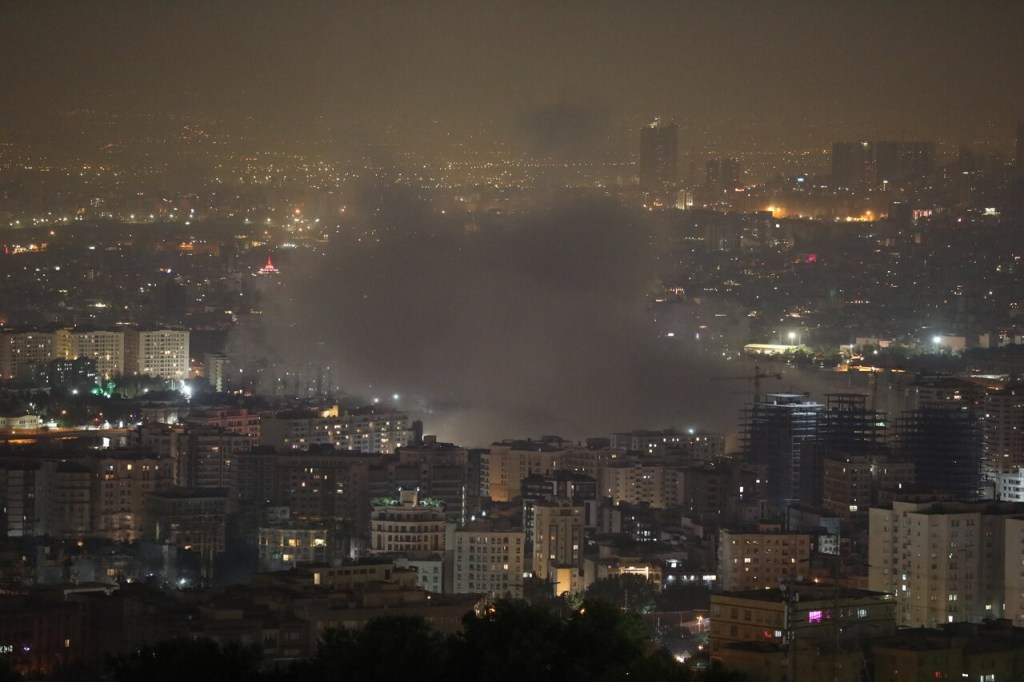
In the early hours of Friday, June 13, 2025, as most of Tehran slept, an Israeli missile hit a residential apartment block in the Sattarkhan district. Among the dead was 23-year-old Parnia Abbasi, a poet, bank employee, and recent graduate, alongside her teenage brother and both parents. Hours earlier, she had made plans to meet her best friend the following day. That meeting would never happen.
Parnia’s death passed largely unnoticed in international media. There were no headlines, no viral hashtags, no calls for justice. This silence stood in sharp contrast to the global coverage that Iranian women received during the 2022 protests. Back then, women like Parnia—young, unveiled, educated—were held up as icons of courage by Western outlets. In 2025, as one such woman was killed by a Western-backed state’s missile strike, no public voice in the West spoke her name.
This omission is not accidental. It reveals a deeper structural bias in the West’s human rights discourse: lives are valued based on political context, not principle. Parnia was not detained by the Islamic Republic. She was not protesting in the streets. She was not targeted by the Iranian state. She was simply a civilian asleep in her home, killed during an Israeli military campaign against Iran. And for that reason, her death did not serve the West’s narrative.
To mourn her publicly would have demanded confronting an uncomfortable truth—that Western-aligned militaries, too, kill women who live the very freedoms they claim to defend. And so, silence won. Rights groups said little. Editorial pages turned away. It was as though Parnia Abbasi had never existed.
Inside Iran, however, her death resonated deeply. Across Persian social media, her face was shared alongside lines of her poetry. One verse, in particular, recirculated widely:
I burn
I become a dimmed star
that fades in your sky
like smoke.
Her best friend, Maryam, recounted how they had planned to meet that morning at 11 a.m. When news of the strike broke, she rushed to Parnia’s building and witnessed the rescue teams pulling her body from the rubble. Parnia’s family lived in a ten-unit block; several others died in the same attack, including her sixteen-year-old brother, Parham. Their parents’ remains were only recovered later, after heavy equipment cleared the ruins.
Maryam described her friend as “bright, kind, ambitious.” Parnia had recently been admitted to a master’s program in management but postponed enrollment to keep her job at Bank Melli. She had studied translation at Qazvin International University and wrote poetry in her free time. Her headscarf was often loose, her voice gentle, her presence modern yet rooted in the city’s texture. She was not an activist in the political sense. But in another time, in another death, her story would have been honored.
The silence surrounding Parnia’s killing has prompted quiet anger inside Iran—not just from government supporters, but from many who had once looked to Western media with cautious trust. Among women especially, there is a sense of betrayal. The same outlets that had spotlighted their courage in 2022 now appeared indifferent to their deaths. For many, it was a clarifying moment: solidarity, they realized, was conditional.
This is not the first time human rights have been filtered through geopolitical lenses. But Parnia’s case is emblematic because it sits at the intersection of three discourses the West claims to champion: civilian protection in war, gender justice, and universal human rights. That a young, unveiled Iranian woman could be killed in her sleep by an allied government, and yet receive no international mourning, should raise urgent questions—especially among those who believe in impartiality and dignity for all.
Today, as the global order fragments and new alliances emerge, these inconsistencies no longer go unnoticed. In the Global South, there is growing skepticism toward what is increasingly seen as a politicized moral language. Empathy, many suspect, is now a strategic tool deployed selectively, withdrawn tactically.
Parnia did not seek to become a symbol. She wanted to study, to work, to write. She wanted to meet her friend on a Friday morning in early summer. Her death was not a protest. But the silence that followed it is.
If liberal democracies are to maintain the integrity of their human rights discourse, they must reckon with this silence. They must ask: why does some grief count more than others? Why do some women only matter when they die in politically convenient ways?
For now, Tehran mourns quietly. But the questions raised by Parnia Abbasi’s death will echo far beyond Iran—for they challenge not only the conscience of one society, but the credibility of a global order.
— Peiman Salehi
Source & license: This article first appeared at MR Online. Unless otherwise noted by MR Online, content on their site is generally distributed under CC BY-NC-ND 4.0. Please follow the original license terms and include a link to the source when reposting.
 Peiman Salehi – Political Analyst & Writer
Leave a comment