How Iranians see the West today
It’s a scorching Thursday afternoon in mid-July when I step out of Tehran’s Enghelab Square, the bustling heart of the city’s book market. I’ve just picked up a copy of Against Liberalism by John Kekes. As I hail a yellow taxi, the driver glances at the title and smirks: “Is that against the West, or against us?” His tone is light, but the subtext is heavy. Our small talk soon drifts to the looming threat of renewed sanctions under the UN’s ‘snapback’ mechanism — which doesn’t require full Security Council consensus.
Once confined to the halls of the UN and the dense pages of nuclear agreements, the word ‘snapback’ now echoes through Tehran’s streets, bakeries, and classrooms. After a ceasefire ended the 12-day war between Iran and Israel in June, European states have argued that reactivating the snapback mechanism is necessary to deter nuclear escalation. But for Iranians like myself, it means sudden inflation, disappearing medicine and dashed dreams. It means punishment without process.
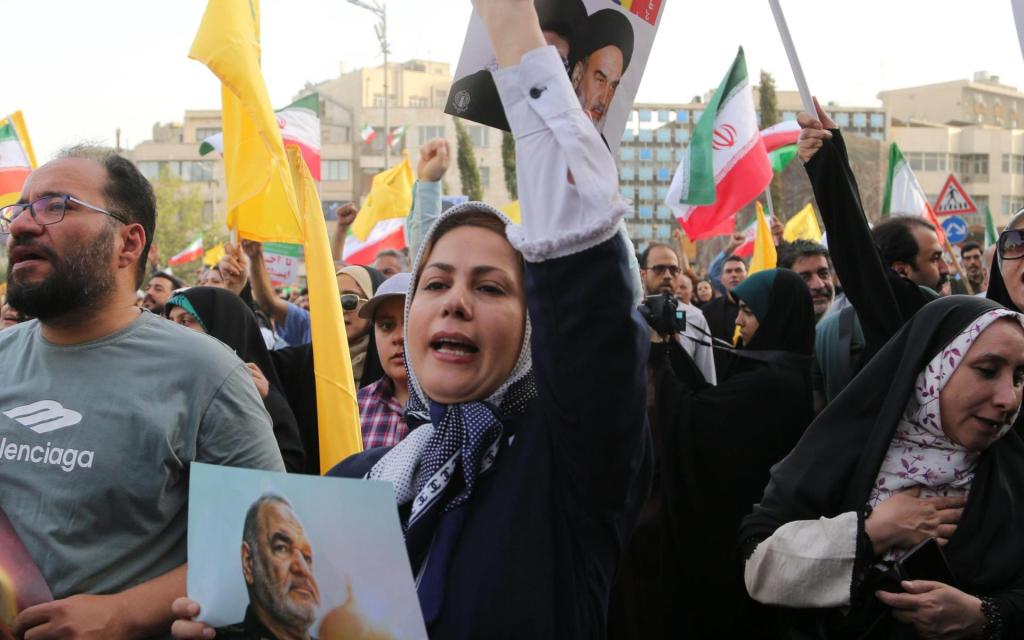
Over the course of that hot summer day, I speak with traders, students, mothers and other ordinary people who have endured the whiplash of diplomacy gone wrong. In recent years, the political and emotional distance between Iran and the West has widened beyond mere diplomacy. What was once framed as a nuclear dispute or a clash over regional influence has gradually evolved into something deeper: a profound sense of betrayal, disillusionment, and mistrust among ordinary Iranians.
The 2015 nuclear deal known as the Joint Comprehensive Plan of Action (JCPOA) unraveled in 2018 when the US unilaterally withdrew, despite repeated confirmations from the International Atomic Energy Agency (IAEA) that Iran was in full compliance. The reimposition of sweeping sanctions outside any UN framework signalled to many Iranians that Washington was never committed to diplomacy in good faith.
But while many in the West expected the 12-day war to trigger chaos or internal collapse, it had the opposite effect: it unified people. And as the threat of sanctions and isolation grows again, one message keeps surfacing in every corner of Tehran: we don’t want war. We don’t want revenge. We just want to build our lives. With calm. With choice. With respect.
Western media has often presented Iran as either a hostile regime or a repressed population on the brink of revolt. Narratives have centred on nuclear proliferation, missile threats, and regional militancy. Some framed the Israeli strikes as retaliation for Iran’s support of armed groups like Hamas and Hezbollah, but this rationale rarely features in Iranian discourse, where it is widely believed that the bombardment is part of a broader regime-change strategy aimed at weakening the country. Many believe Israel is also leveraging its lobbying power in the US to isolate Iran diplomatically and economically in pursuit of the Islamic Republic’s eventual collapse.
Visitors to Iran would be surprised by the many contradictions to the West’s predominant narratives. It is home to the tallest tower in the Middle East after Dubai’s Burj Khalifa, boasts free public education and near-universal healthcare, and supplies internet and energy to even the most remote villages. World Bank figures show that over 95 per cent of urban and rural Iranians have access to electricity, piped gas, and mobile services. By 2020, more than 70 million Iranians had access to high-speed mobile internet, and the government has been officially recognized by UNESCO for expanding telecom to rural areas. Iran’s adult literacy rate was more than 88 per cent in 2022 — compared with 86 per cent in Iraq and just 37 per cent in Afghanistan.
These facts of course don’t excuse the very real economic and social crises inside the country, but they challenge a simplistic portrayal of Iran as backward or broken. Understanding this tension between hardship and dignity is key to grasping how Iranians perceive the West today.
‘I don’t care about politics. I care about my kids’
That same day in mid-July, I meet my friends Amirhossein and Amirreza in a small café tucked between office towers near Vanak Square in the affluent northwest of Tehran. The streets are quieter than usual. There’s a sense of unease in the air. Amirhossein, born in 1997, is a financial analyst working in a company tied to the Tehran Stock Exchange. “With every flare-up in the region, the stock market crashes,” he says. “When the 12-day war started, the market shut down completely. Clients lost money — so did we. You can’t even plan for the next hour.”
I tell him that I used to believe in negotiations, but now I’ve lost trust in the Americans and their allies after they blamed us for pulling out of JCPOA. Amirhossein nods and sips his coffee, adding: “We’re not political. We just want a stable economy. But sanctions, inflation, and fear of the future … they’re eating us alive.”
Amirreza, born in 1995, is a former professional football player. He dreamt of coaching abroad, having trained in Oman. But with the soaring cost of plane tickets and the depreciating currency, now he can’t leave Iran. During the war with Israel in June, Iranian authorities cut the internet — and Amirreza missed a paid online training with a European coach.
Israel and the US claimed they were targeting key military and nuclear sites in their strikes on Iran. But among the more than 1,000 people killed were 436 civilians. One of them was 23-year-old Parnia Abbasi from Tehran. She worked at a bank and wrote poetry. She was known for her light clothing and uncovered hair, and resembled the women who took to the streets in 2022 for the Women, Life, Freedom protests. She was killed alongside her family in the Israeli airstrikes on Tehran.
“Their building collapsed,” recalls Maryam, a close friend of Abbasi’s who was supposed to meet her the morning of her death. “I saw them pulling her body out first, then her brother’s. They couldn’t even reach her parents until bulldozers arrived.”
Abbasi’s murder shattered the Western narrative that the war was targeted and surgical. For many Iranians, this was a turning point in how they viewed Persian-language media like Iran International and BBC Persian. The very networks that had helped galvanize women in 2022 were now giving a platform to those behind the bombs. To many, this was unforgivable. “They used to say they cared about women like Parnia,” one woman told me. “But when she was killed, they said nothing.”
After I part ways with my friends at the café, I walk home through Tehran’s dimly lit alleys. Near my neighbourhood bakery, a group of men are debating the snapback. “They say it’s about nukes. But Pakistan has nukes too and they don’t bomb them,” said one man, tearing into a piece of bread. “It’s not about weapons. It’s about domination. They want to keep everyone under their feet.”
I keep walking to Enghelab Square where I meet Maryam, an insurance clerk and mother of two. “I don’t care about politics. I care about my kids,” she tells me. “With these prices, rents, and bills, I can barely breathe. After all that negotiation, they [the US] still attacked us. I just want Iran to stand on its own. No more illusions about the West.”
The story of Iran cannot be reduced to centrifuges, missiles, or negotiations. It is the story of a nation whose political identity is rooted in a long civilizational memory. A people who see themselves not merely as subjects of a modern state, but as heirs to an ancient empire and spiritual traditions that elevate dignity, sacrifice, and justice.
The adversary here is not solely the United States, but what many see as a Western hegemony intent on erasing Islamic-Iranian identity. Western powers, in their repeated misjudgments, have often failed to understand this, and continue to view Iran through the outdated lens of threat and containment.
European states argue that reactivating the snapback mechanism is necessary to maintain international pressure and deter nuclear escalation. But to many in Iran, this rationale rings hollow. They see it as a political tool used selectively as bait against weaker nations.
Speaking to Iranians, I heard not just their collective mistrust of the West following the latest US-Israeli attacks, but a broader psychological detachment. Many Iranians, especially younger generations, are no longer waiting for change from the West. Instead, they speak of self-reliance — both psychological and economic — as they endure hardship and seek local alternatives.
This can mean using homegrown apps instead of banned platforms, as well as increasing domestic goods production in the face of import restrictions. At the state level, this self-reliance discourse has hardened around a ‘resistance economy’ model that emphasizes internal production, barter deals with non-Western allies, and long-term detachment from Western systems. Iran has deepened ties with Russia and China in recent years, but many see Moscow as opportunistic and Beijing as transactional. For now, these relations are tolerated as strategic necessities, not ideological alliances.
What Iran demands — and what the world must now reckon with — is not submission to Western terms through pressure or sanctions, but recognition. Recognition of a different discourse, one rooted in civilizational sovereignty rather than liberal compliance.
Security Council members including the UK, France and Germany have given Iran until 29 August to contain its nuclear programme. The 2015 deal does not allow China or Russia to veto the snapback and since leaving the nuclear deal in 2018, the US cannot use its veto power either. But for many ordinary Iranians, like the former footballer Amirezza, the looming threat of sanctions is more personal than political. “Sanctions don’t just break economies. They steal chances.”
 Peiman Salehi – Political Analyst & Writer
Leave a comment