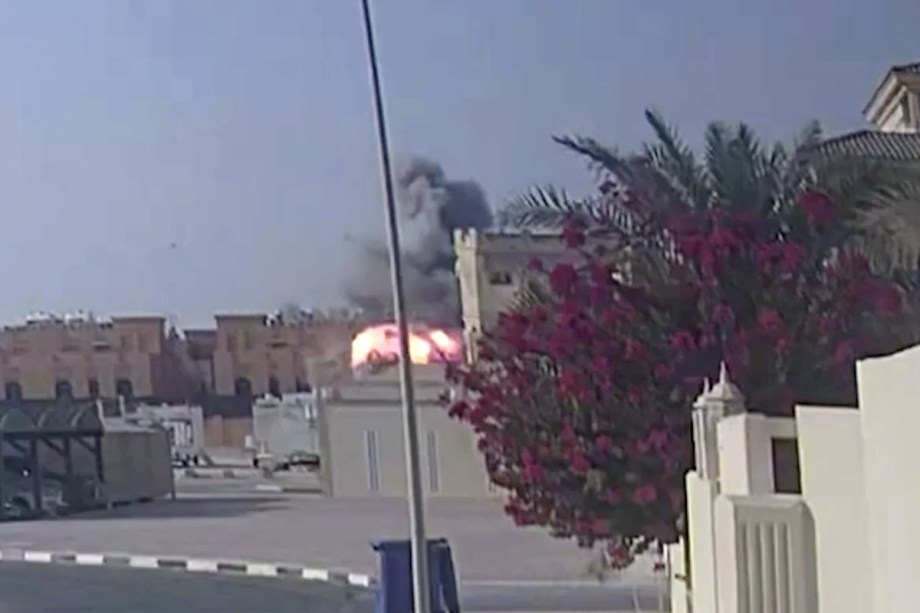
Israel’s strike on Doha: A turning point for US alliances and Gulf sovereignty
By Peiman Salehi | September 10, 2025

The Israeli airstrike on Hamas leaders in Doha on 9 September 2025 was far more than a military operation. It represented a direct assault on the sovereignty of a US ally, Qatar, and a symbolic rupture in the fragile architecture of Middle Eastern diplomacy. For decades, Doha maintained its paradoxical identity: hosting Hamas offices and acting as a platform for negotiations between Iran, the Taliban, and Washington, while simultaneously hosting the al-Udeid airbase, the largest US military installation in the region. Israel’s decision to strike within this “protected” space shattered the perception that Gulf monarchies aligned with Washington could also act as neutral mediators.
The implications go well beyond Qatar. By targeting Doha, Israel undermined the broader notion of diplomatic safe havens in the Arab world. This sends a chilling message to smaller states like Oman and Turkey, which have relied on mediation to assert independence and regional influence. Neutrality, the strike made clear, is an illusion in today’s Middle Eastern conflicts.
For U.S. diplomacy, the strike creates a stark contradiction. If Washington authorized or condoned it, then America openly sacrificed the sovereignty of one of its closest allies for Israel’s security agenda. If the Biden administration was kept in the dark, the damage is even greater: the U.S. no longer has the leverage to restrain its ally. Either way, American credibility in the Gulf has been deeply shaken.
The timing sharpens the irony. Just months earlier, Qatar’s royal family gifted former President Trump $400 million, highlighting Doha’s strategic closeness to Washington. Now, Qatar’s sovereignty has been violated by Israel, exposing the fragility of America’s alliance network in the Gulf. For Arab states, the symbolism is clear: if Qatar—with its wealth, strategic position, and ties to Washington—cannot secure protection, who can?
Regionally, the strike may trigger new alignments. Instead of isolating Hamas, the attack could accelerate coordination between Iran, Qatar, and Turkey, all of whom share an interest in defending sovereignty against Israeli encroachment. Far from weakening resistance, the strike risks broadening its base and deepening multipolar dynamics in the region.
Globally, the episode underscores the erosion of the so-called liberal order. The U.S. has long presented itself as the guarantor of rules and sovereignty. Yet when an ally as close as Qatar is struck by another U.S. ally, those rules collapse into contradiction. The liberal order is revealed to be selective, instrumental, and incapable of protecting even its own network. For the Global South, the lesson is clear: dependence on U.S. guarantees is increasingly unreliable.
Ultimately, Israel’s strike on Doha marks the end of an era where Gulf monarchies could balance U.S. protection with regional mediation. The “safe havens” of diplomacy are gone, replaced by a harsher multipolar reality in which sovereignty is fragile, alliances conditional, and conflict can reach even the most protected capitals. This rupture will not fade quietly; it will reshape Gulf calculations, accelerate the search for alternatives, and deepen skepticism toward Western-led security frameworks.
— Peiman Salehi
Note: This article was originally published by Middle East Monitor (MEMO) .
 Peiman Salehi – Political Analyst & Writer
Leave a comment