By Peiman Salehi
After more than four decades since the Islamic Revolution, it remains clear that many Western policymakers still don’t understand Iran. But perhaps the problem isn’t only Iran it’s the limits of a worldview that assumes liberal norms are universally applicable.
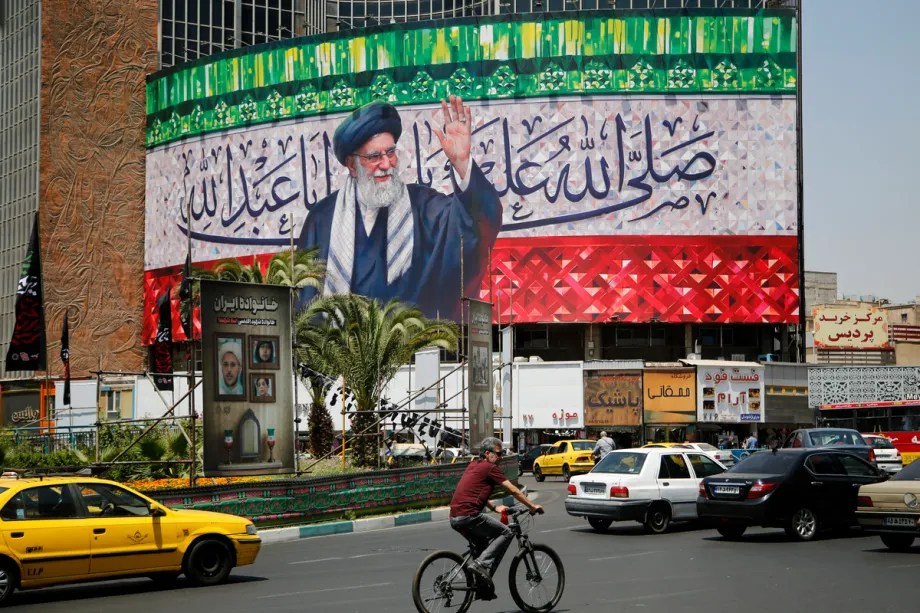
People continue their daily life under the shadow of the ceasefire reached with Israel, in Tehran, Iran, on July 15, 2025. [Fatemeh Bahrami – Anadolu Agency]
Today, Iran is not merely a state at odds with the West. It represents a political discourse forged in the crucible of colonial memory, revolution, and international isolation. A discourse that, rather than fading, now echoes from Damascus to Caracas, from Beirut to Sanaa. While Western media often reduces Iran to missiles, centrifuges, or proxy forces, a growing number of people in the Global South see it as something more: an alternative logic.
This alternative became even more visible after the events of July 2025, when Israel launched a surprise strike on Iranian soil, targeting key figures in Iran’s defense and nuclear programs. While the attack shocked the world, it was Iran’s response that changed the calculus. Within hours, Tehran had rebuilt its command infrastructure and launched retaliatory strikes not only on Israeli positions but also on the US Al Udeid airbase in Qatar. More than a military move, it was a symbolic one: a message that Iran no longer accepts the role of passive deterrence.
For decades, the West has painted Iran as isolated, irrational, or unpredictable. But the reaction to the July attacks suggested otherwise. Iran acted with speed, coherence, and, above all, intention. Its message was clear: it is not simply reacting, it is asserting.
This assertion, however, isn’t just geopolitical. It’s philosophical. For the first time in the post-Cold War order, a non-Western state under immense pressure has openly defied the Western security logic not out of desperation, but with a distinct and alternative worldview.
A discourse, not a rogue actor
To truly grasp Iran’s posture today, one must look beyond the nuclear file or sanctions regime. Iran’s political identity is underpinned by a coherent discourse one that challenges the philosophical underpinnings of the liberal international order.
Unlike other critics of the West who focus on inequality or double standards, Iran questions the moral legitimacy of the system itself. Its opposition is not just realist, but moral: a critique of domination, hegemony, and the presumption of cultural superiority.
This discourse draws strength from three elements:
1. A moral critique of liberal internationalism:
Iran’s opposition to Western order is rooted not only in geopolitics but also in a deep moral rejection of its foundations what it sees as structural injustice embedded in international institutions.
2. Fusion of tradition and geopolitical rationality:
Unlike the Soviet Union, Iran fuses an Islamic ethos of resistance with strategic, realpolitik calculations. The result is a state project that is both ideological and flexible a “resistant state” with its own grammar.
3. Soft influence in the Global South:
From Latin America to West Asia, Iran’s narrative of sovereignty, dignity, and anti-imperialism finds resonance even in the absence of formal alliances or blocs.
Western policymakers often dismiss this influence as propaganda or ideological projection. But ignoring it has consequences. Many in the Global South don’t see Iran as a pariah they see it as a symbol of resistance in a system that often feels rigged.
The “snapback” problem: legitimacy in crisis
Now, with the West seeking to re-activate the so-called “snapback” mechanism from the 2015 nuclear deal a legal tool designed to restore sanctions in the event of serious Iranian violations a deeper crisis is being exposed.
There is a legal paradox at the heart of this move: the very state that unilaterally exited the agreement (the United States) now seeks to enforce its provisions. This is less a legal strategy than a symbolic gesture and one that risks accelerating the decline of Western credibility.
If multilateral institutions are perceived not as frameworks for justice but as tools of selective enforcement, they lose more than authority they lose legitimacy. For many outside the transatlantic world, this reinforces a troubling conclusion: international law is not neutral, but political.
Beyond containment: The need for cognitive recalibration
The West’s biggest challenge in dealing with Iran isn’t military or diplomatic it’s cognitive.
Most Western analyses continue to view Iran through outdated lenses: the Cold War, terrorism, or nuclear proliferation. But we live in a world increasingly shaped by non-Western actors, emerging civilizational identities, and profound mistrust in Western institutions.
To move forward, the West needs a new map one that acknowledges the discursive nature of Iran’s global role.
It requires a shift:
• From seeing Iran as a threat to seeing it as a discourse.
• From punitive strategies to understanding sources of internal and regional legitimacy.
• From security-based thinking to engaging Iran’s political philosophy — especially its challenge to global liberalism.
And most of all, it requires acceptance of a changing world:
We no longer live in the “end of history” we are witnessing the birth of competing rationalities, rival universalisms, and alternative visions of order.
If the West continues to deny the legitimacy or even the existence of these competing visions, it risks not only diplomatic failure but deeper moral and political isolation.
Originally published on Middleeastmonitor
 Peiman Salehi – Political Analyst & Writer
Leave a comment