Author: Peiman Salehi*
*Originally published on: South Africa Today
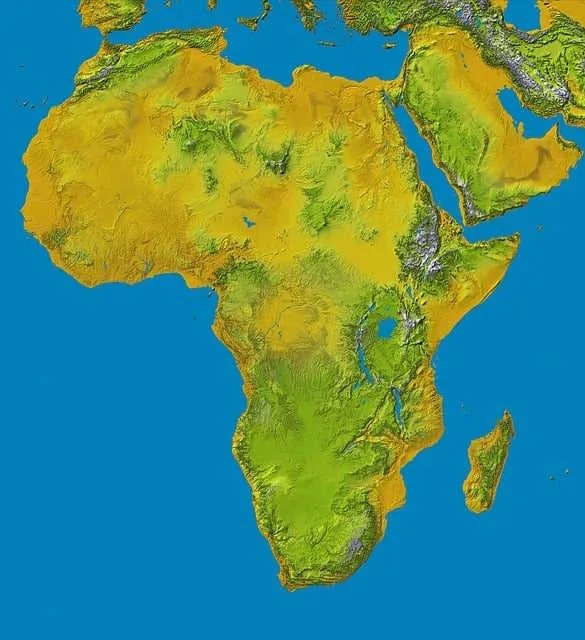
Africa and the Multipolar Moment: Between Non-Alignment and Neo-Colonial Games. Image source: Pixabay
In today’s rapidly shifting global order, Africa finds itself at a critical juncture. The so-called “multipolar moment” presents both an opportunity and a threat. On the one hand, the decline of unipolar dominance creates breathing room for African nations to assert sovereignty, experiment with new alliances, and reimagine their global roles. On the other hand, the same geopolitical transition has revived colonial-era tactics of influence and control, now dressed in the language of aid, investment, and partnership.
The West, particularly the United States and its European allies, no longer holds uncontested sway over African affairs. The rise of China and the reassertion of Russian influence have disrupted traditional alignments. This has led to a new scramble for Africa—not for raw materials alone, but for narrative, leverage, and loyalty.
The Illusion of Non-Alignment
In response to global competition, many African states have resurrected the idea of non-alignment—a strategy once popular during the Cold War. But today’s context is different. The bipolarity of the past has given way to a fragmented and competitive global arena. Non-alignment, in this setting, risks becoming a rhetorical device rather than a genuine strategic posture. Western institutions still demand allegiance through conditional aid, security pacts, and ideological alignment, while Eastern powers offer alternative models with their own expectations.
Neo-Colonialism in New Clothes
The mechanisms of control have evolved. No longer are gunboats or direct rule required. Instead, African economies are being shaped by debt traps, digital surveillance, political influence operations, and media infiltration. Western multinationals dominate supply chains, while global financial institutions prescribe neoliberal reforms that often cripple local industry and undermine state capacity.
Moreover, sanctions imposed on states like Zimbabwe or pressure campaigns against others resisting the liberal orthodoxy demonstrate how sovereignty can be penalized under the guise of “values.” This selective enforcement exposes the moral contradictions within the liberal world order—where freedom is conditional, and independence is negotiable.
The Strategic Value of Africa in the Multipolar Contest
Africa is no longer a passive terrain—it is an active player. The continent holds strategic weight in global institutions, critical mineral resources for the green economy, and demographic leverage with its youthful population. The BRICS+ expansion, growing cooperation with China’s Belt and Road Initiative, and increasing military ties with Russia signal that Africa’s voice in the global conversation is growing louder.
Yet, the danger lies in misreading the moment. Multipolarity does not guarantee justice. It merely shifts the centers of power. If African leaders fail to anchor their policies in self-defined priorities—rooted in cultural dignity, economic sovereignty, and political independence—they risk trading one master for another.
Conclusion: Beyond the Game
Africa must not become the playground for global powers seeking to outmaneuver each other. This is a historic moment for the continent to define itself—not as a buffer zone in a new Cold War, but as a civilizational force with its own worldview. To do so, African states must move beyond tactical balancing and embrace a long-term strategic vision that resists both Western paternalism and Eastern pragmatism when they threaten autonomy.
The future of the global order may well be written in African ink. The question is: who holds the pen?
 Peiman Salehi – Political Analyst & Writer
Leave a comment