Author: Peiman Salehi
*Originally published on: Geopolitika.ru
Introduction: The Promise and Betrayal of Liberalism
Liberalism, once heralded as the final evolution of human political organization, promised freedom, dignity, and prosperity for all. Emerging from the Enlightenment and championing values such as individual rights, democracy, and free markets, it claimed moral superiority over all other ideologies. Yet today, we witness the crumbling of these promises. The liberal order has devolved into an apparatus of domination, waging wars in the name of peace, imposing sanctions that suffocate nations, and exporting cultural nihilism disguised as “universal values.”
The betrayal is profound: the very civilization that proclaimed itself the defender of human dignity now tramples upon it to maintain global hegemony.
Section 1: The Ethical Bankruptcy of Liberalism
Across the world, the moral contradictions of liberalism are exposed. Under the banners of “human rights” and “freedom,” liberal powers have launched devastating wars: Iraq, Afghanistan, Libya. Sanctions regimes against Iran, Venezuela, and Syria have led to untold suffering among civilians. Rather than fostering peace, liberalism has institutionalized coercion.
Internally, the liberal West faces its own decay. Inequality reaches historic levels; trust in democratic institutions collapses. The rise of surveillance states, censorship under the guise of “disinformation control,” and growing social atomization all signify a system unable to live up to its own ideals.
Philosophically, liberalism’s claim to universalism has been revealed as a mask for Western particularism. Its institutions—the UN, IMF, and World Bank—serve not humanity, but the entrenched interests of an Atlanticist oligarchy. Through mechanisms like loan conditionalities and the imposition of austerity policies, these institutions have often deepened inequality and political dependency in the Global South rather than fostering real development.
Section 2: The Rise of Civilizational Resistance
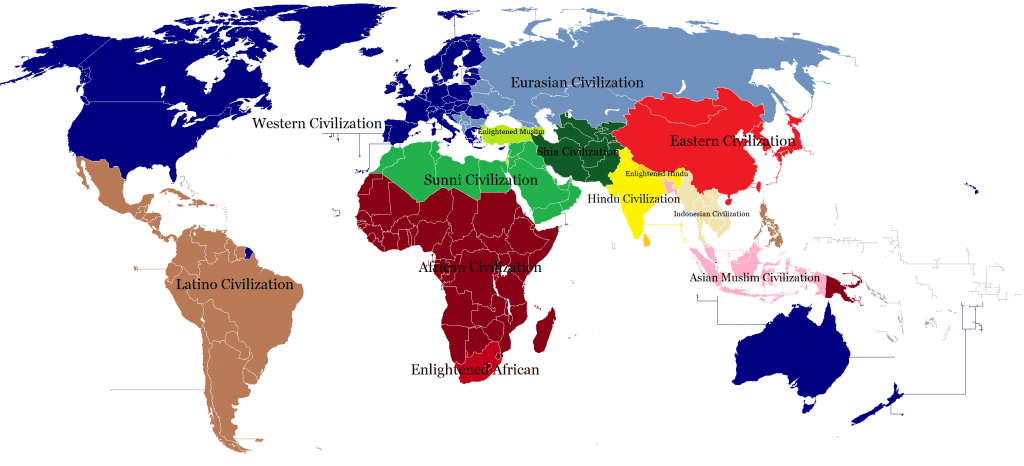
In response, a global wave of civilizational resistance is rising. This is not mere nationalism; it is a deeper affirmation of alternative ways of being, knowing, and organizing societies.
In Iran, the Islamic Republic continues to assert an Islamic model of governance rooted in spiritual sovereignty. Russia, under the rubric of Eurasianism, reclaims its Orthodox and civilizational identity. China’s Confucian socialism offers a synthesis of tradition and modernization outside Western paradigms. Meanwhile, Latin America witnesses a rebirth of Bolivarian solidarity, and Africa gradually reclaims its indigenous epistemologies.
Civilizational resistance is not a return to isolationism; it is an insistence on multipolarity—on the right of different cultures to define modernity on their own terms.
Section 3: Toward a Multipolar World
The unipolar moment is over. The emerging global order is inherently multipolar, shaped by diverse civilizational actors. While liberalism sought to erase cultural particularity in favor of homogenization, the future belongs to the plurality of civilizations.
Iran’s strategic partnerships with Russia and China, the BRICS expansion, and growing South-South cooperation illustrate that resistance is not merely defensive. It is constructive—a creative endeavor to build an alternative international system based on respect, not domination.
These civilizations, rooted in enduring spiritual and cultural traditions, possess a resilience that liberal modernity, with its ephemeral consumerist ethos, increasingly lacks.
Western liberalism, facing demographic decline, moral exhaustion, and strategic overreach, is ill-equipped to reverse this trend. The center can no longer hold.
Conclusion: The End of an Empire, the Birth of Civilizations
The moral collapse of liberalism marks not simply a political shift but a civilizational turning point. As Western hegemony falters, the opportunity arises to forge a more just, diverse, and spiritual world.
Civilizational resistance is not born of hatred but of love—love for tradition, for identity, for a future where humanity is not reduced to economic units but honored as bearers of transcendent meaning.
In this new era, the age of Empire fades. The age of civilizations dawns.
At the dawn of the age of civilizations, dialogue among cultures must replace the monologue of a crumbling civilization.
 Peiman Salehi – Political Analyst & Writer
Leave a comment